Author: Outdoor Cooking King

  • Baltimore Pit Beef: History of a Roadside BBQ Tradition

    Baltimore Pit Beef: History of a Roadside BBQ Tradition

    Baltimore’s pit beef sandwich has a murkier paper trail than most regional barbecue traditions, and the writers who have chased it down say so plainly. This account draws on two Baltimore Sun features: Richard Gorelick’s 2015 investigation into pit beef’s Baltimore origins, and Luke Broadwater’s 2014 profile of Chaps Pit Beef for the paper’s “Postcards from U.S. 40” series.

    An Origin Nobody Can Quite Pin Down

    Gorelick, writing for the Sun’s City Paper section, found that most food historians he consulted agreed pit beef emerged from Baltimore’s east-side working-class neighborhoods, but the specific when and why remain unsettled. Searching the paper’s own archives, he located the earliest mention of pit beef in a 1968 advertisement for Al Kelz’s Elite Tavern on York Road, where it was listed alongside steamed and soft crabs, crab fluffs and crab cakes as part of a crab-focused menu — notably not on Pulaski Highway, the corridor now most associated with the dish. After that ad, Gorelick found no further mentions until 1976, followed by years of passing references in notices for bull roasts and neighborhood fundraisers, with no dedicated coverage of pit beef as a food culture in its own right.

    Pulaski Highway’s Roadside Stands

    Anecdotal accounts place pit-beef stands along Pulaski Highway as early as the 1970s, according to Gorelick’s reporting, well before the press caught up to the trend. Sun columnist Rob Kasper made a passing reference to “the pit beef places I had heard so much about” in a 1982 article, though he noted the stands hadn’t yet opened for the season that February; by 1987 Kasper was describing pit beef as Baltimore’s favorite food. The turning point Gorelick identifies came in 1992, when the Sun ran its first dedicated feature treatment of pit beef culture, including a roundup of ten stands, timed to coincide with the opening of Oriole Park at Camden Yards and the popularity of Boog Powell’s concession stand, Boog’s Corner, inside the new ballpark.

    Chaps and the Modern Pit-Beef Stand

    Broadwater’s 2014 Sun profile traces the most recognizable name in Baltimore pit beef to a specific parking lot. Bob Creager, a former steelworker who had no restaurant experience, opened a small pit-beef stand in 1987 in the parking lot of a Southeast Baltimore nightclub owned by his father-in-law, Gus Glava. Family members put up $7,000 to build a twelve-by-fifteen-foot stand with no electricity, and Glava suggested naming it Chaps, after his own club. Creager learned to cook pit beef by trial and error, crediting Mike DeCarlo of the nearby stand Big Al’s as an informal mentor. According to Broadwater’s reporting, the same 1992 Sun feature that Gorelick identifies as pit beef’s public debut also drove a sudden jump in sales specifically for Chaps — the two Sun accounts, written five years apart by different reporters, independently point to that single 1992 article as a turning point for the food’s visibility.

    Not Quite Barbecue, By Design

    Gorelick’s piece raises a classification dispute that’s central to understanding the dish: pit beef, cooked directly over hot charcoal on a spit or grate rather than slow-smoked at low temperature, is not barbecue in the technical sense many barbecue writers use, and Gorelick notes it is nearly impossible to write about the dish without addressing that distinction. He also records complaints, dating back to the 1992 coverage, about modern shortcuts — grilling over gas instead of charcoal, machine-slicing instead of hand-carving, and serving on white bread instead of a roll — suggesting that debates over authenticity have been part of pit beef’s public identity from nearly the moment it became a named tradition rather than just a private neighborhood habit.

    From One Stand to a Franchise

    Chaps grew steadily after 1992, according to Broadwater’s reporting: a 2008 appearance on the Food Network’s “Diners, Drive-Ins and Dives” brought another surge of business, and the stand later drew visits from national television crews and celebrity chefs. What began as a one-employee operation with no seating expanded, through ten rounds of construction, into a business with about twenty-five employees and roughly fifty seats. Pulaski Highway — U.S. 40 — became known locally as “Pit Beef Row,” a strip Broadwater notes was once also home to Big Al’s and Big Fat Daddy’s, though many of the original stands along that stretch have since closed or relocated. Chaps’ condiment, tiger sauce, is described in Broadwater’s article simply as two parts mayonnaise mixed with one part horseradish — a plain formula that belies how firmly it has become attached to the sandwich regionally.

    Keep reading

    Sources

  • Kreuz Market and the History of Texas Meat-Market BBQ

    Kreuz Market and the History of Texas Meat-Market BBQ

    Lockhart’s meat markets didn’t set out to invent a barbecue style — they were butcher shops that smoked what didn’t sell. This history relies on Kreuz Market’s own published timeline, Texas Monthly’s 1999 report “Pit Split” by Joe Nick Patoski, and Texas Monthly barbecue editor Daniel Vaughn’s 2017 piece “Mapping Texas Barbecue History.”

    Butchers, Not Restaurateurs

    Vaughn’s research for Texas Monthly traces commercial Texas barbecue to the period after the Civil War, when butchers and meat markets began advertising barbecued meats alongside their fresh cuts. He cites a July 19, 1888 item in the San Marcos Free Press that credits a local butcher with the idea and praises the new arrangement, since it meant people no longer had to wait for a communal barbecue “to furnish our people barbecued meats.” Vaughn’s team also found Sanborn Fire Insurance maps from Texas towns showing meat markets with attached smokehouses and barbecue pits, which insurers treated as fire hazards. City directories from the 1890s show barbecue stands beginning to separate from meat markets into standalone businesses — a slow transition, not a single invention.

    Lockhart’s Market

    Kreuz Market’s own history page states that Jesse Swearingen opened the first meat market in Lockhart in 1875, already selling barbecued pork and beef alongside fresh meat. Charles Kreuz Sr. bought the store in 1900 and renamed it. In 1911 his sons Theodore, Will and Alvin took over; Will later sold his share to brother-in-law Hugo Prove. The original metal building was replaced with brick in 1925. According to both Kreuz Market’s history and Texas Monthly’s 1999 account, the Kreuz family sold the business in 1948 to Edgar “Smitty” Schmidt, a longtime employee — Texas Monthly specifies he bought it from Alvin Kreuz and two other co-owners. Schmidt ran the market until 1984, when he retired and sold it to his sons Rick and Don.

    The 1999 Split

    Edgar Schmidt died in 1990, leaving the market’s building to his daughter, Nina Sells, while his sons continued to own and run the business itself as tenants. That arrangement held until the mid-1990s, when — according to Patoski’s 1999 Texas Monthly report — negotiations over a new lease broke down. Rick, who by then was sole owner after his brother Don’s 1997 retirement, wanted a renewed long-term lease; Nina wanted roughly $400,000 in rent over five years, a figure Rick called excessive. The dispute drew coverage from the Austin American-Statesman and CBS’s Eye on America before the lease expired on August 31, 1999. Rick relocated Kreuz Market four-tenths of a mile to a new building on North Colorado Street, and in a moment captured by national television, his pit man transported hot coals from the old pits to light the new ones. Nina reopened the original downtown building under a new name, Smitty’s Market, honoring her father.

    Three Markets, One Small Town

    The split briefly threatened to weaken Lockhart’s reputation, but Patoski’s reporting notes the opposite read was also plausible: Lockhart could end up with four notable barbecue businesses instead of one. Texas Monthly’s own 1997 ranking of the state’s best barbecue had already named Lockhart the only town with three joints on the list — Kreuz’s, Black’s Barbecue, and Chisholm Trail B-B-Q. Black’s, a competing meat market whose motto touts being the oldest in Texas under the same family, posted signs reading “No Crisis Here” and “No Feud, Just Good Food” while the Schmidt family dispute played out. Nina’s husband, Jim Sells, and her sons had also placed at competition cook-offs in Luling and Lubbock before Smitty’s opened, giving the new venture its own competitive credentials rather than starting from nothing.

    What “Pioneer” Leaves Out

    Vaughn’s Texas Monthly piece pushes back on the idea that Kreuz Market, Southside Market in Elgin, and Prause Meat Market in La Grange were the sole originators of Central Texas barbecue. He argues their prominence in the popular telling is partly a matter of survival — they are still in business, while dozens of other nineteenth-century meat markets that also sold smoked meat, documented in Sanborn maps and old city directories from Texarkana to San Angelo, simply closed and were forgotten. The German and Czech immigrant butchers behind Lockhart’s markets were genuine early practitioners, but Vaughn’s research indicates the smoking of unsold meat as a preservation measure was a broader, more diffuse regional habit before a handful of surviving shops came to represent it.

    A Family Business, Still Contested

    Kreuz Market’s own timeline continues the story past the split: Rick Schmidt retired in 2011 and sold the restaurant to his son Keith, who partnered with relatives the following year to open the separate Schmidt Family Barbecue and Lockhart Smokehouse restaurants. Rick Schmidt died in 2019 at age 73. The 1999 rift between Kreuz Market and Smitty’s Market has since eased in public reporting on the family, but the two businesses remain separately owned storefronts, four-tenths of a mile apart, each descended from the same 1875 meat market on Lockhart’s town square.

    Keep reading

    Sources

  • Skylight Inn and Eastern NC Whole-Hog Barbecue History

    Skylight Inn and Eastern NC Whole-Hog Barbecue History

    Eastern North Carolina’s whole-hog tradition is often traced to a single 1769 diary entry, but its modern shape comes from twentieth-century pit houses like the Skylight Inn. This history draws on the Southern Foodways Alliance’s introduction to its North Carolina BBQ oral history collection, written by sociologist John Shelton Reed, along with Garden & Gun’s 2019 interview with pitmaster Sam Jones and the Sam Jones BBQ restaurant’s own published history.

    An Old Style, Documented Early

    According to Reed’s account for the Southern Foodways Alliance, George Washington recorded in his diary that he “went in to Alexandria to a Barbecue and stayed all Night” on May 27, 1769, and likely ate meat from a whole hog cooked for hours over hardwood coals, then chopped or pulled. By the early nineteenth century, Reed writes, a vinegar-and-cayenne-pepper sauce — itself originally West Indian — was already being sprinkled over the finished meat. Reed describes this style as persisting largely unchanged to the present day in eastern North Carolina and the adjoining parts of South Carolina and Virginia, distinguishing it from the piedmont barbecue tradition further west, which took on tomato ketchup and pork-shoulder preferences from German and Scotch-Irish settlers.

    From Special Occasions to Storefronts

    Barbecue in North Carolina was, Reed writes, never really home cooking — it was simply too much trouble. Until the early twentieth century it was reserved for occasions like harvests, fundraisers and political rallies. After the First World War, men who had cooked for those events began selling barbecue from tents and stands at courthouse squares and outside tobacco auctions. The automobile made a fixed, sit-down barbecue restaurant possible soon after; Reed identifies North Carolina’s first as Bob Melton’s in Rocky Mount, opened in 1924. Reed also notes a labor detail often left out of barbecue histories: although most eastern North Carolina barbecue establishments were white-owned through the mid-twentieth century, most of the actual pit cooking was done by African American cooks, and a handful of Black pitmasters opened their own restaurants during the same period.

    The Skylight Inn

    Against that backdrop, Pete Jones opened the Skylight Inn in Ayden in 1947, at age seventeen. Per the Sam Jones BBQ restaurant’s own history page, Jones served whole hog cooked over wood, continuing a method his family describes as older than his own restaurant. National attention arrived gradually. According to the restaurant’s history, National Geographic’s 1979 book “Back Roads America” named Skylight Inn among the country’s best barbecue, and in 1982 Pete Jones was invited to serve barbecue at a congressional event, drawing praise from Ronald Reagan and George H.W. Bush. The clearest institutional recognition came in 2003, when the James Beard Foundation named Skylight Inn BBQ an America’s Classic, an award Sam Jones flew to New York to accept, according to the restaurant’s own account. Pete Jones died in February 2006; his son Bruce, nephew Jeff and grandson Sam kept the pit fires going.

    A New Generation, Same Wood

    Sam Jones grew up working at Skylight Inn, and told Garden & Gun that he felt embarrassed by his small-town roots before travel changed his outlook. In 2013, an invitation to cook at a Charleston event connected him to a wider community of chefs and pitmasters, which Garden & Gun reports helped push him toward opening his own restaurant. With longtime friend and Skylight Inn colleague Michael Letchworth as a business partner, Sam Jones BBQ opened on November 10, 2015, near Greenville, North Carolina — the restaurant’s history page specifies the location as Winterville. Both Skylight Inn and Sam Jones BBQ continue cooking whole hog over wood-fired pits, a rule Sam Jones described to Garden & Gun as absolute for anyone who grew up in that part of the state: if it isn’t wood-fired whole hog, it isn’t barbecue at all.

    What the Sources Agree — and Don’t Fully Cover

    Reed’s Southern Foodways Alliance introduction and the Sam Jones BBQ material describe two different registers of the same tradition: Reed’s is a broader regional and economic history extending back to the eighteenth century, while the Skylight Inn material is a single family’s specific twentieth-century lineage. Neither source gives an exact founding date for whole-hog cooking as a family practice at Skylight Inn beyond Pete Jones’s 1947 opening; the claim that the family’s whole-hog method predates that opening by generations comes from the restaurant’s own promotional materials rather than an independently documented family history, so it should be read as the family’s own account rather than a verified timeline.

    Keep reading

    Sources

  • Big Bob Gibson and the History of Alabama White Sauce

    Big Bob Gibson and the History of Alabama White Sauce

    Alabama’s white sauce is now sold in bottles nationwide, but its history is tied to one Decatur pitmaster and a backyard pit dug in 1925. This account draws on the Encyclopedia of Alabama’s entry on Big Bob Gibson BBQ, written by historian Mark A. Johnson, and the Southern Foodways Alliance’s 2006 oral history interview with Gibson’s grandson, Don McLemore.

    A Railroad Worker’s Weekend Pit

    Robert “Big Bob” Gibson worked for the L&N Railroad in Decatur, Morgan County, when he started tossing hickory coals into a dugout pit behind his house on Danville Road in 1925. According to the Southern Foodways Alliance interview, Gibson stood six-foot-four, weighed more than three hundred pounds, and was known as a big, good-humored man who was easy to talk to. He cooked on weekends at first, feeding friends and neighbors off boards nailed to a sycamore tree. Don McLemore, who joined the family business in 1973, recalled that his grandfather did not raise his own animals. Instead, per the SFA transcript, “he’d buy a whole hog and cut it up himself” and use nearly every part of it — shoulders, hams and ribs — rather than cooking the carcass intact on one pit, the method associated with Eastern Carolina whole-hog pits. Gibson also smoked whole chickens, splitting and seasoning them before three hours over hickory smoke, per the Encyclopedia of Alabama.

    From Backyard to Restaurant

    Word of the weekend cooking spread enough that Gibson quit the railroad. He first partnered with his brother-in-law, Sam Woodall, opening a stand on Moulton Road called Gib-All’s. That partnership lasted about a year, according to McLemore’s SFA interview, before Woodall left to go into business with his own brother, and Gibson continued alone under the name that stuck: Big Bob Gibson Bar-B-Q. Over the next two decades the operation moved several times around Decatur, including a stretch of roughly ten years at two locations on Highway 67 near present-day Priceville, before Gibson resettled the business in Decatur in 1952. That year, his daughter Catherine “Punk” McLemore took over daily operations in exchange for half ownership — a detail confirmed independently by both the Encyclopedia of Alabama and McLemore’s own recollection of his mother joining the business.

    The White Sauce

    Gibson is credited by his family, and by both sources here, as the inventor of Alabama’s mayonnaise-and-vinegar white sauce — a mixture the Encyclopedia of Alabama describes as mayonnaise, vinegar and black pepper, dunked over chickens straight off the smoker. McLemore, in the SFA interview, said his grandfather’s authorship has never been disputed within his own knowledge, though he admitted the family does not actually know how Gibson arrived at the recipe. The sauce was developed strictly for chicken, to keep the meat moist through hours of hickory smoke; Gibson also kept a vinegar-based sauce for pork and a Brunswick stew cooked in a black wash pot, a recipe McLemore said the restaurant still uses today. Decades later, other Alabama restaurants began putting their own white sauce on the table, with some labeling it an original recipe — a claim McLemore disputed in the interview, saying those competitors had only adopted white sauce recently, by comparison to his grandfather’s decades of use.

    Where the Two Sources Disagree

    The record isn’t perfectly clean on two points. The Encyclopedia of Alabama states the family built a larger restaurant on Sixth Avenue in 1987 because their landlord would not allow them to remodel the existing building. The Southern Foodways Alliance’s separate profile page, however, describes the move differently, stating the original restaurant burned to the ground in 1988 and the family rebuilt next door, saving the original neon sign. The two accounts do not name the same trigger or year for the same relocation, and neither source resolves the discrepancy. Likewise, the Encyclopedia of Alabama dates the opening of the Danville Road second location to 1992, while McLemore’s own oral history interview places it around 1990 or 1991. Both are close enough to represent the same event, but the exact year is unconfirmed.

    Growth Into a National Name

    After Gibson’s death in 1972, five grandchildren and their spouses took over. The business gained a national competitive profile after Chris Lilly, a native of Florence, Alabama, joined the family in 1992 following his marriage to Gibson’s great-granddaughter, Amy McLemore. Under Lilly, the Big Bob Gibson team began competing at the Memphis in May World Championship Barbecue Cooking Contest, first placing in 1997 for a tomato-based sauce. Per the Encyclopedia of Alabama, the team has since won the contest’s grand championship five times — 2000, 2003, 2011, 2014 and 2017 — and the pork shoulder category twelve times between 1999 and 2025, for thirteen total category wins. In 2025 the restaurant marked its hundredth year in business, and in July 2026 Southern Living named the white sauce to its “Southern Food Hall of Fame” list of fifty iconic foods.

    A Regional Distinction Worth Noting

    It’s worth being precise about what “whole hog” means in Gibson’s case, since it differs from the single-carcass pit cooking associated with parts of the Deep South and the Carolinas. Gibson’s practice, as his own grandson described it, was buying whole animals from local farmers and butchering them into standard cuts before smoking — a meat-market-adjacent approach rather than the intact, all-night single-pit method. Both sources agree on the outcome, though: a backyard sideline that, within a single family’s ownership, became one of Alabama’s most decorated barbecue names.

    Keep reading

    Sources

  • Korean Gochujang Grilled Chicken Wings (Korean Bapsang)

    Korean Gochujang Grilled Chicken Wings (Korean Bapsang)

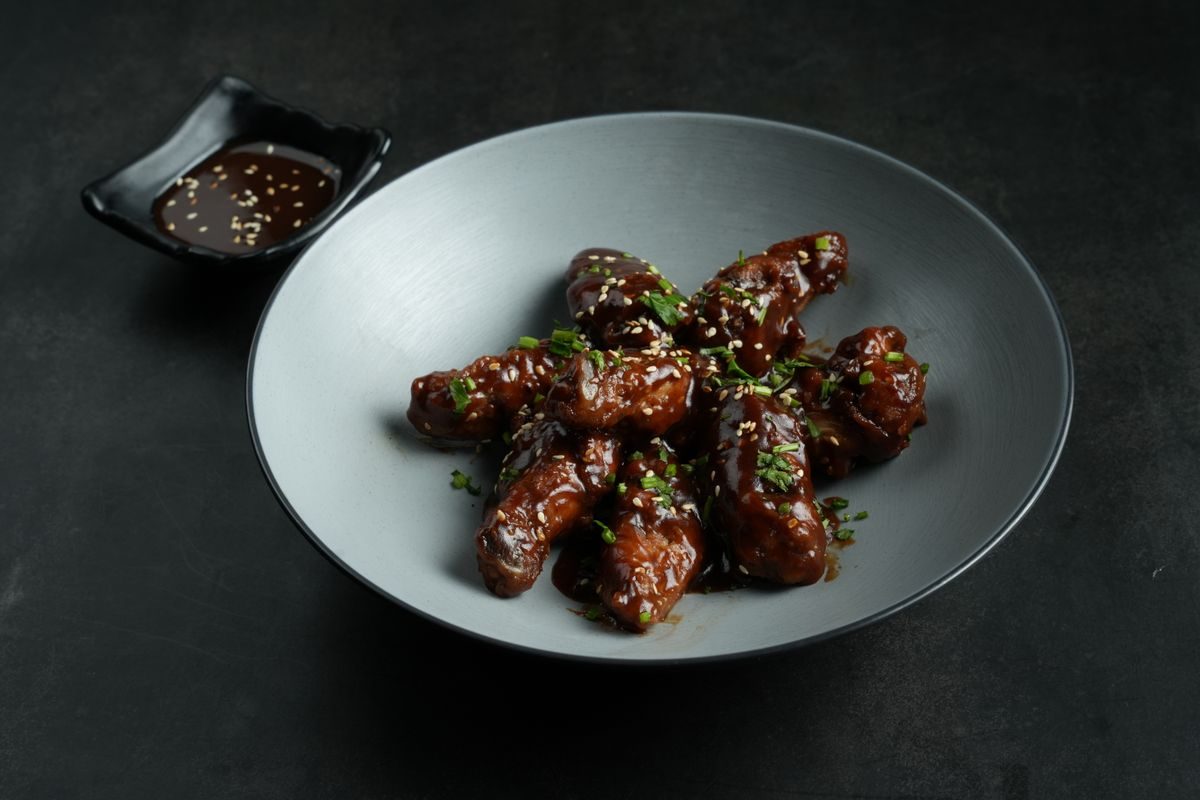
    This recipe is taken directly from Hyosun Ro at Korean Bapsang — the Korean-Flavored Baked Chicken Wings recipe published on koreanbapsang.com, using her “spicy” gochujang marinade. Korean Bapsang bakes the wings by default but also gives grill instructions, which is the version this article follows. It’s a different Korean grilling tradition entirely from the site’s existing galbi article: galbi is marinated beef short ribs, while this is chicken wings built around a fermented chili paste marinade rather than a soy-based one.

    What Gochujang Actually Is

    Before the marinade, it’s worth knowing what the central ingredient is. Ro’s own explainer on making gochujang from scratch describes it as Korean fermented chili pepper paste, one of three fundamental fermented pastes in Korean cooking — alongside ganjang (soy sauce) and doenjang (fermented soybean paste) — collectively called jang. The traditional homemade version is built from finely ground gochugaru (chili powder), yeotgireum (barley malt), chapssal (sweet rice), and mejugaru (fermented soybean powder), then aged outdoors in earthenware onggi pots, typically made in the colder months from October to March. Ro also notes that gochujang isn’t meant to be eaten straight out of the container; it’s a base ingredient used to season other dishes, which is exactly the role it plays in this wings marinade. The recipe below uses store-bought gochujang rather than a homemade batch.

    Ingredients

    For the wings and spicy marinade

    • 24 wing pieces (about 3 pounds)
    • 4 tablespoons gochujang (Korean red chili pepper paste)
    • 4 tablespoons barbecue sauce, any type
    • 2 tablespoons soy sauce
    • 2 tablespoons rice wine or mirin (or white wine)
    • 1 tablespoon sesame oil
    • 1 tablespoon honey
    • 1 tablespoon minced garlic
    • 1 teaspoon finely grated ginger
    • ¼ teaspoon ground pepper

    Ro’s recipe serves 4, with a 10-minute prep time, a 2-to-4-hour marinating window (overnight for best results), and about 30 minutes of cooking.

    Method

    1. Rinse the wings and drain. Whisk together the gochujang, barbecue sauce, soy sauce, rice wine, sesame oil, honey, garlic, ginger, and pepper.
    2. Coat the wings thoroughly in the marinade. Cover and refrigerate 2 to 4 hours, or overnight for the best flavor. Let the wings sit at room temperature for 30 minutes before cooking.
    3. Oven method: Preheat the oven to 425°F (218°C). Line a baking sheet with foil, arrange the wings in a single layer, and bake 20 to 25 minutes until the skin is crisp and golden, flipping halfway through and basting with the reserved marinade.
    4. Gentler oven alternative: Ro also gives a lower, slower version for ovens that scorch the sauce too fast: bake at 400°F (204°C) for 15 minutes, flip, bake another 15 minutes, then raise the oven to 425°F (218°C) and finish for 10 more minutes.
    5. Grill method: Ro’s notes state the wings can also be grilled “on a gas or charcoal grill over moderate heat for 15 to 20 minutes, turning frequently,” basting with the reserved marinade as they cook the way the oven version does.

    Reading the Marinade

    The gochujang and barbecue sauce form the backbone here, with soy sauce and rice wine thinning the marinade enough to coat the wings evenly, honey and the sugars in the barbecue sauce driving the char and glaze, and garlic, ginger, and sesame oil rounding out the aromatics. That combination is why Ro flags scorching as the main risk in the oven: a marinade built on sugar-heavy gochujang and barbecue sauce will catch before the chicken is fully cooked if the heat runs too hot for too long, which is the reason her recipe offers the stepped-down 400°F option as well as the standard 425°F bake. The same logic carries over to the grill, where moderate rather than high heat and frequent turning serve the same purpose: enough time for the marinade to set into a glaze without burning before the wings finish cooking through.

    Cooking Wings Safely

    Wings are thin, uneven cuts, so it’s easy to misjudge doneness by color alone, especially under a dark gochujang glaze. The USDA Food Safety and Inspection Service’s safe temperature chart sets the minimum safe internal temperature for all poultry, wings included, at 165°F (73.9°C), checked with a food thermometer rather than by how crisp or charred the skin looks. Because a sticky glaze can make wings look done before they are, it’s worth checking a thicker piece near the joint before pulling the batch off the heat.

    Keep reading

    Sources

  • Grilled Buffalo Chicken Wings: Weber’s Recipe and Origin

    Grilled Buffalo Chicken Wings: Weber’s Recipe and Origin

    This recipe is taken directly from Weber’s official recipe library — the Grilled Buffalo Chicken Wings recipe published on weber.com. It’s a grate-first take on the classic hot sauce-and-butter wing, built around a spiced rub and a finishing toss rather than a deep fryer, and it’s a different animal from the site’s existing sweet-and-spicy sriracha-honey wings: this one follows the original Buffalo hot sauce and butter combination rather than a sriracha-based glaze.

    Ingredients

    For the rub

    • ¼ cup light brown sugar
    • 2 teaspoons kosher salt
    • 2 teaspoons chili powder
    • 2 teaspoons sweet paprika
    • 2 teaspoons mustard powder
    • 1 teaspoon ground black pepper
    • 1 teaspoon garlic powder
    • ½ teaspoon onion powder
    • ½ teaspoon ground cumin
    • ¼ teaspoon ground celery seed
    • ¼ teaspoon cayenne pepper

    For the wings

    • 3 pounds chicken wings, drums and flats (about 18 pieces)
    • 1 tablespoon olive oil
    • ½ cup hot sauce of your choice
    • 1 teaspoon Worcestershire sauce
    • 3 tablespoons cold unsalted butter, cut into small cubes

    Weber’s version serves 4, with a 10-minute prep time and 20 minutes on the grill.

    Method

    1. Prepare the grill for direct medium-high heat, 450-500°F (about 232-260°C), or a flat 475°F (about 246°C). Preheat 15 minutes and brush the grates clean.
    2. Mix the rub ingredients in a small bowl. In a large bowl, coat the wings in the oil, then toss with 3 tablespoons of the rub (the rest keeps for another batch).
    3. Grill the wings, lid closed, until browned and crisp, about 18 minutes, flipping halfway through.
    4. While the wings cook, mix the hot sauce, Worcestershire sauce, and 1 teaspoon of the leftover rub in a small bowl. Put the butter cubes in a large mixing bowl.
    5. Brush the wings with some of the sauce on both sides, close the lid, and grill 1-2 minutes more, just until the sauce sets. Pour the remaining sauce (about ¼ cup) into the bowl with the butter.
    6. Move the wings into the bowl with the butter and sauce and let them sit 5 minutes before tossing.
    7. Toss the wings in the melted butter and sauce, then transfer to a platter and scrape out the bowl over the top.

    Weber’s own recipe tip explains the 5-minute rest: it lets steam escape the wings so the sauce clings better, and it gives the butter time to melt slowly into a thicker, richer coating instead of separating into a thin, greasy sauce.

    Where the Recipe Actually Comes From

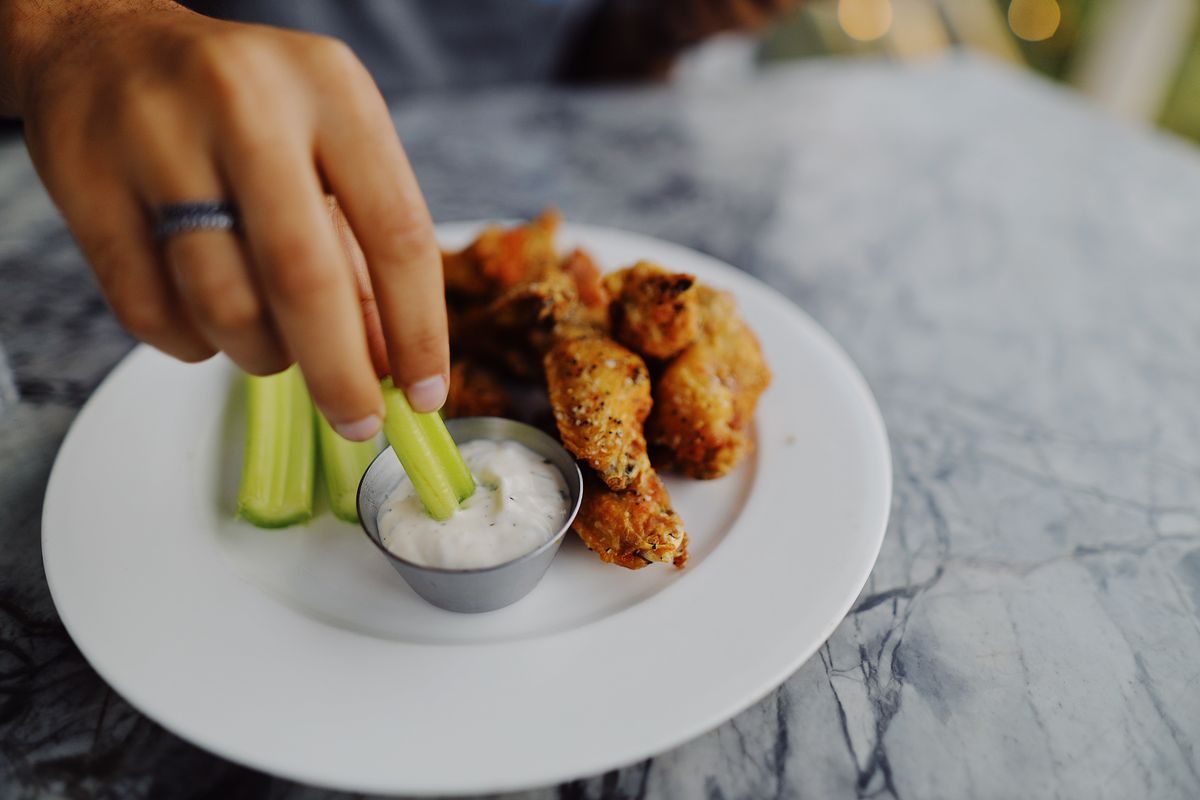
    Buffalo wings trace to a specific bar on a specific night. According to the National Chicken Council’s chicken wing history, “the concept of cooking wings in peppery hot sauce was born in 1964 at the Anchor Bar in Buffalo, New York, when co-owner Teressa Bellissimo cooked leftover wings in hot sauce as a late-night snack for her son and his friends.” The guys liked them enough that the Anchor Bar put the dish on the menu the next day, served with celery and bleu cheese sauce, and it was an immediate hit under the name that stuck: Buffalo wings.

    The same source traces the dish’s spread beyond Buffalo to Dick Winger, who supplied the Anchor Bar’s hot sauce and went on the road with the Bellissimos’ son Dominic to promote the item to other bar and restaurant owners. From there it moved gradually into national chains — McDonald’s added Mighty Wings in 1990, KFC followed with Hot Wings in 1991, and Domino’s introduced its own wings in 1994 — which is how a late-night bar snack in one upstate New York city became a fixture on menus everywhere.

    Grilled, Not Fried

    The Anchor Bar’s original method was deep-frying, which is still how most Buffalo wings are made. Weber’s grilled version swaps the fryer for direct heat and a spice rub underneath the sauce, which changes the texture (crisp from the grill rather than crisp from the oil) but keeps the two defining elements: a vinegar-forward hot sauce and butter finish, tossed on at the end rather than baked in. That’s also what separates it from the site’s existing sriracha-honey wings, which lean on a sweet chile glaze rather than the classic hot sauce-and-butter combination described above.

    As with any chicken wings, doneness is a temperature question rather than a time one. Weber’s instructions call for cooking until the wings are browned and crisp, and the USDA Food Safety and Inspection Service’s safe temperature chart lists 165°F (73.9°C) as the minimum safe internal temperature for all poultry, wings included. Because wings are thin and cook fast, it’s worth checking a couple of pieces near the joint with an instant-read thermometer rather than judging by grill marks alone.

    Keep reading

    Sources

  • Grilled Chicken Drumsticks: Weber’s Two Methods

    Grilled Chicken Drumsticks: Weber’s Two Methods

    This recipe is taken directly from Weber’s official recipe library — the Grilled Chicken Drumsticks recipe published on weber.com. It’s about as bare-bones as grilled chicken gets: four ingredients and one seasoning step. Weber’s site also publishes a second, much slower drumstick recipe worth knowing about, one that changes the shape of the cut entirely, so this article walks through both.

    Ingredients: The Quick-Grilled Version

    • 8 chicken drumsticks
    • 1 tablespoon vegetable oil
    • 2 teaspoons kosher salt
    • 1 teaspoon black pepper

    That’s the full list. Weber lists this as serving 4, with a 5-minute prep time and about 20 minutes on the grate.

    Method

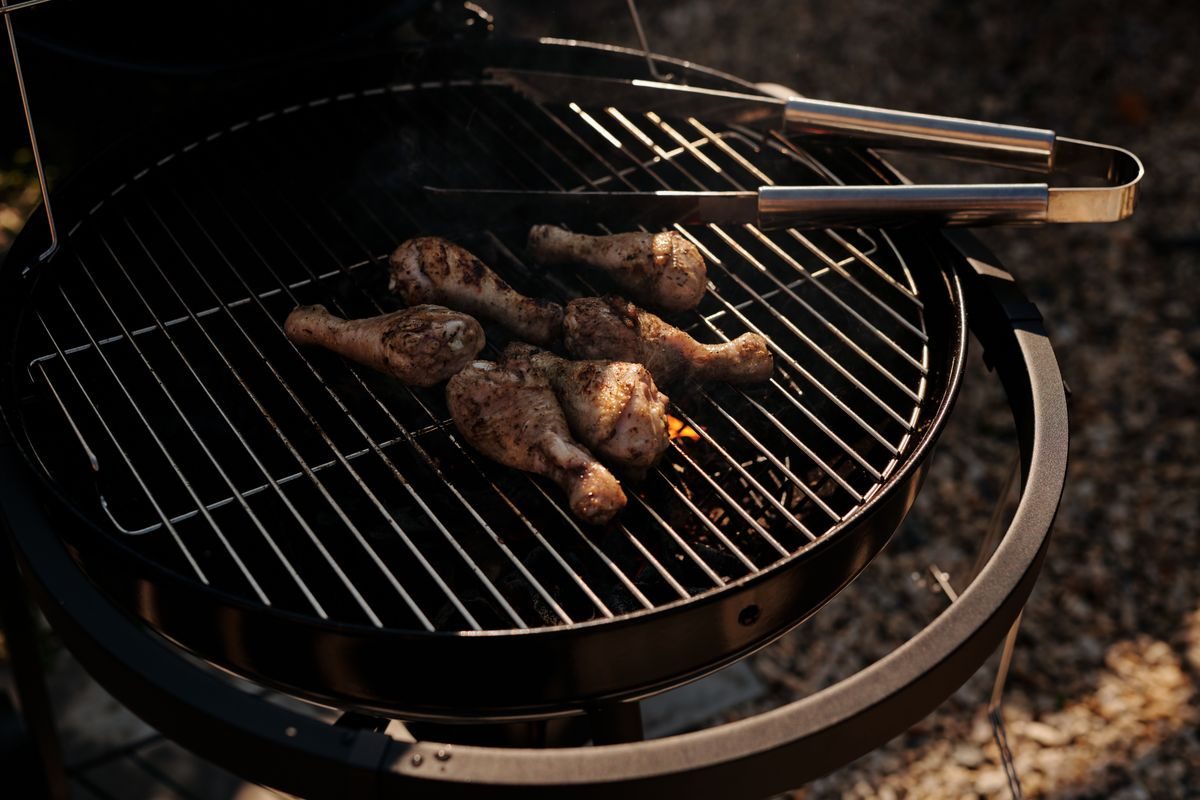
    1. Prepare the grill for direct heat: 450-500°F (about 232-260°C) for gas, 400-450°F (about 204-232°C) for charcoal, or a flat 475°F (about 246°C) if your setup doesn’t distinguish between the two. Preheat 15 minutes and brush the grates clean.
    2. Rub the drumsticks with the oil, then season all over with the salt and pepper.
    3. Place the drumsticks on the grill, lid closed, and cook 8-10 minutes. Flip and continue cooking until the internal temperature reaches 165°F (74°C), another 8-10 minutes.
    4. Let the drumsticks rest 5 minutes before serving.

    Total grilling time lands around 20 minutes, and Weber’s instructions are explicit that doneness is judged by an instant-read thermometer in the thickest part of the meat, not by the clock.

    A Second Method: Turning Drumsticks Into “Lollipops”

    Weber also publishes a slower Chicken Drumsticks with Barbecue Sauce recipe built around a butchering technique rather than a quick sear. The instructions call for holding each drumstick by the bone and using a small, sharp knife to cut around the bony end through the skin, meat, and sinew, then pulling or cutting that material away from the base along with the joint, and pushing the remaining meat up toward the top of the bone. The result is a drumstick shaped like a lollipop, with a clean bone handle and a rounded knob of meat at the top.

    The 16 trimmed lollipops are rolled in a dry rub — sweet paprika, 1 tablespoon fine sea salt, 1 tablespoon brown sugar, 1 teaspoon dried oregano, 1 teaspoon black pepper, 1 teaspoon chili powder, 1½ teaspoons granulated garlic, and 1½ teaspoons granulated onion — then set meat-side up on a rack or threaded onto metal skewers. Instead of Article 1’s direct high heat, this version grills over indirect medium-low heat, 325-375°F (about 163-191°C) on charcoal or a steady 300°F (about 149°C), lid closed, in four 15-minute rounds, with a brush of ¾ cup barbecue sauce added at each round. Weber puts the total grilling time at roughly an hour, checked the same way as the quick version: an instant-read thermometer in the thickest part of the chicken, not touching the bone, reading 165°F (74°C).

    Why the Same Cut Gets Two Very Different Grill Times

    Both of Weber’s drumstick recipes finish at the identical internal temperature, but they get there on opposite ends of the clock, about 20 minutes for the direct-heat version against roughly an hour for the lollipop version. The difference comes down to heat placement and repeated basting rather than the meat itself. Direct heat over 450-500°F sears the skin quickly and cooks a bone-in drumstick through in well under half an hour, which is the faster route when you just want dinner on the table. Indirect medium-low heat trades that speed for control: because the meat never sits directly over the flame, there’s room to brush on barbecue sauce four separate times without it scorching or breaking down into a bitter char, which is the point of the slower method in the first place.

    Neither recipe treats the clock as the real signal for doneness. Both call for pulling the drumsticks once an instant-read or probe thermometer confirms 165°F (74°C) in the thickest part of the meat, which matches the USDA Food Safety and Inspection Service’s minimum internal temperature for all poultry, including legs, thighs, wings, and whole birds. That figure is listed on FSIS’s own safe temperature chart as 165°F (73.9°C), and it’s worth checking with the bone-in cuts specifically: keep the probe away from the bone itself, since bone conducts heat differently than muscle and can give a falsely high reading.

    Which Version to Use

    The direct-heat recipe is the one to reach for on a weeknight: four ingredients, one bowl, twenty minutes at the grate. The lollipop version takes real knife work up front and roughly three times the grill time, but it turns a basic drumstick into something closer to a handheld appetizer, with a caramelized barbecue-sauce crust built up over four separate bastings instead of one quick sear. Both are Weber recipes cooked to the same safe endpoint, so the choice really is about how much time and knife work you want to put in before the grill lid closes.

    Keep reading

    Sources

  • Grilled Quesadillas, Done the Simple Weber Way

    Grilled Quesadillas, Done the Simple Weber Way

    This method is built on Grilled Chicken Quesadillas, published on weber.com’s Tips & Techniques blog, with grill-temperature detail cross-checked against Weber’s separately published Chorizo Quesadillas recipe. Both are official Weber content, and between them they cover the two things that actually go wrong with a grilled quesadilla: too much heat, and too much filling.

    A quesadilla is one of the simplest things you can put on a grill – two tortillas, cheese, and whatever filling you’ve got – which also makes it a forgiving one for cooking with kids at the table, since there’s no marinade timing or thermometer check involved once the chicken itself is cooked. The same folded-tortilla approach works just as well over a campfire grate with a cast-iron skillet or griddle in place of a backyard grill; the heat management below is what matters, not which fire it’s sitting over. It’s also an easy way to use up chicken that’s already been cooked for another meal, since neither Weber method calls for cooking raw meat on the grill itself – the filling just needs to be warm before the quesadilla goes together.

    Keep the Filling Light

    Weber’s chicken quesadilla method calls for just three components – tortillas, cheese, and precooked chicken – and is explicit that more cheese than chicken works better, since a thin, even layer melts and covers the tortilla fully rather than leaving gaps. Flour tortillas are the default, though the guide notes corn is a fine substitute. The practical reason to keep fillings sparse is speed: a thinly filled quesadilla heats through and melts evenly in the time it takes the tortilla to crisp, while a thickly stuffed one risks a burnt outside before the center is even warm.

    Heat It Lower Than You’d Think

    Both Weber recipes agree that quesadillas want gentler heat than most other grilled food. The chicken quesadilla guide calls for preheating the grill on high for about 10 minutes, then scraping the grates clean and checking that the actual cooking temperature has dropped to no higher than 300°F (about 150°C, our conversion) before the quesadilla goes on. Weber’s Chorizo Quesadillas recipe, which uses the same folded-tortilla technique with a different filling, calls for a similar direct low heat in the 250°F to 350°F range. The guide sums up the logic simply: it’s better to go low and slow than “fast and burnt,” since the tortilla needs enough time on the grate for the cheese inside to fully melt before the outside scorches.

    Getting It On and Off the Grate

    Because a filled quesadilla is loose until the cheese sets, sliding it onto the grate is the part most likely to go wrong. Weber’s guide suggests lifting the grill lid, bringing the assembled quesadilla in on a plate close to the grate, then tilting the plate so a spatula can guide it into place without the filling spilling out. Grill about 2 minutes per side, and if the cheese isn’t fully melted by then, an extra minute over low, indirect heat finishes the job without adding more char to the tortilla.

    Resting and Cutting

    Once off the grill, Weber’s guide calls for letting the quesadilla cool for about 2 minutes before cutting it into halves or quarters. That short rest matters more than it sounds like it should: melted cheese straight off the heat is loose enough to run out when you cut into it, and a couple of minutes lets it firm back up so the wedges hold together on the plate.

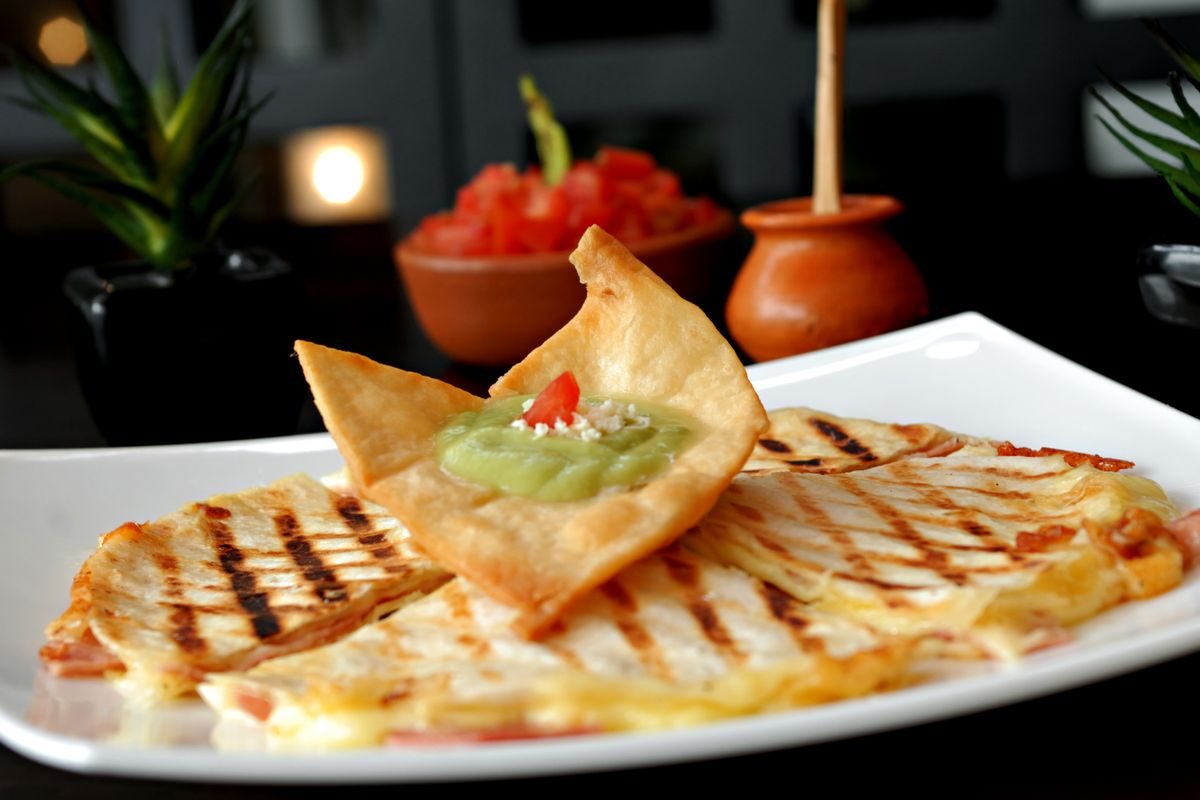
    Served with a small bowl of salsa, sour cream, or guacamole on the side rather than folded inside, this version keeps the core ingredients mild enough for most kids while still giving adults something to dress theirs up with at the table. Because the recipe itself is just tortillas, cheese, and one cooked filling, it’s an easy one to repeat with different fillings through the week without changing the grilling method at all.

    Keep reading

    Sources

  • Mild Grilled Chicken Skewers Kids Actually Like

    Mild Grilled Chicken Skewers Kids Actually Like

    This recipe is adapted from Weber’s official recipe library – the Grilled Lemon Pepper Chicken Skewers recipe published on weber.com by Weber grill expert Jason Pruitt. It’s built around a short list of mild ingredients – lemon, garlic, olive oil, and herbs – which makes it a reasonable starting point for a family table where not everyone wants heat or heavy spice on their chicken.

    Chicken skewers are an easy way to get white meat cooked evenly on a grill, since cutting the breast into bite-size pieces means everything finishes at roughly the same time instead of waiting on one thick cut. The marinade in Weber’s recipe is intentionally simple: as the recipe puts it, the flavors are “easy to love and hard to mess up,” which is really the whole appeal for a weeknight or family cookout.

    The Marinade, and Why Less Time Is Fine

    Weber’s marinade combines lemon juice, olive oil, lemon zest, chopped garlic, rosemary, thyme, and a small amount of soy sauce. The recipe is specific that this isn’t a long soak: because the marinade is acidic, it calls for refrigerating the chicken in a sealed bag for up to 1 hour, not longer. The recipe notes there’s enough flavor in the mix that the chicken doesn’t need much time in it at all to pick up the lemon and herb notes – useful if you’re assembling dinner after work rather than planning a day ahead.

    Threading and Grilling

    Cut boneless, skinless chicken breast into bite-size pieces, then thread it onto metal or bamboo skewers, leaving about an inch of bare skewer at each end so there’s room to hold and turn them. If you’re using bamboo, soak the skewers in water for at least 30 minutes first so they don’t scorch on the grill. Weber’s method calls for prepping the grill for direct medium-high heat, in the 450°F to 500°F range (roughly 230°C to 260°C, our conversion), and preheating for 15 minutes with the grates brushed clean. Brush the skewered chicken lightly with oil, season with salt and pepper, and grill until the chicken is cooked through and lightly charred – Weber lists this at 5 to 6 minutes per side.

    One Cool Zone Helps

    Pruitt’s recipe also suggests keeping part of the grill cooler than the rest, toward the front, so you have somewhere to move skewers that are browning faster than others are cooking through. Chicken pieces cut to different sizes, or skewers packed more tightly than others, won’t always finish at exactly the same rate, and having a lower-heat spot to shift them to avoids having to pull an underdone piece just because its neighbors are already charred.

    The Temperature That Actually Matters

    Char and marinade aside, the number that decides whether the chicken is done is internal temperature, not how long it’s been on the grill. USDA’s food safety guidance sets a single safe minimum for all poultry – breasts, thighs, wings, whole birds, and ground poultry alike – at 165°F (73.9°C), checked with a food thermometer in the thickest part of the piece. Because skewered chicken pieces are small and can look done on the outside well before the center catches up, it’s worth checking at least one piece per batch rather than judging purely by color or grill marks. Pulled and rested briefly, chicken that’s reached 165°F is reliably safe to eat regardless of how mild or fully cooked-through it looks.

    Served plain, with rice, or tucked into a pita, these skewers are close to a blank canvas – the lemon and herb base is mild enough that most kids who like grilled chicken at all will eat it without extra sauce, while adults can add hot sauce or a yogurt dip on the side without changing what’s on the skewer itself.

    Keep reading

    Sources

  • Grilled Cheese on the Griddle: King Arthur’s Method

    Grilled Cheese on the Griddle: King Arthur’s Method

    This method leans on King Arthur Baking’s “How to make your best grilled cheese yet”, a technique piece by staff writer Rossi Anastopoulo, along with the griddle-specific timing from King Arthur’s own Grilled Cheese with Apple and Arugula recipe. Both are published on kingarthurbaking.com, and together they cover the two things a griddle actually changes about grilled cheese: how evenly the bread toasts, and how you get the cheese to melt before the bread burns.

    A griddle or flat-top grill is arguably a better tool for grilled cheese than a skillet, simply because you can cook several sandwiches at once on one steady surface instead of working through a single pan in batches – handy if you’re feeding a family rather than one person. But steady heat cuts both ways – a griddle that’s too hot will toast the outside long before the inside is warm enough to melt the cheese, which is the main problem King Arthur’s tips are built to solve.

    Spread the Outside – and the Inside

    King Arthur’s baker PJ Hamel, quoted in the guide, makes the case for mayonnaise over butter on the exterior: mayo, she says, “spreads easily, covering every square centimeter of bread.” It also browns more evenly than butter and adds a slight tang. The less obvious tip is to butter or mayo the inside faces of the bread too, then toast both sides on the griddle before you add the cheese. That head start means the bread is already warm when the sandwich goes back together, so the cheese has less work left to do.

    Set the Heat Once, Not Twice

    For a griddle specifically, King Arthur’s own Grilled Cheese with Apple and Arugula recipe gives real numbers rather than a vague “medium heat”: heat an electric griddle to 350°F (about 175°C, our conversion), then toast the sandwiches for 5 minutes on each side. That recipe finishes the sandwiches in a 350°F oven for another 5 minutes so the center fully melts, which is one solution to slow melting – but the more practical griddle-only fix, per the technique guide, is covering the sandwiches with a lid or dome while they cook. Trapped heat melts the cheese faster than the griddle surface alone, so you’re not stuck choosing between a burnt crust and a cold center.

    Slow Down

    The guide’s last tip is really about patience: keep the heat low enough that the bread colors gradually, since a hot griddle can look “done” from the outside well before the cheese inside has caught up. Checking one sandwich by lifting a corner with a spatula is a better test than judging by time alone, especially the first time you’re using a given griddle’s actual surface temperature.

    Bread and Cheese Choices That Actually Matter

    King Arthur’s tips also flag two ingredient choices worth making deliberately rather than grabbing whatever’s on hand. First, a sturdier sandwich loaf with straight sides cuts into even, symmetrical pieces, which matters more than it sounds like it should when you’re serving a group. Second, a cheese that’s already flecked through the bread – their guide points to a cheddar-studded loaf as an example – effectively doubles the meltiness without doubling the filling. Neither is required for a good griddle grilled cheese, but both push a basic version toward a better one.

    Putting It Together on the Griddle

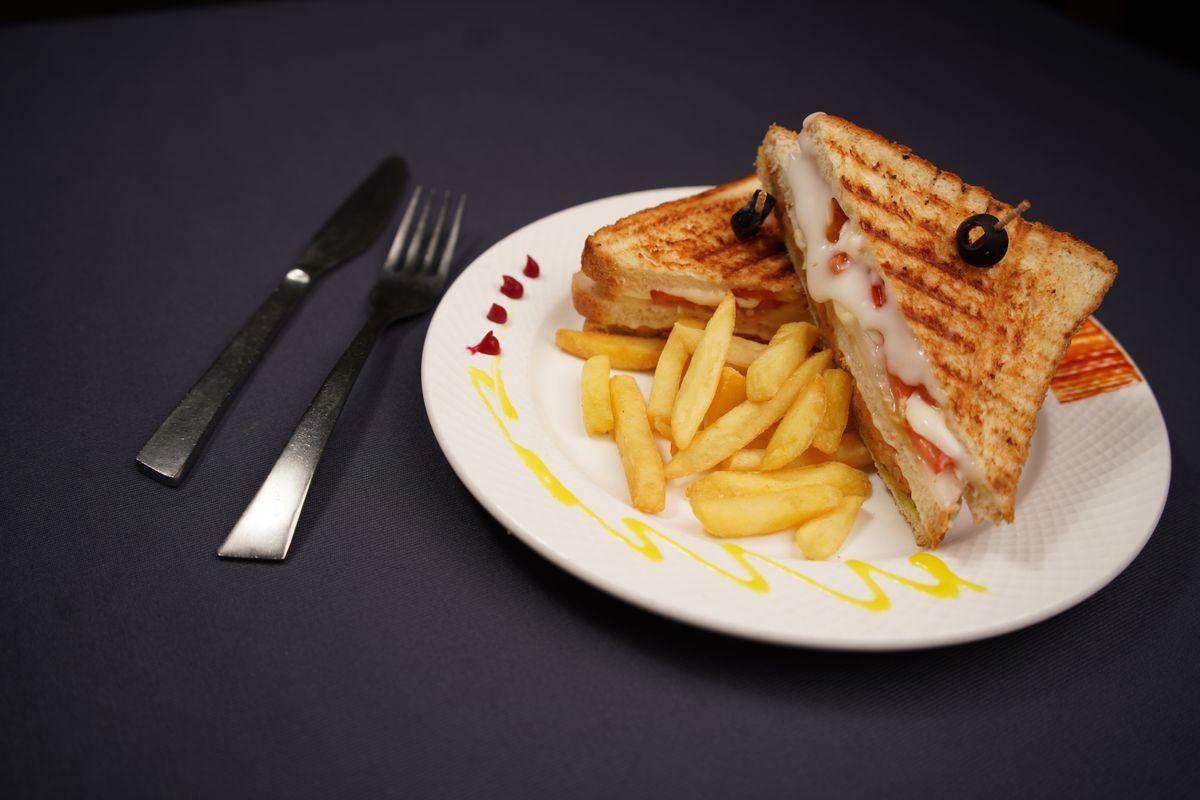
    In practice: butter or mayo both sides of each bread slice, toast them plain on a 350°F griddle to get a head start, layer in the cheese, close the sandwich, and finish under a lid until the cheese is fully melted rather than just the surface. Slice on the diagonal and serve warm – the arugula recipe notes this is when the sandwich’s contrast between crisp exterior and soft, melted interior is at its best. None of this requires special equipment beyond a spatula and something to cover the sandwiches with, which makes it an easy one to repeat on a griddle you already use for pancakes or burgers.

    Keep reading

    Sources