
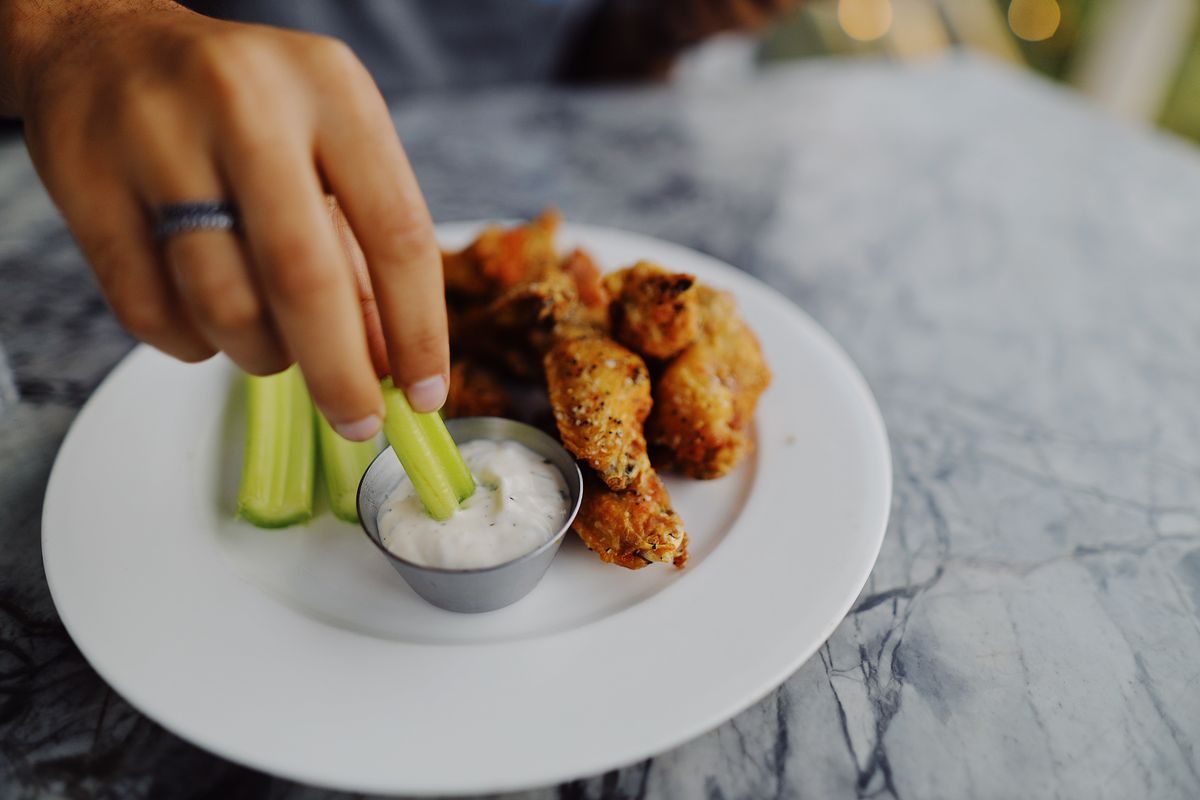
This recipe is taken directly from Weber’s official recipe library — the Grilled Buffalo Chicken Wings recipe published on weber.com. It’s a grate-first take on the classic hot sauce-and-butter wing, built around a spiced rub and a finishing toss rather than a deep fryer, and it’s a different animal from the site’s existing sweet-and-spicy sriracha-honey wings: this one follows the original Buffalo hot sauce and butter combination rather than a sriracha-based glaze.
Ingredients
For the rub
- ¼ cup light brown sugar
- 2 teaspoons kosher salt
- 2 teaspoons chili powder
- 2 teaspoons sweet paprika
- 2 teaspoons mustard powder
- 1 teaspoon ground black pepper
- 1 teaspoon garlic powder
- ½ teaspoon onion powder
- ½ teaspoon ground cumin
- ¼ teaspoon ground celery seed
- ¼ teaspoon cayenne pepper
For the wings
- 3 pounds chicken wings, drums and flats (about 18 pieces)
- 1 tablespoon olive oil
- ½ cup hot sauce of your choice
- 1 teaspoon Worcestershire sauce
- 3 tablespoons cold unsalted butter, cut into small cubes
Weber’s version serves 4, with a 10-minute prep time and 20 minutes on the grill.
Method
- Prepare the grill for direct medium-high heat, 450-500°F (about 232-260°C), or a flat 475°F (about 246°C). Preheat 15 minutes and brush the grates clean.
- Mix the rub ingredients in a small bowl. In a large bowl, coat the wings in the oil, then toss with 3 tablespoons of the rub (the rest keeps for another batch).
- Grill the wings, lid closed, until browned and crisp, about 18 minutes, flipping halfway through.
- While the wings cook, mix the hot sauce, Worcestershire sauce, and 1 teaspoon of the leftover rub in a small bowl. Put the butter cubes in a large mixing bowl.
- Brush the wings with some of the sauce on both sides, close the lid, and grill 1-2 minutes more, just until the sauce sets. Pour the remaining sauce (about ¼ cup) into the bowl with the butter.
- Move the wings into the bowl with the butter and sauce and let them sit 5 minutes before tossing.
- Toss the wings in the melted butter and sauce, then transfer to a platter and scrape out the bowl over the top.
Weber’s own recipe tip explains the 5-minute rest: it lets steam escape the wings so the sauce clings better, and it gives the butter time to melt slowly into a thicker, richer coating instead of separating into a thin, greasy sauce.
Where the Recipe Actually Comes From
Buffalo wings trace to a specific bar on a specific night. According to the National Chicken Council’s chicken wing history, “the concept of cooking wings in peppery hot sauce was born in 1964 at the Anchor Bar in Buffalo, New York, when co-owner Teressa Bellissimo cooked leftover wings in hot sauce as a late-night snack for her son and his friends.” The guys liked them enough that the Anchor Bar put the dish on the menu the next day, served with celery and bleu cheese sauce, and it was an immediate hit under the name that stuck: Buffalo wings.
The same source traces the dish’s spread beyond Buffalo to Dick Winger, who supplied the Anchor Bar’s hot sauce and went on the road with the Bellissimos’ son Dominic to promote the item to other bar and restaurant owners. From there it moved gradually into national chains — McDonald’s added Mighty Wings in 1990, KFC followed with Hot Wings in 1991, and Domino’s introduced its own wings in 1994 — which is how a late-night bar snack in one upstate New York city became a fixture on menus everywhere.
Grilled, Not Fried
The Anchor Bar’s original method was deep-frying, which is still how most Buffalo wings are made. Weber’s grilled version swaps the fryer for direct heat and a spice rub underneath the sauce, which changes the texture (crisp from the grill rather than crisp from the oil) but keeps the two defining elements: a vinegar-forward hot sauce and butter finish, tossed on at the end rather than baked in. That’s also what separates it from the site’s existing sriracha-honey wings, which lean on a sweet chile glaze rather than the classic hot sauce-and-butter combination described above.
As with any chicken wings, doneness is a temperature question rather than a time one. Weber’s instructions call for cooking until the wings are browned and crisp, and the USDA Food Safety and Inspection Service’s safe temperature chart lists 165°F (73.9°C) as the minimum safe internal temperature for all poultry, wings included. Because wings are thin and cook fast, it’s worth checking a couple of pieces near the joint with an instant-read thermometer rather than judging by grill marks alone.
Keep reading
- Weber’s Sweet and Spicy Chicken Wings (Sriracha-Honey)
- Grilled Chicken Drumsticks: Weber’s Two Methods
- Korean Gochujang Grilled Chicken Wings (Korean Bapsang)
- Crispy Smoked Chicken Wings: Hey Grill Hey’s Method