
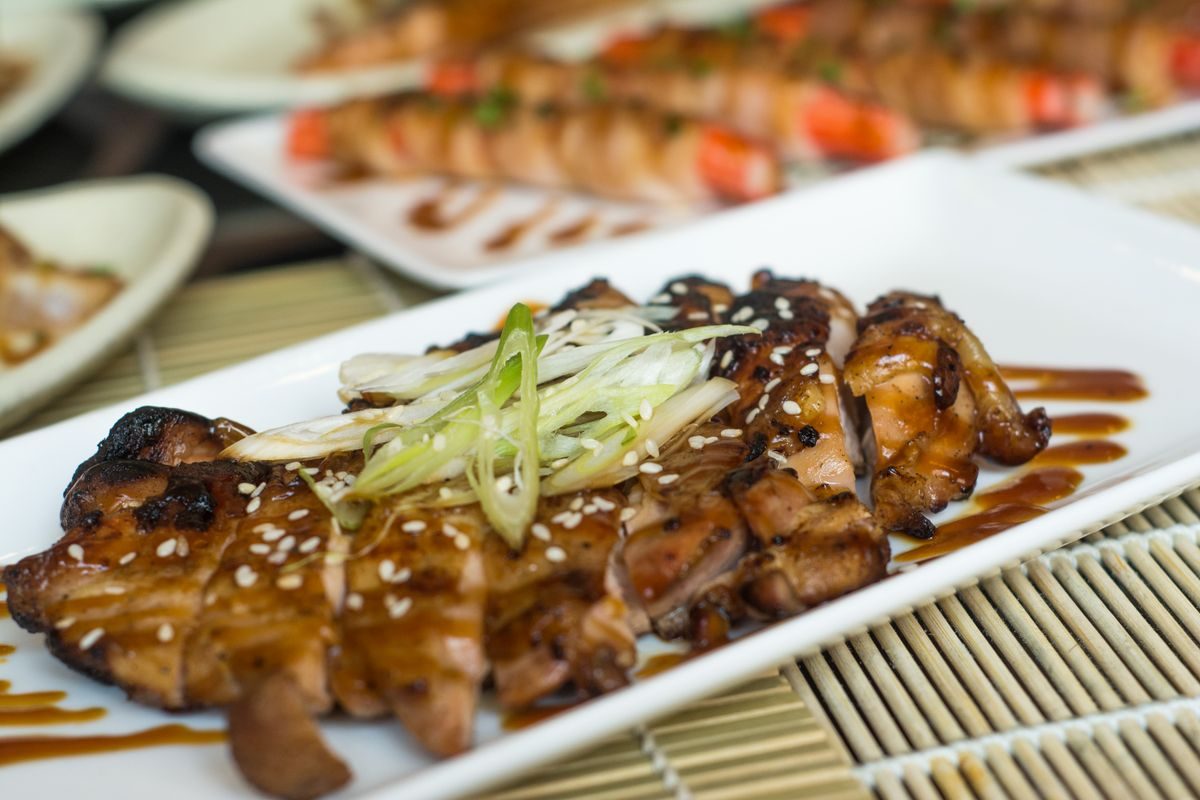
This recipe is taken directly from Just One Cookbook, the Japanese-cuisine site run by Namiko Hirasawa Chen — the Teriyaki Sauce recipe published on justonecookbook.com. Nami’s version sticks to the four ingredients Japanese home cooks actually use, which makes it a useful baseline before anyone reaches for a bottled, cornstarch-thickened version instead.
Ingredients
- 1/2 cup sake
- 1/2 cup mirin
- 1/2 cup soy sauce (Japanese soy sauce; a gluten-free soy sauce can be substituted)
- 1/4 cup sugar
That’s a 2:2:2:1 ratio of soy sauce to sake to mirin to sugar — the classic starting point in Japanese cooking, which Nami says can be adjusted sweeter, saltier or lighter depending on what it’s going on.
Substitutions from the source recipe
- No mirin: 1/4 cup sake + 1/4 cup water + 3 tablespoons sugar
- No sake, with alcohol: 1/2 cup dry sherry or Chinese rice wine
- No sake, without alcohol: 1/2 cup water
Method
- Combine the sake, mirin, soy sauce and sugar in a medium saucepan.
- Bring the mixture to a boil over medium heat, whisking continuously until the sugar is fully dissolved.
- Lower the heat to medium-low and simmer for 10-15 minutes, until the sauce thickens. It’s ready when small bubbles rise and appear on the surface as you tilt the pan.
- Remove from the heat. The sauce keeps thickening as it cools, so don’t leave it on the stove longer than 10-15 minutes chasing a thicker result.
Why Each Ingredient Matters
Nami is specific about the role each of the four ingredients plays, and about not swapping in look-alikes. Soy sauce should be Japanese soy sauce specifically — she notes it has a different flavor profile from Chinese, Thai or Korean soy sauce, so the substitution isn’t neutral. Sake, the rice wine, is there mainly for the fermented depth it adds rather than as a flavor on its own; she notes it’s available at Japanese and many Asian grocery stores, or at any major liquor store, so it’s not a specialty item. Mirin, a Japanese sweet rice wine, is what gives the sauce both its delicate sweetness and the glossy shine (“teri”) that gives teriyaki its name — she calls it an essential ingredient in Japanese cooking generally, not just this sauce. Sugar’s job is narrower: it balances the saltiness of the soy sauce and adds straightforward sweetness on top of what the mirin already contributes.
What Makes It Authentic
Nami is specific about what does and doesn’t belong in a Japanese teriyaki sauce. The four ingredients above are it — she advises against rice vinegar, brown sugar, sesame oil, apple cider vinegar or sesame seeds, all of which show up in Americanized versions but aren’t part of the traditional flavor profile. The thickening comes entirely from reduction: simmering the liquid down concentrates the sugar until it turns glossy, rather than relying on a cornstarch slurry. She also notes that authentic Japanese teriyaki sauce is meant to run thinner than the thick, syrupy bottled sauces most people are used to.
One optional finishing touch from the same source: stirring in a tablespoon of butter right before taking the pan off the heat, which softens the sauce’s edge and adds richness. Nami uses this trick in her teriyaki salmon recipe specifically.
Using the Sauce on the Grill
Because the sauce is already reduced and thickened before it ever touches a protein, the source recipe treats it as a finishing glaze rather than something to marinate raw meat in for hours: brush it onto already-cooked chicken, salmon, tofu, beef or meatballs and there’s no need to simmer it again. For a grill application, that means searing or grilling the protein first, then brushing on the teriyaki sauce during the last few minutes so it sets into a glaze rather than burning over direct heat, since the sugar content will scorch quickly if it’s on the grate too long. A tablespoon or more is enough to coat most cuts.
A Short History
According to Just One Cookbook, teriyaki sauce originated in Japan as part of a cooking method dating back to the 1600s. The name itself describes the technique: a glossy (“teri”) grilled or broiled (“yaki”) finish. Nami draws a clear line between the Japanese original — thin, lightly sweet, reduced by simmering — and the thicker, sweeter, starch-bound versions that became standard in American cooking as teriyaki spread internationally.
Storage
The source recipe doesn’t specify a fixed shelf life, but as a simmered, sugar-and-salt-heavy sauce it’s suited to being made ahead and kept refrigerated in a sealed container, then rewarmed gently or used cold as a finishing glaze.
About the Source
Just One Cookbook is run by Namiko Hirasawa Chen, who publishes recipes built around Japanese home cooking rather than restaurant-style dishes. This teriyaki sauce recipe is presented as a foundational seasoning on the site — the same base sauce is referenced across her other recipes, including a teriyaki salmon dish where she adds the optional butter finish described above, which is a useful signal that the ratio here is meant to be a starting template rather than a one-off.
Keep reading
- Yakitori with Homemade Tare: Just One Cookbook Method
- Yakiniku: Just One Cookbook’s Japanese BBQ Recipe
- Virginia Willis’ Georgia Peach BBQ Sauce
- Korean Gochujang Grilled Chicken Wings (Korean Bapsang)