
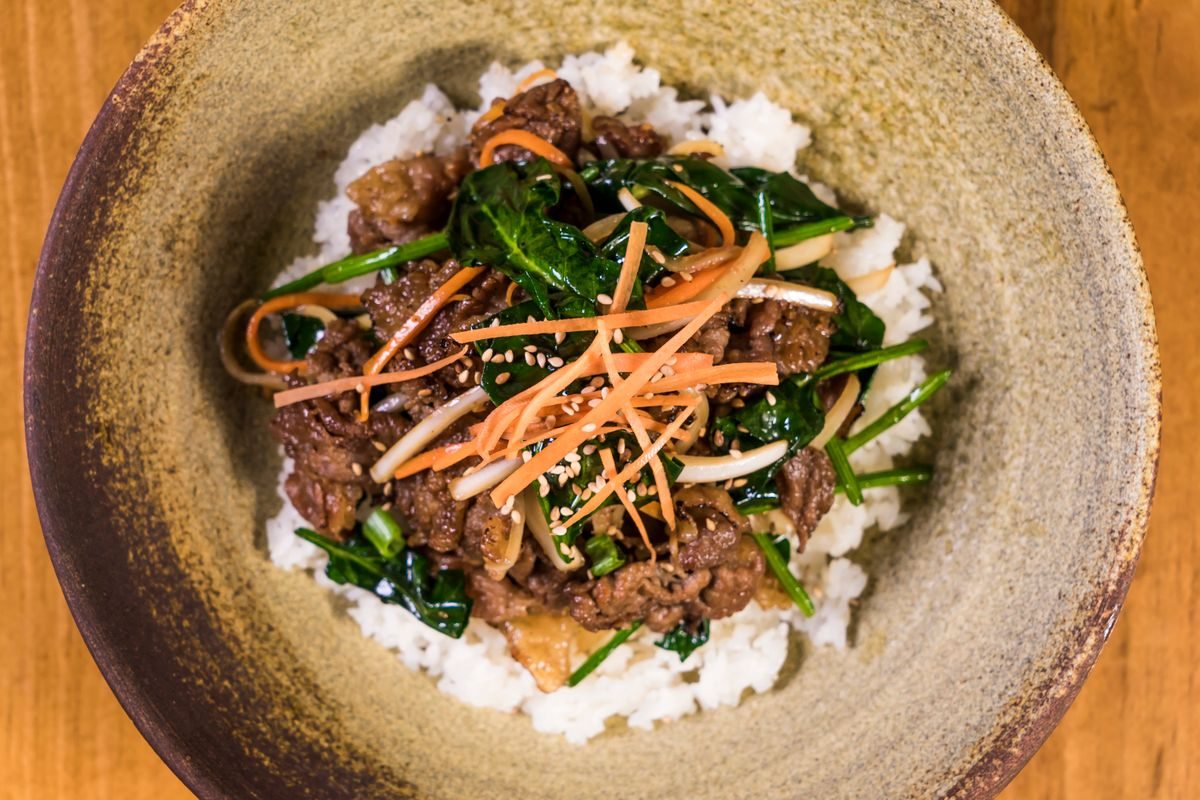
This recipe comes from Maangchi, the Korean cooking teacher and cookbook author whose YouTube channel and website have introduced millions of home cooks to Korean food. Her Bulgogi recipe on maangchi.com is her own refined version, developed after years of testing marinades, and it’s a good baseline before you start adjusting the recipe to your own taste.
What “Bulgogi” Means, and How It Differs From Galbi
Maangchi explains that the word breaks down as bul, meaning fire, and gogi, meaning meat — “fire meat.” It’s easy to mix bulgogi up with galbi (also spelled kalbi), the other marinated beef dish that regularly appears on Korean BBQ menus, but the two are built from different cuts. According to Food Republic, galbi literally translates to “rib” and is “typically made with bone-in beef short ribs,” cut thick enough to gnaw on, while bulgogi “is most commonly made with ribeye that’s thinly-sliced (so thin it’s almost shaved).” Maangchi’s own recipe follows that pattern: it calls for boneless steak, sliced thin, rather than a rib cut.
Choosing and Cutting the Beef
Maangchi recommends tenderloin, sirloin, or skirt steak for this recipe, and stresses that the cut matters as much as the marinade: “it’s very important to choose tender, marbled beef” because leaner cuts like brisket or flank steak “will turn out too tough.” The beef should be cut thinly against the grain — about ½ inch by 2 inches and ⅛ inch thick — which is easiest to do if the meat is partially frozen first so it holds its shape under the knife.
The Marinade
For 1 pound of beef, Maangchi’s marinade combines ½ cup of crushed Korean pear (or ripe Bosc pear as a substitute), ¼ cup onion purée, 4 cloves of minced garlic, 1 teaspoon minced ginger, 1 chopped green onion, 2 tablespoons soy sauce, 2 tablespoons brown sugar (or a mix of brown sugar and rice syrup), a pinch of black pepper, 1 tablespoon toasted sesame oil, and a few thin carrot slices. She notes the pear “adds some lovely sweetness to the dish and is effective in the marinade,” working alongside the sugar to tenderize the meat. Mix the marinade, add the sliced beef, and refrigerate for at least 30 minutes — Maangchi recommends overnight for a tougher cut.
A Meat-Free Version
Maangchi also gives a vegetarian option using the identical marinade: soak 10–12 dried shiitake mushrooms in warm water until soft, squeeze out the excess liquid, and slice them thinly along with some white mushrooms, carrot, and onion before marinating. She mentions bringing bulgogi mushrooms to a friend’s BBQ alongside the beef version, and that they “got a lot of compliments, too.”
Grilling and Serving
Maangchi’s preferred method is grilling over an open charcoal flame, because the fat and marinade that drip onto the coals burn and return to the meat as smoke — “you can’t beat charcoal for bulgogi,” in her words. A cast-iron grill pan or a hot skillet will also work if you don’t have a grill set up. Cook over medium-high heat until the beef is browned and cooked through; because the slices are so thin, this happens quickly, in a matter of minutes rather than the long cook times associated with thicker steaks. To serve, she suggests wrapping a piece of grilled bulgogi with rice and a little ssamjang in a lettuce leaf, alongside banchan like kimchi.
A Note on Safe Cooking Temperature
Bulgogi is made from whole cuts of beef rather than ground meat, so USDA guidance for steaks and roasts applies: the Food Safety and Inspection Service’s Safe Minimum Internal Temperature Chart lists beef, pork, veal, and lamb steaks, chops, and roasts at “145 °F (62.8 °C) and allow to rest for at least 3 minutes” (63°C). Because bulgogi is sliced so thin, a probe thermometer is impractical for each piece; use the same visual cue Maangchi describes — well-browned on both sides with no raw color remaining — and keep an instant-read thermometer nearby if you’re grilling a thicker piece before slicing.
Keep reading
- Yakiniku: Just One Cookbook’s Japanese BBQ Recipe
- Galbi: How Korean BBQ Turned Short Ribs Into a Grilling Tradition
- Xinjiang Cumin Lamb Skewers (Chuar) Recipe
- Moo Ping: Hot Thai Kitchen’s Grilled Pork Skewers