
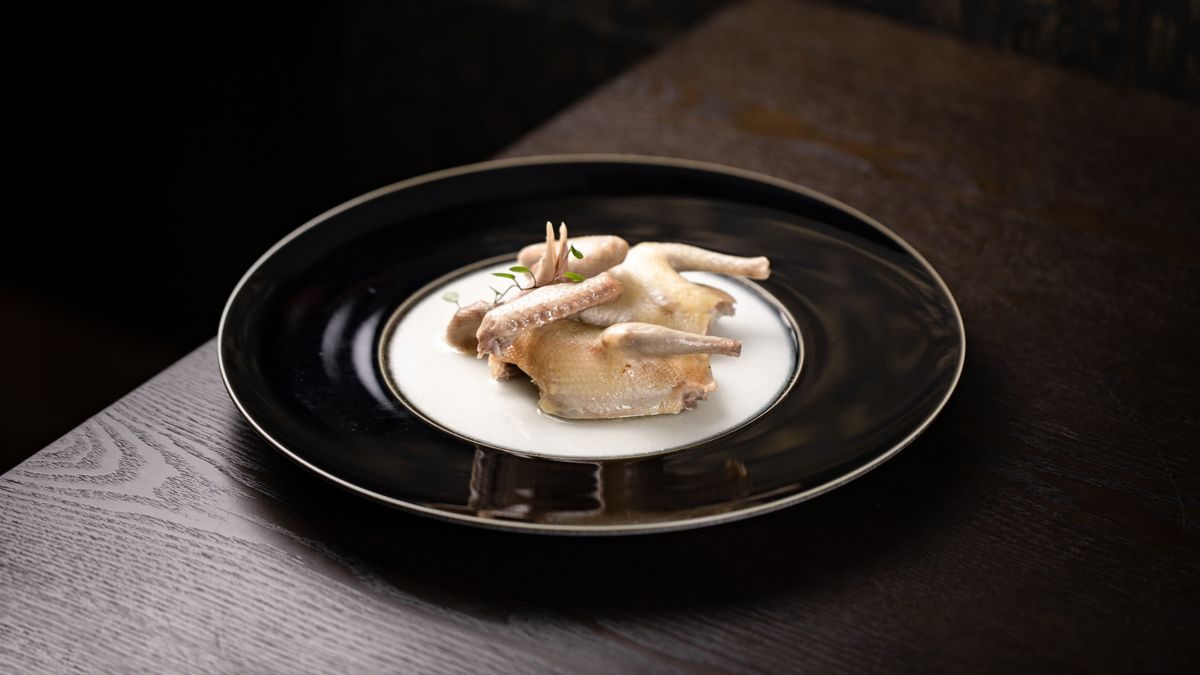
This recipe comes from “Cornish Game Hens with Garlic-Mint Butter,” by Jamie Purviance, published in Weber’s Real Grilling™ recipe library, with the doneness and food-safety notes cross-checked against USDA guidance on cooking poultry safely. Cornish game hens are small enough — 1¼ to 1½ pounds each — that a whole one makes a single serving, and they cook fast enough for a weeknight even though they’re grilled whole and indirect, the same way a full-size chicken would be.
The Garlic-Mint Butter
The compound butter is built the same way a good chicken rub is: aromatics crushed into a paste, then worked into softened butter. Roughly chop three garlic cloves, sprinkle a teaspoon of kosher salt over them, and use the flat side of a knife blade to crush the two together into a paste. Mix that paste into a stick of softened butter along with a tablespoon of finely chopped fresh mint, half a teaspoon of grated lime zest, two teaspoons of fresh lime juice, half a teaspoon of chili powder, and a quarter teaspoon of black pepper. The mint and lime keep it lighter than a typical herb butter, which matters on a bird this small — there’s less meat to carry a heavy rub.
Getting the Butter Under the Skin
Working from the cavity end of each hen, run your fingers between the skin and the flesh of the breast and legs to loosen the skin without tearing it — the same technique used for a whole roasted or spatchcocked chicken. Divide the butter mixture across the four hens and push half of each portion under the loosened skin, massaging from the outside so it spreads evenly over the breast and legs rather than sitting in one clump. Spread what’s left of the butter over the outside of each hen, then truss each bird with butcher’s twine so the legs stay close to the body and cook evenly.
Grill Setup and Cook Time
Set the grill for indirect cooking over high heat, 450° to 550°F — noticeably hotter than the indirect medium heat used for a full-size turkey, which makes sense given how much less mass there is to cook through. With the cooking grates brushed clean, grill the hens over that indirect high heat with the lid closed until the juices run clear and the meat is no longer pink at the bone, which the recipe puts at 45 to 55 minutes. Pull them off, cover loosely with foil, and let them rest 3 to 5 minutes before serving warm.
Where the Recipe’s Doneness Cue Falls Short
Weber’s recipe describes doneness the traditional way — clear juices, no pink at the bone — without giving an internal-temperature number. That’s worth flagging, because USDA guidance doesn’t treat color or juice clarity as a reliable safety check for poultry. USDA’s food safety guidance is direct on the underlying rule for all poultry — whole birds, parts, and ground alike: “the safe cooking temperature for all poultry products… stays the same at 165°F,” checked with a food thermometer rather than judged by eye. Unlike a beef roast, there’s no lower “carryover” temperature that applies to poultry; 165°F is the floor no matter how small the bird. On something as compact as a Cornish game hen, it’s easy to hit the recipe’s time window without actually reaching a safe core temperature, especially if the grill runs cooler than intended. The safer approach is to treat 45 to 55 minutes as a general guide and confirm doneness with an instant-read thermometer in the thickest part of the thigh, not touching bone, before pulling the hens off the grill.
Why Indirect Heat and Trussing Matter Here
Both the trussing and the indirect setup exist to solve the same problem a full-size chicken has, just at a smaller scale: an untied bird’s legs splay outward and cook faster than the compact breast, and direct flame under a whole bird chars the skin before the interior catches up. Trussing keeps the legs tucked against the body so the whole hen presents a more even shape to the heat, and the indirect zone lets hot air circulate around that shape rather than searing one side of it. Because a game hen is so much smaller than a chicken, that even-cooking margin for error is thinner — there’s less time for a misjudged fire to correct itself before the bird is either underdone near the bone or dried out at the breast.
Keep reading
- Weber’s Grilled Whole Turkey, Plus USDA Safe Steps
- Weber’s Official Beer Can Chicken Recipe, Step by Step
- Weber’s Sweet and Spicy Chicken Wings (Sriracha-Honey)
- Grilled Chicken Drumsticks: Weber’s Two Methods