
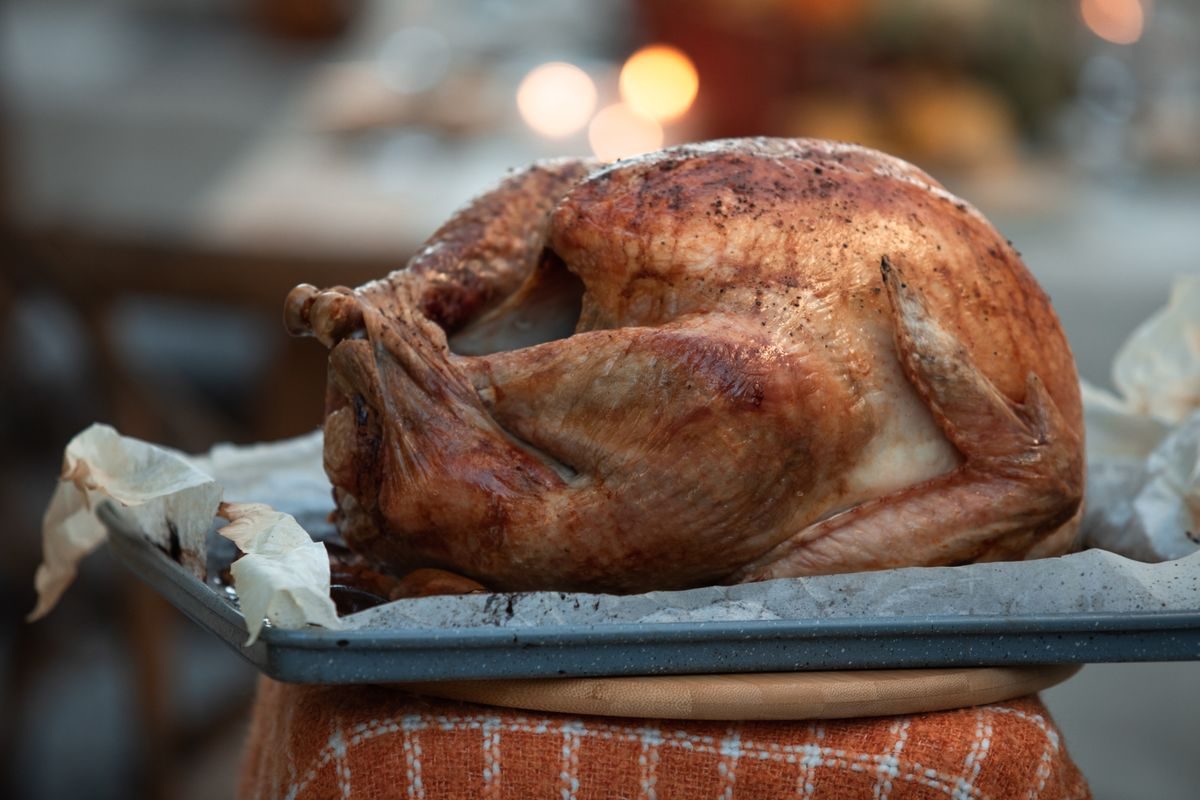
This method is taken from “Barbecued Turkey with White Wine Gravy,” a recipe by Jamie Purviance published in Weber’s Real Grilling™ recipe library, with the thawing and doneness rules cross-checked against the USDA Food Safety and Inspection Service’s “Turkey from Farm to Table” guidance. This is a grill-roasted whole bird — no fryer, no oven — cooked over indirect heat with a water pan underneath to keep it moist through a two-and-a-half- to three-hour cook.
Before the Bird Goes On: Thawing It Safely
Skip this step at your own risk, since it’s the one most people get wrong. USDA lists three safe ways to thaw a whole turkey: in the refrigerator, in cold water, or in the microwave — and specifically warns “never defrost turkey on the counter.” Refrigerator thawing needs the most lead time: about one day for every four to five pounds of bird, so a 12-pounder needs roughly two and a half to three days in the fridge before it touches the grill. The cold-water method is faster but needs more attention — submerge the turkey in its original airtight wrapping or a leak-proof bag, and change the water every 30 minutes to keep it cold, cooking the bird immediately once it’s thawed. Microwave-thawed turkey also needs to go straight to the grill, since partially cooked spots from the microwave can’t safely sit and wait.
The Butter Rub and the Cavity
Weber’s recipe builds its flavor under the skin rather than on top of it. Combine finely chopped garlic, chopped Italian parsley, a tablespoon of chili powder, orange zest strips, and a stick of softened butter in a bowl with salt and pepper. Starting from the neck end, separate the skin from the breast meat with your fingers and push about half the butter mixture directly onto the breast meat, spreading it evenly under the skin. The remaining butter goes over the outside of the bird, followed by a generous seasoning of salt and pepper. The quartered, zested oranges go inside the turkey’s cavity rather than into the mixture itself.
Setting Up the Grill
This is a two-zone, water-pan cook. Set the grill for indirect cooking over medium heat, 350° to 450°F, and place a large foil pan on top of the Flavorizer bars (or the equivalent heat deflector on a charcoal or pellet grill), filled halfway with room-temperature water. Inside a heavy-duty roasting pan, combine 2 cups of low-sodium chicken stock with a roughly chopped onion and carrot, then set the turkey breast-side up on a roasting rack inside that pan. The pan of aromatics sits over the water pan, not directly over the fire.
The Cook and the Target Temperature
Grill with the lid closed, checking in after the first hour: if any part of the bird is browning too fast, tent it with foil. If the roasting pan looks dry, add the second 2 cups of stock so the drippings don’t scorch. Check again after another hour, tenting any dark spots. Total grilling time runs 2¼ to 3 hours. The recipe’s target is an internal temperature of 165°F in the thickest part of the thigh, not touching the bone — which matches USDA’s safe minimum for whole poultry exactly. USDA’s own guidance checks that same 165°F at three points: the innermost part of the thigh, the innermost part of the wing, and the thickest part of the breast, all measured with a food thermometer rather than gauged by the clock. Once the bird is out, let it rest 20 to 30 minutes before carving; both Weber and USDA note the internal temperature will keep climbing slightly during that rest.
It’s worth flagging one place Weber’s own materials aren’t perfectly consistent: a separate Weber grill-skills page on roasting a whole turkey describes pulling the bird at 170° to 175°F rather than 165°F. That higher figure is a personal-preference doneness target, not a safety minimum — USDA is explicit that 165°F is where poultry becomes safe to eat, while noting separately that “for reasons of personal preference, consumers may choose to cook turkey to higher temperatures.” Either number is safe to serve at; the actual food-safety floor is 165°F throughout the bird, with no lower “carryover” exception the way there is for a beef roast.
Finishing the Gravy
While the turkey rests, strain the pan juices into a heatproof bowl, discarding the solids, and let the fat rise to the top for three to five minutes before skimming it off (topping up to 6 tablespoons with melted butter if the drippings came up short). Whisk the same amount of flour into the fat back in the roasting pan over medium heat until it darkens, 1 to 2 minutes, then whisk in stock and a half cup of dry white wine, scraping up the browned bits. Simmer about 5 minutes, adjusting thickness with more stock or more simmering time, season, strain, and stir in fresh chopped parsley before serving alongside the carved turkey.
Keep reading
- Weber’s Grilled Cornish Game Hens, Step by Step
- Thawing Meat for the Grill or Smoker: What USDA Says About Safe Methods
- Weber’s Sweet and Spicy Chicken Wings (Sriracha-Honey)
- Weber’s Official Beer Can Chicken Recipe, Step by Step