
Author: Outdoor Cooking King

  • Marinated Grilled Salmon: A Diabetes-Friendly Recipe

    Marinated Grilled Salmon: A Diabetes-Friendly Recipe

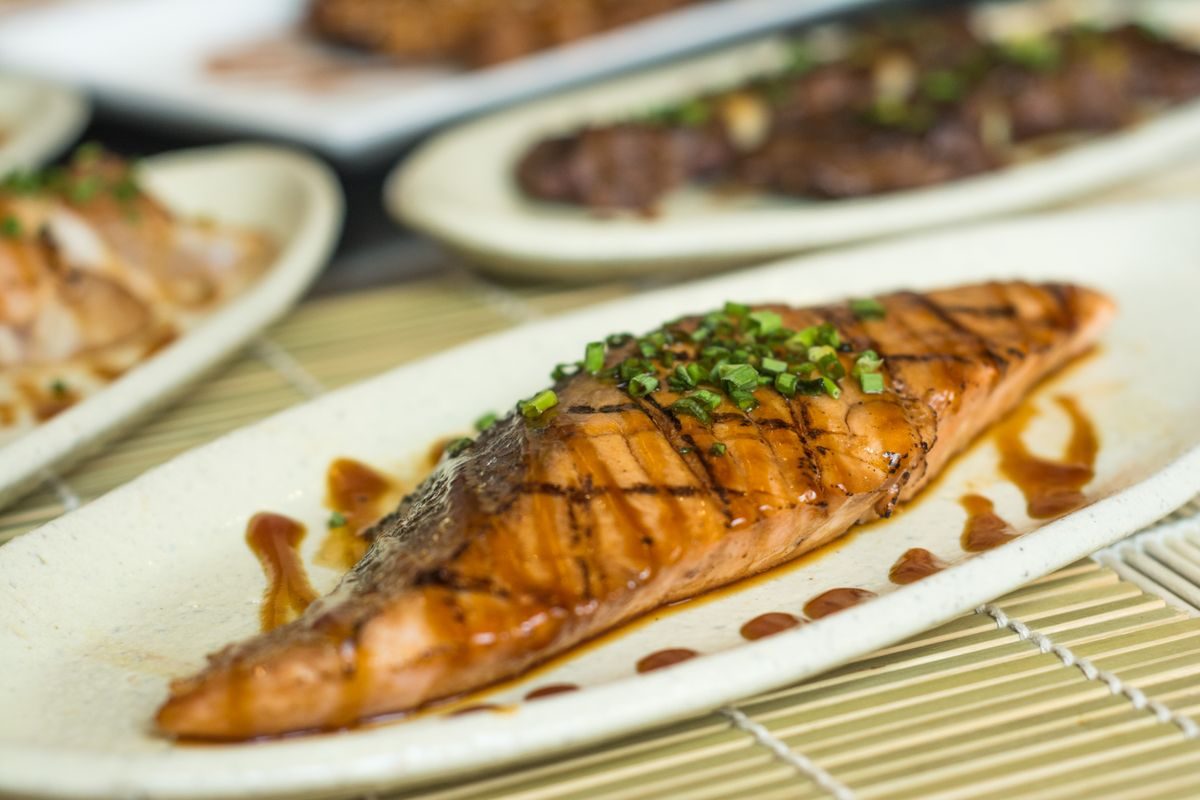
    This recipe is taken directly from the American Diabetes Association’s own recipe library — the Marinated Grilled Salmon recipe published on Diabetes Food Hub, tagged by the ADA under its “Low Carb” and “Grilling” categories. This is general information about ingredient choices, not medical or nutrition advice — individual carbohydrate targets and dietary needs vary, and anyone managing diabetes should follow guidance from their own doctor or a registered dietitian.

    The ADA describes it simply as “a great summer recipe for the grill,” suggesting it alongside a side of rice pilaf and grilled asparagus or summer squash — which, notably, is a version of the same plate-method split covered elsewhere on this site: a lean protein, a non-starchy vegetable, and a smaller carbohydrate side.

    Ingredients

    For the marinade

    • 2 tablespoons lower-sodium soy sauce
    • 1 tablespoon olive oil
    • 1 whole small hot chile pepper (Serrano or other, equivalent of 1 tablespoon minced)
    • 1 tablespoon fresh ginger, grated
    • 1 tablespoon lemongrass, minced (substitute 1 tablespoon lime juice if lemongrass isn’t available)
    • 1 tablespoon low-calorie brown sugar substitute

    For the fish

    • 4 sockeye salmon fillets, 4 ounces each, skinless

    Method

    1. Prepare an indoor or outdoor grill.
    2. Whisk together all the marinade ingredients — everything except the salmon — in a medium-sized bowl.
    3. Pour the marinade over the salmon, coating both sides. Marinate in the refrigerator for 30 minutes.
    4. Remove the salmon from the marinade and discard any leftover liquid. Grill the fillets 4–6 minutes on each side.

    Salmon fillets like these fall into what the ADA’s own grilling guide calls direct-heat cooking — placing food right over the heat source rather than off to one side. The guide specifically lists “lean fish” among the foods best suited to that method, alongside vegetables and small pieces of chicken, because they cook quickly enough that they don’t need the slower, indirect setup reserved for whole birds or big roasts. The same guide recommends having an instant-read thermometer on hand to check doneness, and using separate clean plates for raw and cooked food rather than reusing the platter the marinated fillets sat on.

    Why This Recipe Fits a Lower-Carbohydrate Plate

    Per the ADA’s own published nutrition figures, one 4-ounce fillet (the recipe makes 4 servings) has 160 calories, 6g total fat, 1g saturated fat, 60mg cholesterol, 150mg sodium, 1g total carbohydrate, 0g total sugars, 0g added sugars, and 26g protein. That’s the kind of profile that maps cleanly onto the protein quarter of the ADA and CDC’s Diabetes Plate method — flavored with an acid-and-aromatics marinade (soy sauce, chile, ginger, lemongrass) rather than a sugar-based glaze, which keeps the added-sugar count at zero even with a small amount of brown sugar substitute standing in for real sugar in the marinade.

    The chile-ginger-lemongrass combination also means the marinade is doing the flavor work that a sweetened bottled sauce would otherwise carry — brushing on barbecue sauce partway through grilling is common with chicken and pork, but this recipe skips that step entirely, which is part of why the added-sugar figure stays at zero grams per serving.

    Whole Fish Over Processed Alternatives

    The CDC’s own meal-planning guidance describes a good meal plan as one that will “focus on whole foods instead of highly processed foods as much as possible,” alongside including “fewer added sugars and refined grains.” A whole salmon fillet, seasoned with a from-scratch marinade rather than a pre-made glaze or a breaded coating, is the kind of ingredient choice that guidance points toward — the sodium and flavor in this recipe come from measured amounts of soy sauce, ginger, and chile rather than from a packaged sauce with its own added sugar and salt already built in.

    Serving It as Part of a Cookout Plate

    Grilled salmon like this pairs naturally with a non-starchy grilled vegetable — zucchini, asparagus, or peppers — to fill the other half of the plate, with a modest carbohydrate side like rice or a small portion of grilled corn rounding things out. None of that is a rule from this recipe specifically; it’s simply the same plate-method logic the ADA applies across its recipe library.

    Keep reading

    Sources

  • What Official Bodies Say About Diabetes-Friendly Grilling

    What Official Bodies Say About Diabetes-Friendly Grilling

    This is general information about ingredient choices, not medical or nutrition advice — individual carbohydrate targets and dietary needs vary, and anyone managing diabetes should follow guidance from their own doctor or a registered dietitian. The framing below is drawn from three public health sources: the American Diabetes Association’s Diabetes Plate, the CDC’s Diabetes Meal Planning guidance, and the NHS page on treatment for type 2 diabetes, with grilling-specific tips from the ADA’s own grilling guide.

    The Diabetes Plate Method, Explained

    Both the ADA and the CDC describe the same basic layout, built around a standard dinner plate rather than any counting or weighing. The ADA’s Diabetes Plate instructs people to “fill half your plate with non-starchy vegetables,” “fill one-quarter with lean protein,” and “fill one-quarter with quality carbohydrate foods.” The CDC’s version is nearly identical in proportion: starting from a 9-inch plate, it says to “fill half with nonstarchy veggies,” “fill one quarter with a lean protein,” and “fill one quarter with carb foods,” then to pair the meal with water or a low-calorie drink. Neither agency asks for carb counting to use this method — it’s presented as a portioning shortcut, not a precise calculation.

    Applying It At a Backyard Cookout

    A cookout plate can follow the same three-part layout as any other meal — it just means paying attention to where the grilled food and the table spread land on the plate.

    Half the Plate: Non-Starchy Grilled Vegetables

    Grilling suits the “half the plate” portion well. Zucchini, bell peppers, onions, mushrooms, and other non-starchy vegetables hold up directly over the heat and take on char in a matter of minutes, which is the same category of food the ADA lists as examples for that half of the plate (“broccoli, carrots, or spinach”).

    A Quarter: Lean Grilled Protein

    The protein quarter maps onto the centerpiece of most cookouts — chicken, fish, or another lean cut on the grill. The ADA’s own plate examples use “chicken or turkey without the skin” as the lean-protein reference point, and the CDC lists “chicken, beans, tofu, or eggs” for the same quarter. The grilling method itself helps here too: the ADA’s grilling guide notes that grilling “can be diabetes- and heart-friendly because you don’t need extra fat (like oil) to cook your meat, fish, tofu, vegetables, or fruit,” and suggests acid-based marinades — vinegar or citrus juice and zest, plus fresh or dried herbs — as a way to add flavor “lower in carbs, sodium, and fat” than heavier bottled sauces.

    The Carbohydrate Quarter: Buns, Sauces and Sides

    This is the part of a cookout plate that’s easiest to lose track of, because it’s spread across several dishes at once instead of sitting in one place. A hamburger or hot dog bun, a scoop of potato salad, corn on the cob, and a few tablespoons of a sweetened barbecue sauce are all carbohydrate foods in the ADA and CDC framework — the same category as “starchy vegetables, whole grains, low-fat dairy, or fruit,” per the ADA’s plate description. None of that makes any single item off-limits under this method; it just means the quarter-plate allowance for carbohydrate foods is usually where a bun, a side, and a sauce are all competing for the same space, rather than each getting its own.

    What the NHS Adds

    The NHS page on managing type 2 diabetes doesn’t lay out plate fractions the way the ADA and CDC do, but its general dietary advice points the same direction. It recommends people “eat a healthy diet including fruit, vegetables, wholegrain foods such as wholemeal bread and oats, and pulses such as chickpeas and lentils,” while advising against eating “too much processed foods with lots of salt and sugar.” At a cookout, that general framing lines up with the same practical choices as the plate method: vegetables and whole foods make up more of the plate, and the more processed, sugar-heavy items — bottled sauces, sweetened marinades, packaged snacks — are the ones worth watching.

    The Bottom Line for a Cookout Plate

    None of these three sources describe grilling itself as doing anything to blood sugar — the emphasis in all three is on portioning and ingredient choice, not on any single food or cooking method having a special effect. Grilled non-starchy vegetables and a lean protein are simply easy to fit into the “half veg, quarter protein” pattern that the ADA and CDC both describe; the carbohydrate quarter is the part of a cookout spread that takes the most active attention, since buns, sides, and sauces all draw from the same allowance.

    Keep reading

    Sources

  • Keto Coleslaw: Wholesome Yum’s Sugar-Free Recipe

    Keto Coleslaw: Wholesome Yum’s Sugar-Free Recipe

    This slaw is taken from Wholesome Yum, a widely followed keto and low-carb recipe site run by cookbook author Maya Krampf — see the Keto Coleslaw (5-Ingredient Low Carb Recipe) on wholesomeyum.com. It’s a mayo-based dressing built around a keto-friendly sweetener rather than the sugar most bottled and deli coleslaws are made with.

    The appeal here is how few ingredients it takes: shredded cabbage and carrot, a creamy dressing, and a short rest in the fridge so the cabbage softens slightly and takes on the dressing’s tang. It’s the kind of cold, crunchy side that sits well next to anything coming off the grill.

    Ingredients

    • 4 cups shredded coleslaw mix (primarily cabbage, with a small amount of carrot)
    • 1/4 cup mayonnaise
    • 2 tablespoons apple cider vinegar
    • 1 tablespoon Besti Powdered Monk Fruit Allulose Blend (or more, to taste)
    • 1 teaspoon celery seed
    • 1/4 teaspoon sea salt (to taste)
    • 1/4 teaspoon black pepper (to taste)

    Method

    1. Place the shredded coleslaw mix into a large bowl and set aside.
    2. In a small bowl, whisk together the mayonnaise, apple cider vinegar, powdered sweetener, and celery seed. Season with sea salt and black pepper to taste.
    3. Stir the dressing into the shredded coleslaw mix and toss to coat evenly.
    4. If you have time, refrigerate the coleslaw for at least an hour, or overnight, to let the flavors develop. Stir again before serving, and serve chilled.

    Why It Stays Sugar-Free

    The sweetness in this dressing comes entirely from a powdered monk fruit and allulose blend rather than granulated sugar. Wholesome Yum’s own comparison in the recipe notes that a typical store-bought coleslaw runs about 12-13 g of sugar and net carbs per half-cup serving, while this version comes in under 2 g net carbs in a larger 3/4-cup serving — a gap that comes specifically from swapping out the sugar in both the dressing and, often, the coleslaw mix itself. The source specifically recommends the powdered form of the sweetener rather than a granular one, since granular sweeteners — particularly ones based on erythritol — tend not to dissolve fully in a cold dressing and can leave a gritty texture; powdered allulose or a sugar-free honey are given as acceptable substitutes, in a larger amount.

    What the Recipe Publishes on Carbs

    Wholesome Yum’s nutrition figures for this recipe list 77.5 calories and 1.8 g net carbs per serving, with 3 g total carbohydrate and 1.2 g fiber, alongside 7.1 g fat. Those are the source’s own published numbers for the recipe as written above; nothing here has been recalculated independently.

    Serving Notes

    Because the dressing is mayo-based rather than vinegar-only, this slaw holds its creamy texture well once chilled, which makes the make-ahead rest genuinely useful rather than just a suggestion — the cabbage softens and the flavors round out without the dressing separating. It works as a side for anything smoky or rich coming off the grill, where the cold crunch and tang cut through the fat the same way a traditional sugar-sweetened coleslaw would. The recipe card is written for 6 servings, and the source suggests giving the slaw a quick stir right before serving, since the dressing can settle at the bottom of the bowl while it sits in the fridge.

    Storage

    Wholesome Yum says this coleslaw keeps in an airtight container in the fridge for 3-5 days once the cabbage and dressing are mixed together. If you’d rather keep the crunch at its best, the source recommends storing the shredded cabbage and dressing separately, which it says extends the shelf life to a week or more. Freezing isn’t recommended, since the mayonnaise-based dressing and fresh cabbage don’t hold their texture well once thawed.

    A Note on This Being a Recipe Style, Not a Health Claim

    This article is about a lower-carbohydrate way to make coleslaw without added sugar, nothing more — it isn’t medical or nutrition advice, and individual dietary needs vary, so check with a qualified professional before changing how you eat.

    Keep reading

    Sources

  • Keto Bacon Cheeseburger Wraps: Diet Doctor’s Recipe

    Keto Bacon Cheeseburger Wraps: Diet Doctor’s Recipe

    This recipe is taken from Diet Doctor, a low-carb and keto publisher whose recipes carry published net-carb counts on every page — see the Keto Bacon Cheeseburger Wraps recipe on dietdoctor.com. It takes a classic cheeseburger apart and rebuilds it without a bun, using butterhead lettuce leaves as the wrap instead.

    Everything else about it stays close to a diner cheeseburger: seasoned ground beef, crispy bacon, melted cheddar, and tomato. What changes is the base it’s served on, which is what makes this a distinct build from a classic grilled patty-on-a-bun burger rather than just a variation on one.

    Ingredients

    • 7 oz. bacon
    • 4 oz. mushrooms, sliced
    • 1 1/2 lbs ground beef (or ground turkey)
    • 1/2 teaspoon salt
    • 1/4 teaspoon pepper
    • 1 cup shredded cheddar cheese
    • 1 butterhead lettuce, leaves separated and washed
    • 8 cherry tomatoes, sliced

    Method

    1. Add the bacon to a large skillet and cook over medium heat for about 15 minutes, or until crispy. Remove the bacon from the pan and set aside.
    2. Over medium-high heat, sauté the mushrooms in the leftover bacon fat for about 5 to 7 minutes, until browned and tender. Set aside.
    3. Add the ground beef, salt, and pepper to the same pan. Sauté the beef, breaking up any chunks with the back of a wooden spoon, for about 10 minutes, or until evenly browned.
    4. To serve, spoon the ground beef onto the lettuce leaves and layer the cheddar cheese, bacon, mushrooms, and tomatoes on top.

    Why Lettuce Instead of a Bun

    Using butterhead lettuce as the wrap is a straightforward swap: the leaves are pliable and large enough to fold around the filling, without the starch a bun would add. Diet Doctor’s own description frames this directly as taking “your favorite fast food meal” and making it low carb by wrapping it in lettuce instead of bread — the technique, not the toppings, is what does the work here.

    What the Recipe Publishes on Carbs

    Diet Doctor lists this recipe at 3 g net carbs per serving, across 4 servings total. The full nutrition panel on the recipe page also lists 697 kcal, 49 g fat, 58 g protein, and 1 g fiber per serving. Those figures are printed directly on the recipe page alongside the ingredient list; nothing here has been recalculated or estimated independently.

    Assembly Notes

    Because the beef, bacon, and mushrooms are all cooked in the same skillet — bacon first, then mushrooms in the rendered bacon fat, then the beef — there’s minimal extra cleanup, and each layer picks up a little flavor from the one before it. Diet Doctor suggests ground turkey as a straight swap for the beef if you’d rather use it, with no other changes to the method. Using a sturdier lettuce variety, such as romaine or iceberg, is also worth trying if butterhead leaves feel too delicate to hold the filling once it’s loaded. The source notes that since the lettuce is doing the job a bun would normally do, leaf size and shape matter more than exact weight — as a guide, it estimates about three leaves per serving to fully wrap each portion of filling.

    Timing and Yield

    Diet Doctor lists this as a 30-minute recipe overall: about 5 minutes of prep and 25 minutes of active cooking across the bacon, mushrooms, and beef, split roughly into the 15, 5-7, and 10 minute windows given in the method above. The recipe card is written for 4 servings, which is the basis for both the nutrition figures and the “about three leaves per serving” guidance.

    A Note on Food Safety

    The ground beef here needs to reach a safe internal temperature rather than just look browned. The USDA’s Safe Minimum Internal Temperature Chart lists ground meats, including beef, at 160°F (71.1°C), with no rest time required. Diet Doctor’s method goes by time and color, so it’s worth checking a batch with an instant-read thermometer the first time you make this, especially since the meat is served straight from the skillet with no further cooking step.

    A Note on This Being a Recipe Style, Not a Health Claim

    This article is about a lower-carbohydrate way to build a burger, nothing more — it isn’t medical or nutrition advice, and individual dietary needs vary, so check with a qualified professional before changing how you eat.

    Keep reading

    Sources

  • Sugar-Free Keto BBQ Sauce: Wholesome Yum’s Recipe

    Sugar-Free Keto BBQ Sauce: Wholesome Yum’s Recipe

    This sauce is taken from Wholesome Yum, a widely followed keto and low-carb recipe site run by cookbook author Maya Krampf — see the Sugar Free BBQ Sauce (Sweet & Smoky) recipe on wholesomeyum.com. It’s built to replace the bottled stuff, which almost always leans on sugar or corn syrup for its sweetness, with a stovetop sauce sweetened by a keto-friendly substitute instead.

    The base is nothing exotic: tomato paste, vinegar, a hit of liquid smoke, and a short list of spices, simmered down until it thickens. What sets it apart from a regular homemade barbecue sauce is the sweetener — Wholesome Yum uses a powdered monk fruit and allulose blend rather than sugar, brown sugar, or honey.

    Ingredients

    • 2 1/2 (6 oz) cans tomato paste
    • 1/2 cup apple cider vinegar
    • 1/4 cup Besti Powdered Monk Fruit Allulose Blend (to taste)
    • 2 tablespoons Worcestershire sauce
    • 1 tablespoon liquid hickory smoke
    • 2 teaspoons smoked paprika
    • 1 teaspoon garlic powder
    • 1/2 teaspoon onion powder
    • 1/2 teaspoon sea salt
    • 1/4 teaspoon chili powder
    • 1/4 teaspoon cayenne pepper (or more, to taste)
    • about 1 1/2 cups water

    Method

    1. Whisk the tomato paste, vinegar, powdered sweetener, Worcestershire sauce, liquid smoke, and spices together in a medium saucepan, adding the water last. Start with about a cup, then whisk in more gradually until the mixture is slightly thinner than a finished barbecue sauce — Wholesome Yum notes it takes roughly 1 1/2 cups depending on how thick the tomato paste is.
    2. Bring the mixture to a gentle boil over medium-high heat, then reduce to medium-low and simmer, stirring frequently, for about 20 minutes, or until it has thickened.
    3. Taste and adjust — more sweetener if you want it sweeter, more cayenne if you want it hotter. If it’s thicker than you’d like, stir in extra water a tablespoon at a time.

    Why No Added Sugar

    Every sweetness cue here comes from the powdered monk fruit and allulose blend, not sugar, honey, or brown sugar. Wholesome Yum specifically recommends a powdered form over granular sweeteners because it dissolves fully instead of leaving the sauce gritty or crystallizing once it’s chilled in the fridge. The one caveat the source itself flags: Worcestershire sauce typically contains a small amount of sugar, though at roughly 1/20 tablespoon per serving in this recipe, the source describes it as trivial — and offers swapping in a dash of blackstrap molasses and water, or omitting it, for anyone who wants to avoid it entirely.

    What the Recipe Publishes on Carbs

    Wholesome Yum’s nutrition figures for this sauce list 20 calories and 3.5 g net carbs per serving, with 4.5 g total carbohydrate and 1 g fiber. Those numbers are exactly as the source publishes them for the recipe above; nothing here has been recalculated or estimated independently.

    Using It on the Grill

    Because the sauce reduces to a spoonable, glaze-like consistency rather than a thin marinade, it works the way a classic bottled barbecue sauce would — brushed onto chicken, ribs, or pulled pork in the last few minutes of cooking so it doesn’t scorch, or served on the side as a dip. Wholesome Yum’s variations section also suggests swapping in half a batch of a brown-sugar-style version of the same sweetener for a deeper caramel note, or its own sugar-free honey for what the developer calls her favorite version of the sauce. The recipe also scales easily — Wholesome Yum’s card is written for 20 servings, so it’s meant to be made as a batch rather than a single-meal portion.

    Storage

    Wholesome Yum recommends keeping the sauce in the fridge, where the developer has told readers in the comments that it keeps well for about two weeks. For longer storage, the source says it can be frozen for 3-6 months, either as a whole batch thawed overnight in the fridge, or portioned into an ice-cube-style tray so individual servings can be popped out and thawed in the microwave as needed. If you’d rather skip the stovetop step entirely, the source also notes this can be made as a no-cook sauce by mixing the ingredients cold and using less water — though it says the simmered version develops noticeably more flavor.

    A Note on This Being a Recipe Style, Not a Health Claim

    This is simply a lower-carbohydrate way to make barbecue sauce without added sugar — it isn’t medical or nutrition advice, and individual dietary needs vary, so check with a qualified professional before changing how you eat.

    Keep reading

    Sources

  • Grilled Keto Cauliflower Steaks: Wholesome Yum’s Recipe

    Grilled Keto Cauliflower Steaks: Wholesome Yum’s Recipe

    This recipe comes straight from Wholesome Yum, one of the most widely followed keto and low-carb recipe sites, run by cookbook author Maya Krampf — see the Cauliflower Steak (Roasted or Grilled) recipe on wholesomeyum.com. The site files this dish under its “Keto” and “Healthy Side Dishes” categories, and it’s built for exactly the spot on the plate a baked potato or a scoop of rice usually takes.

    The idea is simple: instead of breaking the cauliflower into florets, you cut the whole head into thick, flat slabs. Kept intact this way, cauliflower holds together on the grate, takes a real char on both cut faces, and eats more like a substantial side than a pile of florets does — while staying a fraction of the carbs of the starchy side it’s standing in for.

    Ingredients

    • 2 heads cauliflower
    • 2 tablespoons olive oil
    • 1/2 teaspoon sea salt
    • 1/2 teaspoon black pepper
    • 1 teaspoon paprika
    • 1/2 teaspoon garlic powder

    Method

    1. Cut each cauliflower head into slices about 3/4 inch thick, working from the top down through the core. You’ll get two to three full slabs from each head; the loose ends that fall apart into florets can be saved for another dish.
    2. In a small bowl, mix the olive oil with the sea salt, black pepper, paprika, and garlic powder. Brush this mixture over both sides of each cauliflower steak.
    3. Grill method: preheat the grill to medium heat. Place the cauliflower steaks on the grate, close the lid, and cook for 5 minutes. Flip, cover again, and cook for another 4-5 minutes, until the steaks are tender and browned with visible char marks.
    4. Oven method (if you’d rather not grill): preheat the oven to 425°F (218°C — Wholesome Yum publishes both figures) and bake on a parchment-lined sheet for 10 minutes, then flip and bake another 10-15 minutes until tender and browned.

    Why the Slab Shape Matters

    Cutting through the core rather than separating the florets is what makes this work as a “steak.” The core fibers hold the layers together, so each slab can be flipped once on the grate without falling apart into scattered pieces the way loose florets tend to. Wholesome Yum notes that grilling brings something the oven can’t: a genuine charred flavor and crisp, blistered edges, which is also why it’s worth doing whenever the weather makes firing up the grill more appealing than heating the kitchen.

    What the Recipe Publishes on Carbs

    Wholesome Yum’s own nutrition figures for this recipe list 100 calories, 8 g total carbohydrate, and 3.3 g fiber per serving, alongside 7.2 g fat and 2.9 g protein. Those are the source’s published numbers for the base recipe as written above — this article doesn’t add, adjust, or estimate anything beyond what’s printed on the recipe card.

    Serving It as the Starchy Side

    Because the seasoning here is intentionally plain — just salt, pepper, paprika, and garlic — the steaks are built to sit next to whatever protein is already on the grill, the same way a baked potato or a scoop of rice would. Wholesome Yum’s own suggestions include pairing it with grilled chicken, salmon, or steak, and finishing it with a brush of barbecue sauce partway through cooking if you want a sweeter, saucier version. A few readers in the comments mention using smoked paprika instead of sweet paprika for extra depth, and doubling the oil-and-spice mixture if a head of cauliflower turns out larger than average, since the brush-on coating is deliberately light.

    Reheating Leftovers

    Wholesome Yum files this recipe as freezer- and make-ahead-friendly, and gives three reheating options for leftover steaks: about a minute per side in a skillet over medium heat, roughly 10 minutes in a 350°F oven (177°C, our conversion), or about a minute in the microwave. The source notes the skillet and oven methods do a better job of keeping the browned edges from going soft than the microwave does, though the microwave is the fastest option if texture isn’t a priority.

    A Note on This Being a Recipe Style, Not a Health Claim

    This article is about a lower-carbohydrate way to fill the starchy-side spot on the plate, nothing more — it isn’t medical or nutrition advice, and individual dietary needs vary, so check with a qualified professional before changing how you eat.

    Keep reading

    Sources

  • Egg-Free Southern Potato Salad: Abi Cowell’s Recipe

    Egg-Free Southern Potato Salad: Abi Cowell’s Recipe

    This egg-free Southern potato salad comes from Abi Cowell’s Easy Southern Potato Salad, published on Very Veganish, a site built around whole-food plant-based cooking. Cowell writes it as a version of the potato salad her family has always made for summer gatherings in Houston, Texas, with the chopped hard-boiled egg left out and a vegan mayonnaise standing in for the standard kind.

    Ingredients

    • 4 pounds russet potatoes (about 8 medium), peeled and cut into 1-inch cubes
    • 2 cups celery, sliced thin
    • 1/2 cup white onion, minced
    • 1/2 cup sweet pickle relish
    • 1/2 cup vegan mayonnaise, store-bought or homemade
    • 1 1/2 tablespoons yellow mustard
    • 3/4 teaspoon sea salt
    • 1/4 teaspoon black pepper

    Method

    1. Add the cubed potatoes to a medium-large pot, cover with cold water, and add a little salt. Bring to a boil over high heat.
    2. Once boiling, lower the heat to medium and cook for about 5 minutes, until just barely fork-tender. Cowell is specific about not overcooking them, since that starts turning them into mashed potatoes instead of salad.
    3. Drain in a colander and transfer to a large mixing bowl. Let cool for 5 to 10 minutes before adding the rest of the ingredients.
    4. Add the celery, onion, relish, vegan mayonnaise, mustard, salt and pepper. Mix gently with a large spoon, being careful not to mash the potatoes.
    5. Cover and refrigerate until cold, then serve chilled. Cowell notes it keeps in an airtight container in the fridge for up to 7 days, and doesn’t recommend freezing it.

    Potato and Relish Options

    Cowell’s notes give some room on two ingredients without changing the egg-free dressing. For the potatoes, she uses russet for a more traditional, tender texture, but suggests red, new or baby potatoes — thin-skinned enough to leave unpeeled — for a firmer bite, while ranking Yukon gold last on her own list for this particular salad. For the relish, sweet pickle relish is what the recipe calls for, but she notes chopped dill pickles or chopped cornichons work as substitutes, with a little extra pickle juice added to taste if the sweetness needs replacing. Neither swap touches the mayonnaise, which is the ingredient actually doing the egg-free work.

    Why This Version Is Egg-Free

    Cowell’s recipe changes two things about a traditional Southern potato salad: it drops the chopped hard-boiled egg entirely, and it replaces standard mayonnaise — made with egg — with a vegan mayonnaise, which by definition contains none. She’s direct about the distinction in her own ingredient notes: “vegan mayo contains no egg, whereas standard mayo uses egg.” That swap in the dressing is what makes the dish egg-free; the potatoes, celery, onion and relish were never an egg risk to begin with. The recipe also happens to be dairy-free and, with an oil-free vegan mayo swapped in, oil-free too, but those follow from the vegan approach rather than being the point of the recipe.

    The Mayonnaise Is Where Labels Matter

    Vegan mayonnaise is a category, not a single formula, and Cowell’s own notes point out that most store-bought versions are made with oil rather than resembling a traditional egg-based mayo in any way. That’s straightforward for an egg allergy, but it doesn’t say anything about other allergens: Cowell separately suggests a cashew-based mayo for an oil-free version of this same salad, which would introduce a tree nut that the standard recipe doesn’t have. Anyone assembling this for a guest with a diagnosed egg allergy should still check the label on whichever vegan mayonnaise actually goes in the bowl — brands and formulas vary and change, and this recipe’s egg-free status describes the dish as Cowell wrote it, not any specific jar bought at a specific store.

    Reaction severity and individual triggers vary from person to person. Serving this salad “prepared without egg as published” is not the same as a guarantee, and the label of the exact mayonnaise used should be checked by the person with the diagnosed allergy, or someone they trust, before it’s served.

    Keep reading

    Sources

  • Nut-Free Sunflower Satay Sauce: Karen Sheer’s Recipe

    Nut-Free Sunflower Satay Sauce: Karen Sheer’s Recipe

    This nut-free satay sauce and its grilled chicken skewer marinade come from Karen Sheer’s Sunflower Satay Sauce, published on her site A Zest for Life. Sheer built the recipe around sunflower seed butter specifically so it would work around a nut allergy, publishing it under the title “Peanut-Free” and calling it “NUT FREE” directly in the recipe card.

    Ingredients

    • 1-inch piece ginger, peeled (about 1 tablespoon chopped)
    • 2 large fresh garlic cloves, chopped (about 1 tablespoon plus 1/2 teaspoon)
    • 1/2 teaspoon crushed dried hot red chiles
    • 3 tablespoons rice vinegar
    • 3 tablespoons soy sauce, or tamari sauce (use a gluten-free tamari if needed)
    • 2 tablespoons tahini sauce
    • 5 tablespoons warm filtered water, plus more if needed
    • 1/2 teaspoon molasses
    • 1/2 cup sunflower seed butter

    Method

    1. Combine the first eight ingredients — everything except the sunflower seed butter — in a small food processor. Pulse, then run until you have a smooth, slightly chunky paste.
    2. Add the sunflower seed butter, pulse to combine, then run until just blended. For a thinner sauce, add up to one more tablespoon of water.
    3. Serve at room temperature. Stored in a clean glass container in the refrigerator, Sheer’s recipe says it keeps for up to 3 weeks.

    Serving It Over Noodles

    Sheer’s original use for the sauce is a cold noodle dish rather than a dip. She tosses 2 cups of cooked, al dente noodles — she reaches for organic round soba or gluten-free rice noodles — with 2 teaspoons of sesame oil, then mixes in 4 to 6 tablespoons of the sunflower satay sauce. She garnishes the bowl with a drizzle of extra sauce, 2 tablespoons of sunflower seeds, 1/4 cup of sunflower sprouts, and sliced scallions, and suggests adding julienned cucumber and multi-colored carrot for crunch. It’s the same sauce recipe throughout — the noodle bowl and the skewer marinade both draw from the batch made above.

    Grilled Chicken Skewers, Marinated in the Same Sauce

    Sheer uses the finished satay sauce as the base for a marinade, too. For 1 1/4 pounds of chicken tenderloins, tendons removed, her method combines 2 teaspoons soy sauce, 2 teaspoons sesame oil, 2 tablespoons of the satay sauce and 1 teaspoon each of minced garlic and ginger. Toss it with the chicken, cover and refrigerate for 2 hours, then thread onto soaked bamboo or metal skewers and grill on a hot, preheated grill, turning until well-marked and cooked through. She also gives a vegan variation — the same marinade brushed on firm tofu, grilled and served with extra sauce on the side.

    Peanut-Free and Tree-Nut-Free — But Check the Rest

    Sheer’s recipe is built to avoid peanuts and tree nuts specifically, in favor of sunflower seed butter, and her post notes that sunflower seed butter itself is “free from the top 8 food allergens: peanuts, tree nuts, soy, milk, eggs, wheat, fish, and crustacean shellfish.” The finished sauce isn’t allergen-free across the board, though. It calls for both tahini, which is made from sesame — the FDA’s ninth major allergen, added in 2023 — and soy sauce, which carries soy and, unless a gluten-free tamari is substituted, wheat. The noodle serving suggestion in Sheer’s post adds sesame oil on top of that. None of this affects a peanut or tree nut allergy specifically, but anyone avoiding sesame, soy or wheat needs to read this as a nut-free recipe, not a top-9-allergen-free one.

    As with any dish prepared without a specific allergen, reaction severity and individual triggers vary from person to person, and store-bought tahini, soy sauce and sunflower seed butter should each be checked on the label for manufacturing advisories before serving this to a guest with a diagnosed peanut or tree nut allergy. This article follows Sheer’s published ingredient list; it isn’t a lab test of any specific jar or bottle.

    Keep reading

    Sources

  • Instant Dairy-Free BBQ Sauce: Alisa Fleming’s Recipe

    Instant Dairy-Free BBQ Sauce: Alisa Fleming’s Recipe

    This dairy-free barbecue sauce comes directly from Alisa Fleming’s Instant Homemade Barbecue Sauce, published on GoDairyFree.org — the recipe site Fleming founded and still writes for, built specifically around dairy-free cooking. She adapted it from a recipe in the cookbook American Vegan Kitchen and, by her own account, has made her toned-down version at least a dozen times since.

    Ingredients

    • 2 garlic cloves, minced, or 1/8 to 1/4 teaspoon garlic powder (optional)
    • 1/4 to 1/2 teaspoon onion powder
    • 2/3 cup natural or organic ketchup
    • 1 to 3 teaspoons minced chipotle chiles in adobo sauce
    • 1/2 teaspoon chipotle chili powder
    • 1 1/2 tablespoons apple cider vinegar
    • 1 1/2 tablespoons blackstrap molasses
    • 1 teaspoon liquid smoke
    • 3/4 teaspoon Worcestershire sauce (vegan, if desired)

    Method

    1. Whisk all the ingredients together in a bowl, or add them to a blender and purée. Adjust the seasoning to taste.
    2. Use it as-is, or for the best flavor, stir it into a dish that’s still cooking — or into a slow cooker — so the flavors have time to meld before serving.

    The Stovetop Version

    Fleming also publishes a slightly richer variation: heat 1 tablespoon olive oil in a skillet over medium-low, sauté 1/4 cup minced onion until soft, add the garlic cloves and cook for 1 minute more, then whisk in the remaining ingredients — skipping the onion powder — and bring to a boil. Reduce to a simmer and cook uncovered for about 15 minutes, thinning with a little water if it gets too thick. Both versions take under 15 minutes start to finish.

    Adjusting the Heat

    The chipotle chiles in adobo sauce carry most of the heat, and the recipe is written as a range — 1 to 3 teaspoons — so it can be tasted and adjusted rather than fixed. Fleming notes she deseeds the chipotles as much as possible before mincing them, since the seeds run hotter than the flesh, then purées a batch ahead of time so it’s ready to measure by the teaspoon next time she cooks.

    Why This Recipe Exists

    Fleming has written that she went looking for a natural barbecue sauce without high-fructose corn syrup and came up mostly empty at local stores — Annie’s Homegrown was the only brand she found that qualified, and by her own account she didn’t much like it. She found the version behind this recipe as the barbecue sauce component of a Smokin’ BBQ Portobello Sandwiches recipe in the cookbook American Vegan Kitchen, then toned down what she describes as an overly spicy original and trimmed the ingredient list down to what’s listed here. The whisked, no-cook version makes about 1 cup of sauce.

    Why This One Stays Dairy-Free

    Every ingredient in the sauce is built on tomato, vinegar, chile and spice — ketchup, chipotle in adobo, chipotle chili powder, apple cider vinegar, blackstrap molasses, liquid smoke and Worcestershire sauce — with nothing derived from butter, milk, cream or cheese. GoDairyFree.org states the recipe’s diet profile directly: by ingredients, it’s dairy-free/non-dairy, egg-free, optionally gluten-free, nut-free, peanut-free, optionally vegan/plant-based and optionally vegetarian. The one ingredient worth a second look is the Worcestershire sauce, which traditionally contains anchovies rather than dairy; a vegan version swaps those out too, but that’s a fish consideration, not a dairy one.

    A recipe written as dairy-free describes how the dish is put together, not a guarantee for any specific bottle sitting in a specific pantry. Packaged ketchup, adobo sauce, chili powder blends and Worcestershire sauce can change formulation between brands or between years, and some carry a “may contain milk” advisory depending on the manufacturer. Anyone with a diagnosed milk allergy should check the label on whatever is actually being used rather than relying on this list, since reaction severity and individual triggers vary and this recipe’s dairy-free status reflects Fleming’s published ingredients, not a lab test of any particular product on a store shelf.

    Keep reading

    Sources

  • Grilling Around Food Allergies: Avoiding Cross-Contact

    Grilling Around Food Allergies: Avoiding Cross-Contact

    A backyard grill mixes proteins, sauces and shared tools in ways a home kitchen usually avoids, which makes it an easy place for a food allergen to move from one dish to another without anyone noticing. This guide draws on two sources: the FDA’s food allergen guidance, which sets out the official list of major allergens, and FARE’s (Food Allergy Research & Education) cross-contact resource, which explains how allergens actually transfer between foods and how kitchens are trained to stop it.

    The Nine Allergens the Rules Are Built Around

    The 2004 Food Allergen Labeling and Consumer Protection Act named eight major food allergens: milk, eggs, fish, crustacean shellfish, tree nuts, peanuts, wheat and soybeans. According to the FDA, those eight accounted for roughly 90 percent of food allergies and serious allergic reactions in the US at the time the law passed. Sesame became the ninth major allergen on January 1, 2023, under the FASTER Act. Packaged foods sold in the US must declare these nine either in parentheses after an ingredient — “whey (milk)” is the FDA’s own example — or in a “Contains” statement under the ingredient list. That requirement stops at pre-packaged retail food, though: the FDA is explicit that it doesn’t cover most foods sold at retail or food-service establishments that aren’t pre-packaged with a label. A homemade BBQ sauce, spice rub or a bag of buns split open at a cookout isn’t carrying that declaration, which is exactly why the label on anything opened at a backyard grill is worth reading directly rather than assumed.

    Where Cross-Contact Actually Happens at the Grill

    FARE draws a specific line between cross-contact and cross-contamination: cross-contamination involves bacteria or other pathogens that cooking usually destroys, while cross-contact is a food protein transferring to a food that didn’t originally contain it — and cooking does not destroy that protein. FARE’s own illustration is a shared flattop griddle: eggs and French toast cooked at breakfast leave milk, egg and wheat protein on the surface, and if the griddle isn’t properly washed before lunch service, meat cooked on it afterward picks up those same proteins. A backyard grill running through course after course works the same way — grates, tongs, basting brushes and cutting boards that touch a buttered corn cob or a marinade containing soy sauce can pass that allergen straight into the next protein that lands on the same surface.

    Cleaning the Grate and Tools Between Dishes

    FARE is specific that wiping a surface down is not the same as cleaning it. A study FARE cites, published in the Journal of Allergy and Clinical Immunology, found that dishwashing liquid alone did not effectively remove peanut protein from a tabletop and that alcohol-based sanitizer did not remove it from hands — bar and liquid soap, used properly, did. For a grill, that means a wire brush and heat aren’t enough to clear allergen protein off a grate; it needs an actual wash with hot, soapy water, or a second set of grates, tongs and cutting boards kept aside for allergen-free food only. FARE also lists a follow-up sanitizing step for food-prep surfaces: one tablespoon of concentrated bleach per gallon of room-temperature water, left to air dry after application.

    Marinades, Basting Brushes and Shared Condiments

    A basting brush dipped into raw chicken and then reused on a second protein carries the same risk FARE describes with a knife moved from a jar of peanut butter to a jar of jelly: “there could be enough peanut protein remaining on the knife to cause a reaction.” The safer approach is portioning out marinade or BBQ sauce for basting into a separate container before it ever touches raw meat, rather than dipping a brush back into the batch that will also be served at the table. Communal condiments and a shared bag of buns deserve the same caution — a knife that buttered one roll and was then only wiped before touching a dairy-free bun, or a squeeze bottle several different plates dip into, carries the same trace-protein risk FARE describes for restaurant service.

    Telling Guests What’s Actually in a Dish

    FARE’s guidance for eating out recommends asking a restaurant whether it uses a shared grill or fryer for both allergen and allergen-free meals, and treating “yes” as a sign the kitchen isn’t managing the allergen — the same standard is useful at a private cookout. A host who can name every ingredient in a dish, including what’s in a store-bought sauce, spice rub or bun, gives a guest something to actually evaluate rather than a guess. Writing a short ingredient list for each dish, keeping packaging within reach so a guest can check it themselves, and flagging anything cooked on shared equipment covers most of what FARE recommends asking a restaurant manager.

    None of this amounts to a guarantee that a given dish is safe for a given guest. Allergy severity and individual triggers vary, and every packaged ingredient’s label should still be checked by the person with the diagnosed allergy, or someone they trust, regardless of what a host or a recipe states. Careful cleaning and clear ingredient information reduce the chance of cross-contact; they don’t replace that check.

    Keep reading

    Sources