
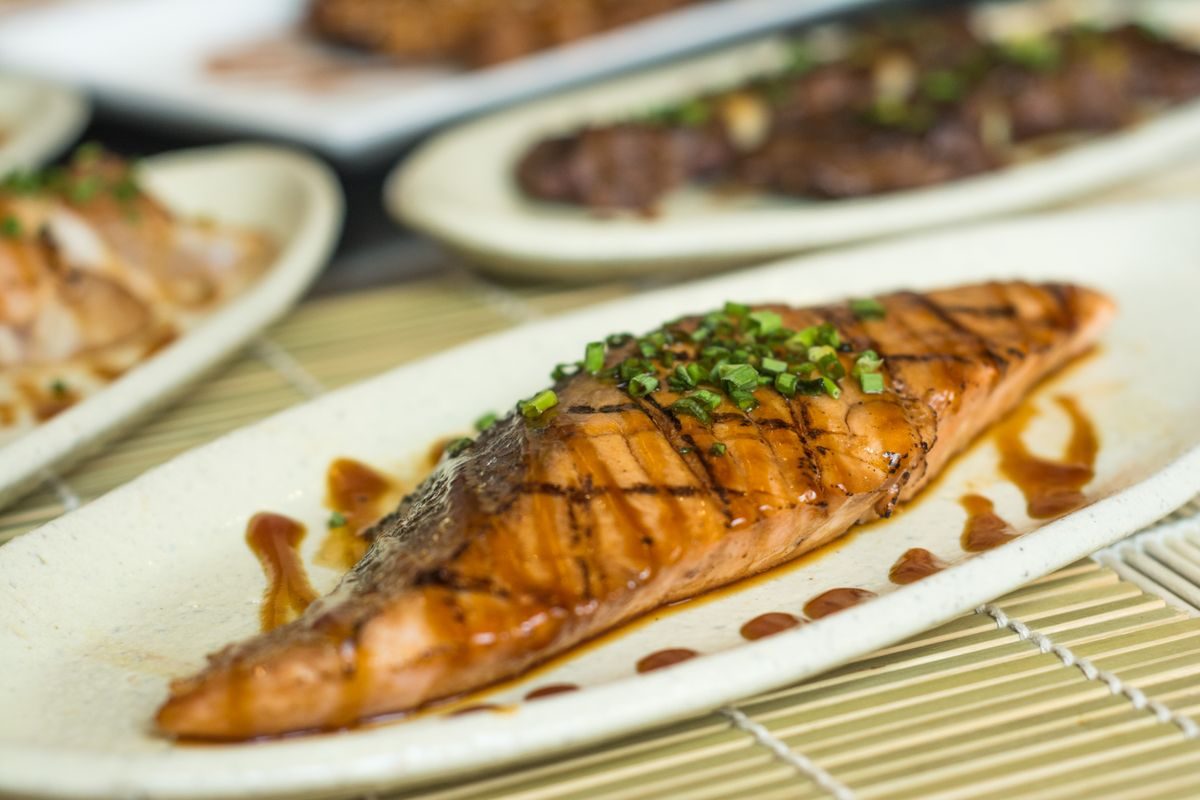
This recipe is taken directly from the American Diabetes Association’s own recipe library — the Marinated Grilled Salmon recipe published on Diabetes Food Hub, tagged by the ADA under its “Low Carb” and “Grilling” categories. This is general information about ingredient choices, not medical or nutrition advice — individual carbohydrate targets and dietary needs vary, and anyone managing diabetes should follow guidance from their own doctor or a registered dietitian.
The ADA describes it simply as “a great summer recipe for the grill,” suggesting it alongside a side of rice pilaf and grilled asparagus or summer squash — which, notably, is a version of the same plate-method split covered elsewhere on this site: a lean protein, a non-starchy vegetable, and a smaller carbohydrate side.
Ingredients
For the marinade
- 2 tablespoons lower-sodium soy sauce
- 1 tablespoon olive oil
- 1 whole small hot chile pepper (Serrano or other, equivalent of 1 tablespoon minced)
- 1 tablespoon fresh ginger, grated
- 1 tablespoon lemongrass, minced (substitute 1 tablespoon lime juice if lemongrass isn’t available)
- 1 tablespoon low-calorie brown sugar substitute
For the fish
- 4 sockeye salmon fillets, 4 ounces each, skinless
Method
- Prepare an indoor or outdoor grill.
- Whisk together all the marinade ingredients — everything except the salmon — in a medium-sized bowl.
- Pour the marinade over the salmon, coating both sides. Marinate in the refrigerator for 30 minutes.
- Remove the salmon from the marinade and discard any leftover liquid. Grill the fillets 4–6 minutes on each side.
Salmon fillets like these fall into what the ADA’s own grilling guide calls direct-heat cooking — placing food right over the heat source rather than off to one side. The guide specifically lists “lean fish” among the foods best suited to that method, alongside vegetables and small pieces of chicken, because they cook quickly enough that they don’t need the slower, indirect setup reserved for whole birds or big roasts. The same guide recommends having an instant-read thermometer on hand to check doneness, and using separate clean plates for raw and cooked food rather than reusing the platter the marinated fillets sat on.
Why This Recipe Fits a Lower-Carbohydrate Plate
Per the ADA’s own published nutrition figures, one 4-ounce fillet (the recipe makes 4 servings) has 160 calories, 6g total fat, 1g saturated fat, 60mg cholesterol, 150mg sodium, 1g total carbohydrate, 0g total sugars, 0g added sugars, and 26g protein. That’s the kind of profile that maps cleanly onto the protein quarter of the ADA and CDC’s Diabetes Plate method — flavored with an acid-and-aromatics marinade (soy sauce, chile, ginger, lemongrass) rather than a sugar-based glaze, which keeps the added-sugar count at zero even with a small amount of brown sugar substitute standing in for real sugar in the marinade.
The chile-ginger-lemongrass combination also means the marinade is doing the flavor work that a sweetened bottled sauce would otherwise carry — brushing on barbecue sauce partway through grilling is common with chicken and pork, but this recipe skips that step entirely, which is part of why the added-sugar figure stays at zero grams per serving.
Whole Fish Over Processed Alternatives
The CDC’s own meal-planning guidance describes a good meal plan as one that will “focus on whole foods instead of highly processed foods as much as possible,” alongside including “fewer added sugars and refined grains.” A whole salmon fillet, seasoned with a from-scratch marinade rather than a pre-made glaze or a breaded coating, is the kind of ingredient choice that guidance points toward — the sodium and flavor in this recipe come from measured amounts of soy sauce, ginger, and chile rather than from a packaged sauce with its own added sugar and salt already built in.
Serving It as Part of a Cookout Plate
Grilled salmon like this pairs naturally with a non-starchy grilled vegetable — zucchini, asparagus, or peppers — to fill the other half of the plate, with a modest carbohydrate side like rice or a small portion of grilled corn rounding things out. None of that is a rule from this recipe specifically; it’s simply the same plate-method logic the ADA applies across its recipe library.
Keep reading
- A Dietitian’s Fruit-Sweetened BBQ Sauce, No Added Sugar
- ADA’s Grilled Summer Veggies With Herb Dressing
- What Official Bodies Say About Diabetes-Friendly Grilling
- Grilled Keto Cauliflower Steaks: Wholesome Yum’s Recipe