
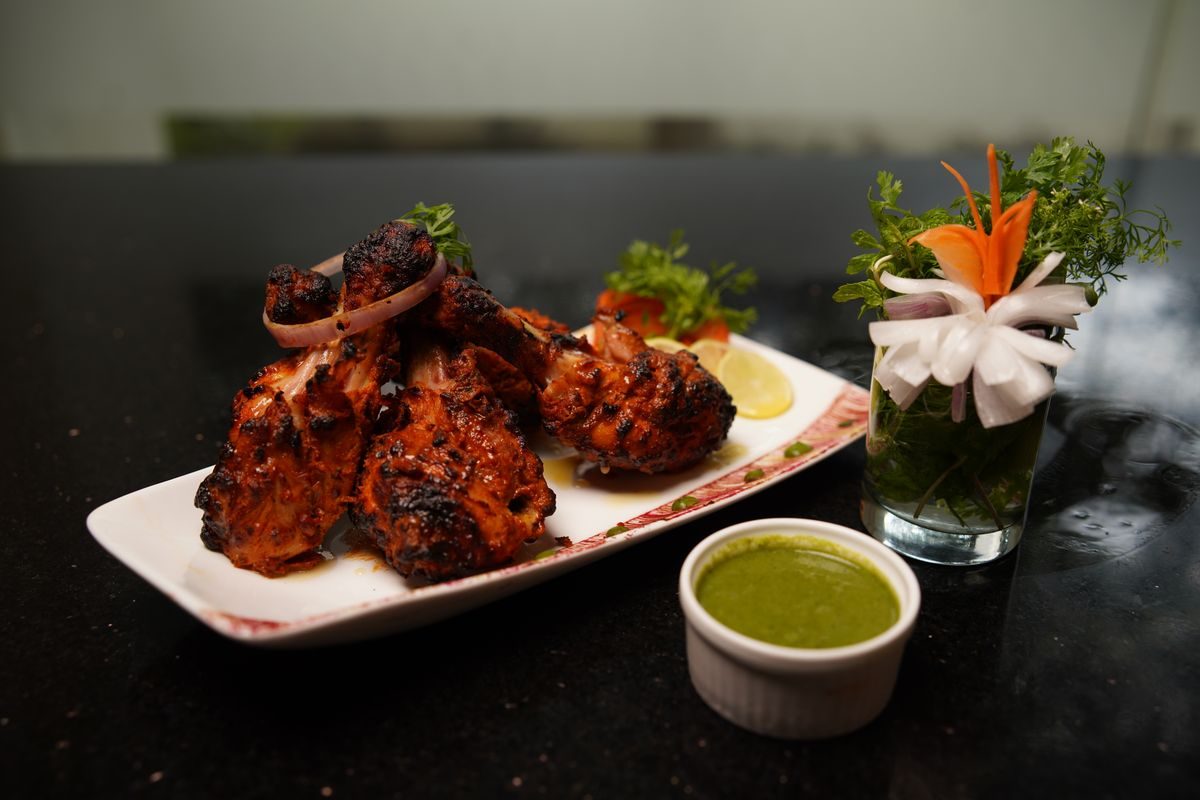
This recipe is adapted from Swasthi Shreekanth’s Authentic Tandoori Chicken (Restaurant Style) on Swasthi’s Recipes, an Indian recipe site. The marinade and the outdoor-grill method below both come from that post. It is a home adaptation of a tandoor dish, not a copy of it, and the sections below explain what carries over and what does not.
What a tandoor does, and what a grill does instead
Swasthi describes a tandoor as a cylindrical clay oven heated by wood fire or charcoal, where juices drip onto the hot charcoal and give the chicken its smoky flavor. A backyard grill is a different tool. Her own post says any heat source will cook the chicken, whether that is an oven, a stovetop pan, an air fryer or direct fire, so what you are reproducing at home is the marinade, the spice balance and some char rather than the clay oven itself.
Who invented the dish is not settled. Swasthi notes that some sources trace tandoori chicken to the Mughal period, while others credit Kundan Lal Gujral at Moti Mahal in Peshawar, before the partition of India. She sets that debate aside, and so do we.
Ingredients
These are the amounts on Swasthi’s recipe card, for 4 portions.
Chicken
- 1.5 pounds (about 3/4 kg) skinless, bone-in chicken thighs, legs, quarters or 8 drumsticks
Marinade
- 1/2 cup Greek yogurt (strained “hung curd”)
- 1 tablespoon ginger-garlic paste
- 1 teaspoon garam masala
- 1 to 2 teaspoons Kashmiri red chili powder
- 1/4 teaspoon black pepper
- 1 1/2 teaspoons coriander powder
- 1/2 teaspoon cumin powder
- 1/2 teaspoon sea salt
- 1/4 teaspoon turmeric (optional)
- 1 teaspoon kasuri methi (dried fenugreek leaves); the step-by-step photo section says 1 1/2 teaspoons
- 1 tablespoon lemon juice
- 1 1/2 tablespoons oil (she notes mustard oil is used in India)
Method
- Stir the marinade ingredients together. Swasthi stresses that it must be thick, not runny, or it will not cling to the chicken.
- Pat the chicken dry and cut deep slits: 3 to 4 in larger thighs, 2 to 3 in smaller pieces. Coat well, cover and refrigerate for at least 6 hours or overnight. Her post allows up to 48 hours.
- Heat the grill to medium-high and grease the grate generously. Wipe off excess marinade before the chicken goes on.
- Cook 5 to 6 minutes, turn, and cook another 5 to 6 minutes, repeating as needed. Swasthi puts the total at roughly 27 to 30 minutes, depending on the size of the pieces.
- Brush with butter or mustard oil at the end and serve with cilantro or mint chutney, onions and lemon wedges.
Doneness and food safety
Swasthi’s grill instructions end when a meat thermometer in the thickest part reads 165°F (75°C). That matches the USDA minimum for all poultry, which is 165°F (73.9°C). For oven cooking she gives a range of 165 to 170°F. Go by the thermometer, not the clock.
One point where we would differ slightly: her grill notes mention basting with the marinade. USDA advises that marinade from raw poultry should not be used as a sauce unless it is boiled first. Boiling a thick yogurt marinade is impractical, so the simpler route is to use only the butter or mustard oil she suggests for finishing. USDA also says poultry can stay in a marinade in the refrigerator for up to 2 days.
A second grill method to compare
Archana Mundhe of Ministry of Curry, another Indian recipe author, publishes a tandoori chicken recipe for oven or grill. She grills skinless drumsticks or whole legs at 400 to 450°F (204 to 232°C), about 20 minutes for drumsticks and about 30 minutes for legs, turning halfway, and says to cook until the juices run clear. Juices are a weaker check than a thermometer, so we would still confirm 165°F.
She says her mother made the dish on a terrace mini tandoor in India, and she credits Kashmiri chili powder for the deep red color with no artificial coloring. Swasthi makes the same point: skip food coloring, because Kashmiri chili is mild and gives the color on its own.
Where the grill falls short
Expect char and smoke from the fire, but not the all-around blast of a clay oven. For pan and oven cooks, Swasthi lists direct fire for the last few minutes as one way to add smoke, and a grill starts with that advantage. Thighs and drumsticks of similar size cook most evenly, according to her notes, and she recommends thick strained yogurt because ordinary runny yogurt will not hold the spices.
Keep reading
- Grilled Chicken Drumsticks: Weber’s Two Methods
- Weber’s Harissa Chicken Thighs on the Grill
- Grilled Greek Chicken Gyro, Adapted from Mia Kouppa
- Weber’s Grilled Cornish Game Hens, Step by Step
Sources
- Authentic Tandoori Chicken (Restaurant Style) — Swasthi’s Recipes, Swasthi Shreekanth
- Tandoori Chicken Recipe (Oven or Grill) — Ministry of Curry, Archana Mundhe
- Safe Minimum Internal Temperature Chart — USDA Food Safety and Inspection Service
- Poultry: Basting, Brining, and Marinating — USDA Food Safety and Inspection Service