
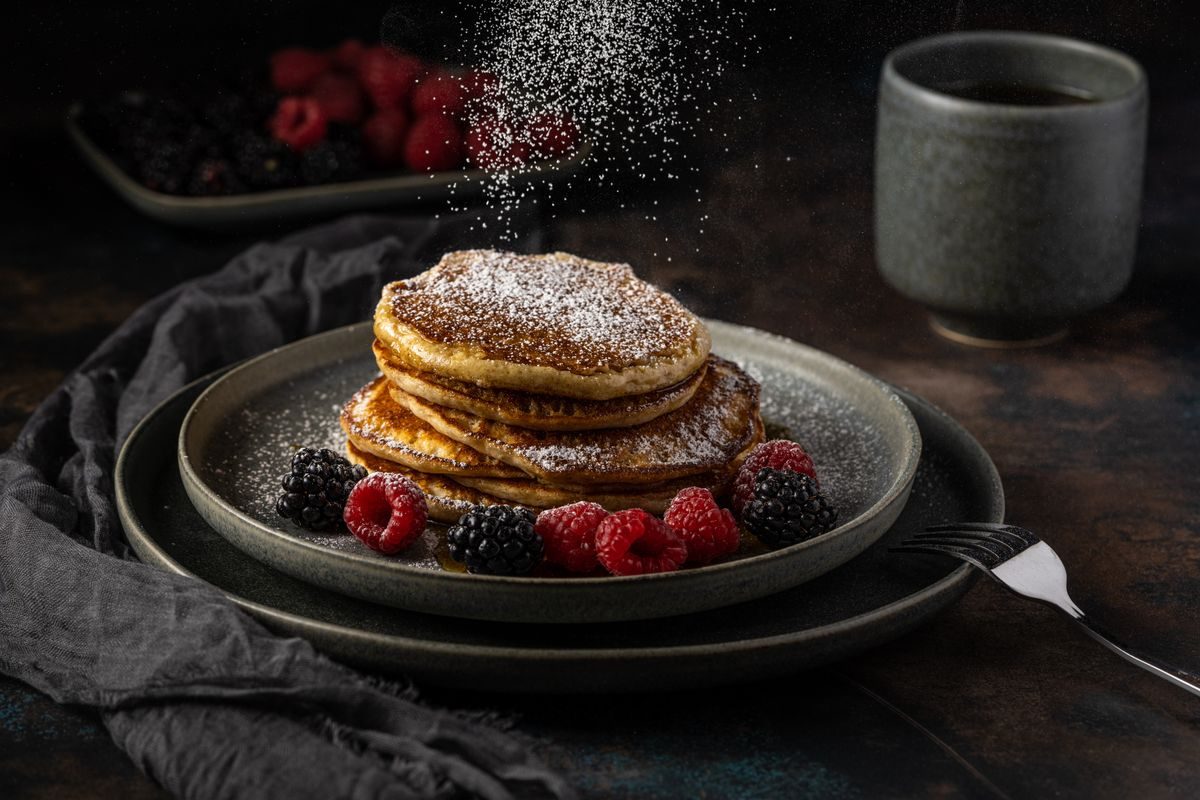
This recipe comes straight from Weber’s recipe library, where it is credited to Mike Lang: the Ricotta Pancakes recipe on weber.com. It is written for a griddle set to a steady low heat, which makes it a good first breakfast for a flat-top or a griddle insert. The method and quantities below are Weber’s; the food safety notes come from the FDA. This is a write-up of a published recipe, not a first-hand test.
Weber lists the recipe at 8 servings, with about 10 minutes of prep and 4 to 5 minutes on the griddle per pancake, and it marks a griddle as required equipment. Its own description says the ricotta gives a pancake that is light and fluffy, “while staying delightfully moist as they cook.”
Ingredients
- 2 cups milk
- 1 cup ricotta cheese
- 2 eggs
- 1/2 cup butter, melted
- 2 3/4 cups flour
- 4 teaspoons baking powder
- 4 teaspoons kosher salt (as printed on Weber’s page; see the note below)
- Oil for cooking
- Maple syrup, whipped cream, or berries for serving
Method
- Heat the griddle to low, 350-400°F (about 177-204°C; the Celsius figures in this article are my own conversions).
- In a large bowl, mix the milk, ricotta, eggs and melted butter.
- In a separate bowl, stir together the flour, baking powder and salt. Pour the dry mixture into the wet one and whisk until smooth. Weber says a few lumps in the batter are fine, so stop whisking once it comes together.
- Wipe a thin coat of oil over the griddle surface.
- Pour the batter onto the griddle in 1/3-cup portions. Cook until both sides are golden brown, flipping once, for 4 to 5 minutes in total.
- Lift the pancakes off the heat and serve with syrup, whipped cream, berries, or a mix of the three.
Notes on the Recipe as Published
The heat setting is the detail to get right. Weber calls for the griddle at low, 350-400°F, rather than a hot sear, and it asks for only a thin coat of oil on the surface. The 1/3-cup measure matters too: the 4 to 5 minutes Weber gives is for a pour of that size, so smaller pancakes would need a shorter time and closer watching. The cue Weber gives is colour, not the clock: cook until both sides are golden brown, and flip only once.
Four teaspoons of kosher salt is what Weber’s page prints alongside 2 3/4 cups of flour. I have reproduced the figure exactly as listed, but it is worth double-checking against the original page before you scale the recipe, and it is the one quantity here I would confirm before cooking.
Weber’s page marks the recipe as a griddle recipe with gas and charcoal listed as the fuel types, so a griddle plate or flat-top over either fuel matches the recipe as written. Weber also credits Mike Lang as the author, and its page suggests serving with maple syrup, whipped cream or berries.
Egg and Batter Safety at the Griddle
This batter contains raw eggs and raw flour, so a few handling rules from the FDA apply before the pancakes ever touch the griddle.
Eggs
The FDA’s egg safety page says to wash hands, utensils, equipment and work surfaces with hot, soapy water before and after they touch raw eggs or foods containing raw egg. It advises cooking eggs until both the yolk and the white are firm, and says dishes that contain eggs, such as casseroles, should reach 160°F (about 71°C), checked with a food thermometer. That page does not give a separate figure for pancakes, and a thin pancake is awkward to probe, so treat 160°F as the reference point for egg dishes generally and cook the pancakes through rather than pulling them early. The FDA also says to refrigerate leftover cooked egg dishes and use them within 3 to 4 days.
Flour and raw batter
The FDA’s flour guidance notes that processing raw grain into flour does not kill harmful bacteria, that many flour foods also contain raw eggs, and that cooking is the only way to be sure such foods are safe. Its advice is simple: never eat or taste raw flour, dough or batter. It also says to wash hands, utensils, bowls and countertops with warm, soapy water after handling raw flour, dough and eggs, and to keep raw foods such as flour and eggs separate from ready-to-eat foods. In practice that means the whisk, the batter bowl and the measuring cup stay away from the serving plates and the fruit.
Dietary Note
This is not a vegan recipe: it contains milk, ricotta, eggs and butter. It has no meat or fish ingredients, but I have not verified how the ricotta is made, so it is not labelled vegetarian here.
Keep reading
- Weber’s Grilled French Toast, Step by Step
- Grilled Pizza on Gas or Charcoal: Weber’s Method
- Grilled Flatbread on Gas or Charcoal: King Arthur Recipe
- Weber’s Skillet Cornbread on the Grill, Compared