
This guide is based on J. Kenji López-Alt’s smash burger recipe, published on Serious Eats as The Ultimate Smash Cheeseburger (the page shows an original date of March 2014 and an update in September 2025). We have not cooked it ourselves, so this is a write-up of his published method, adapted for readers using a griddle, flat-top or cast-iron pan, with the USDA’s safe temperature added at the end.
The idea is simple: instead of one thick patty, you cook two thin, hard-smashed 2-ounce patties with a slice of cheese between them. In López-Alt’s words, the aim is “maximum crust = maximum flavor = maximum craving.”
Why Smashing Works
According to the recipe, putting a ball of meat on a hot, unoiled surface and pressing it into a thin disk greatly increases the contact between meat and metal. That increases the Maillard reaction, the browning chemistry behind the crust on steaks and burgers. Splitting a 4-ounce burger into two 2-ounce patties doubles the crust for the same total size, while the cheese sandwiched in the middle helps keep the burger moist.
The trade-off is stated plainly in the recipe: patties this thin will not give you a medium-rare centre, and they come out a little drier than a thick burger. The mitigations it gives are cooking almost entirely on one side, keeping the second side to a few seconds, and using the cheese layer for fat and moisture.
Ingredients
Makes 1 burger (multiply as needed).
- 1 soft hamburger roll, buttered and toasted
- Condiments and toppings as desired, such as mayonnaise, mustard, shredded lettuce, onions, tomatoes and pickles
- 4 ounces (110 g) freshly ground beef chuck, divided into 2 balls of 2 ounces (55 g) each
- Kosher salt and freshly ground black pepper
- 1 slice good melting cheese, such as American or cheddar
The recipe’s equipment list is a large straight-sided stainless steel sauté pan, a stiff metal spatula and a metal bench scraper.
Method
- Get the bun ready first: put your toppings on the bottom half and keep it next to the stove. The burger cooks in under a minute, so there is no time to assemble it afterwards.
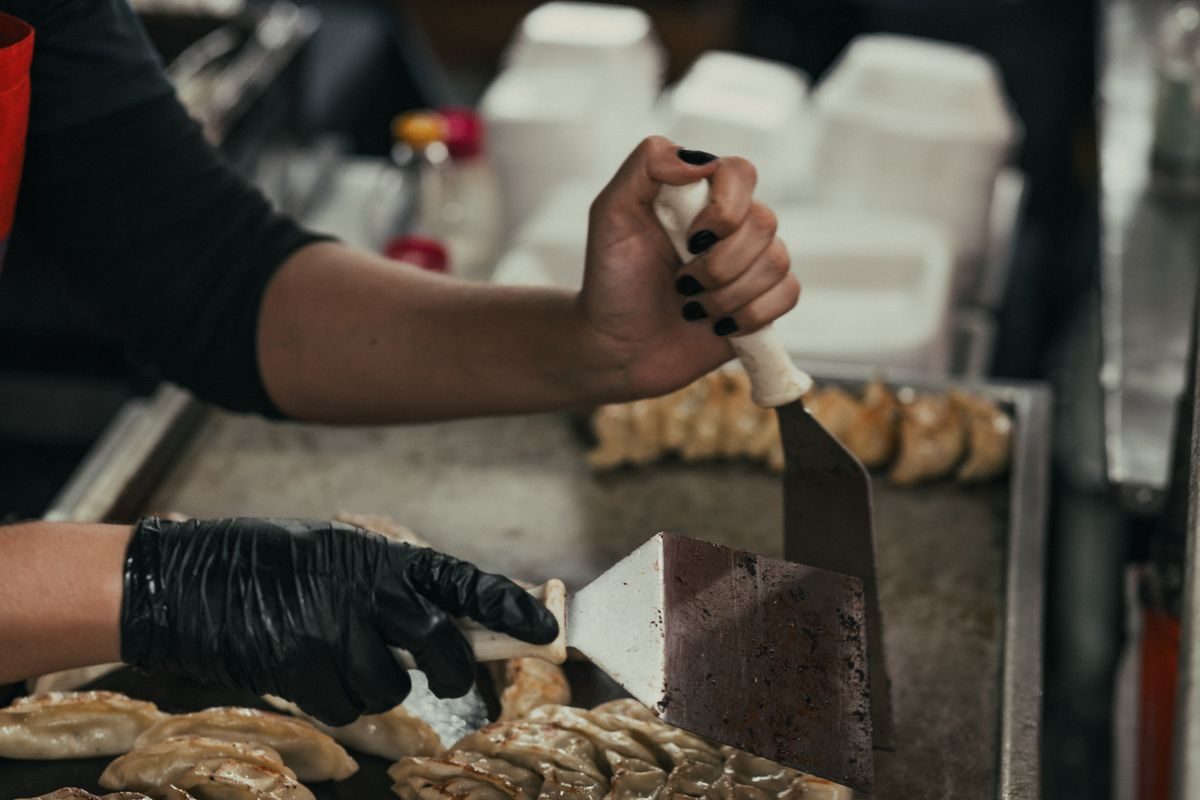
- Heat a large stainless steel pan over high heat (the recipe card says 2 minutes). Add both beef balls, then press each one flat with a stiff metal spatula, using a second spatula on top for extra pressure. The smashed patties should end up slightly wider than the bun.
- Season generously with salt and pepper. Cook for about 45 seconds, until the patties are well browned and the tops are starting to turn pale pink or gray in spots.
- Slide a bench scraper (or the back of a stiff spatula) under each patty, taking care to lift every bit of the browned crust off the pan.
- Flip the patties and, straight away, lay the cheese on one and set the other on top. Move the stack directly to the bun and serve.
The recipe notes that these cook too fast to batch, so make them one at a time and keep finished burgers warm under a foil tent.
Griddle and Pan Heat Tips
López-Alt’s version is written for a stainless steel pan, so these tips only repeat what the source says and do not add flat-top settings of our own.
- Heat the surface hard. In the text of the recipe he preheats a stainless steel or cast iron pan over high heat for several minutes, aiming for 600 to 700°F (315 to 370°C), and prefers stainless. The recipe card says 2 minutes, so use a thermometer rather than the clock.
- Skip nonstick. He says it prevents proper crust development, and that heating nonstick surfaces above roughly 450°F (230°C) is undesirable because the coating vaporizes.
- Do not grease the surface. The restaurant version he describes uses an ungreased griddle so the meat sticks and browns.
- Check a cast-iron surface with a heat gun. Lodge Cast Iron suggests reading cast iron temperatures with a digital heat gun.
- A home flat-top is not his restaurant griddle. The restaurant uses a low-emissivity griddle that heats almost entirely by contact. He gives no separate figure for a home flat-top, so do not assume yours reads the same as his pan.
- Bind the beef lightly. For smash burgers he says you do want to work the beef a little so it binds, then pack it into 2-ounce balls. Weighing them on a scale keeps the patties consistent.
- Take care with hot fat. He suggests heavy-duty protective gloves when scraping the patties.
Cook Ground Beef to a Safe Temperature
The recipe judges doneness by browning and timing and does not give an internal temperature. The USDA Food Safety and Inspection Service says the safe minimum for ground meats, including ground beef, is 160°F (71.1°C), measured with a food thermometer. It also says colour and appearance are not reliable indicators of safety, and that even hamburgers that look fully cooked may not be. Its thermometer guidance is to insert the probe into the thickest part of the food, without touching bone, fat or gristle. The USDA notes that some people choose to cook to a higher temperature for personal preference. Use the chart as your guide when deciding how to cook these.
Keep reading
- Classic Grilled Cheeseburgers (Weber Recipe)
- J. Kenji López-Alt’s Reverse Sear: Why Cooking Steak Backwards Works Better
- The Maillard Reaction: The Actual Chemistry Behind Grill Marks and Browning
- Seasoning a Flat-Top Griddle: Blackstone’s Steps