
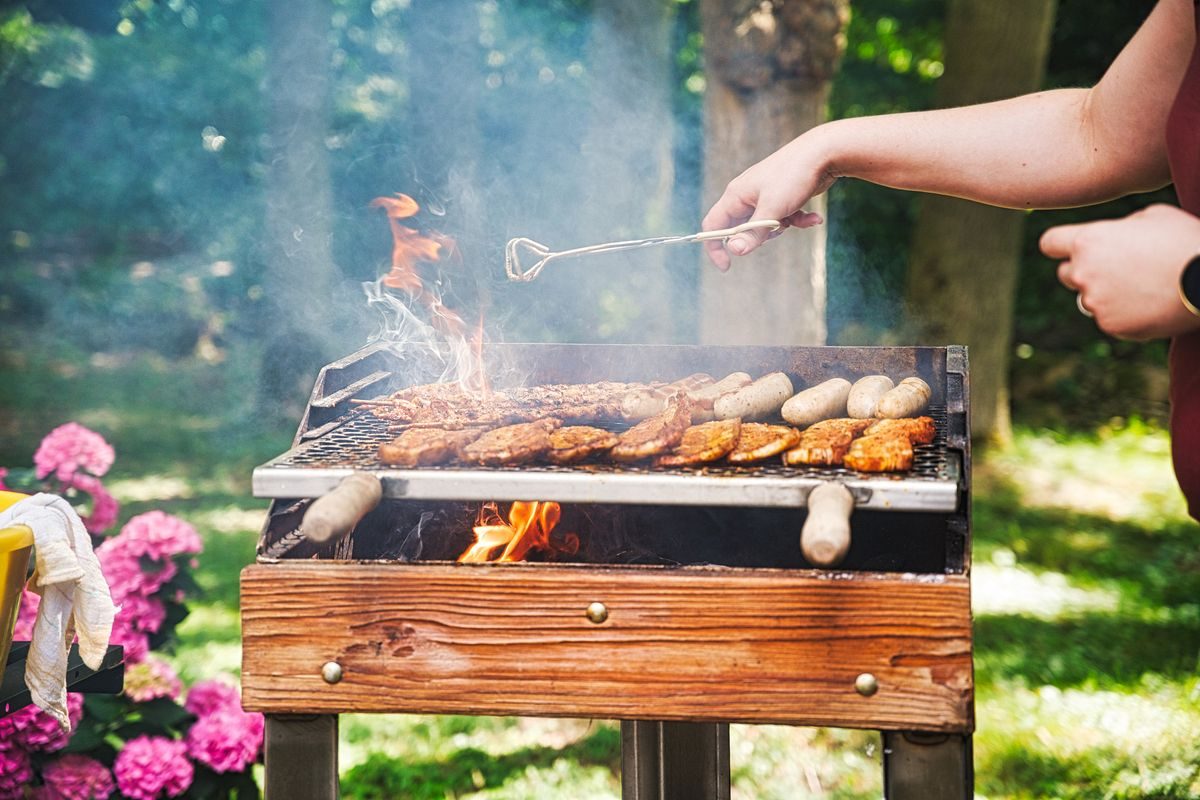
The backyard cookout — dad at the grill, a patio full of guests, a tiki-glass drink in hand — reads as timeless Americana, but the Smithsonian’s National Museum of American History dates its rise fairly precisely to the years after World War II. Drawing on the museum’s “Backyard Cookout” exhibition materials, its “Postwar Potluck” collections story, and reporting from Smithsonian magazine, the postwar patio turns out to be less about the food itself and more about travel, gender roles, and a very specific kind of suburban leisure.
Where the Museum Says It Started
The National Museum of American History’s “Postwar Potluck” story, published by the museum’s Caitlin Kearney, states that backyard barbecue as a widespread American practice began in the 1950s, as postwar Americans used their newfound leisure time for casual outdoor dinners after the frugality of wartime rationing. That’s a somewhat tighter claim than culinary historian Robert Moss makes in Smithsonian magazine’s separate reporting on the Weber grill: Moss traces casual backyard barbecue back further, to the 1920s and the first wave of American suburbanization, when magazines began publishing instructions for digging small backyard cooking pits, an echo of nineteenth-century communal pit barbecues. The two accounts aren’t strictly contradictory — Moss is describing early roots, the museum’s “Postwar Potluck” piece is describing when the practice went mainstream — but they do put different dates on when backyard barbecue actually began, and readers should treat the postwar period as an acceleration rather than a clean starting point.
What the War Changed
Whichever starting date is used, both Smithsonian sources agree on why the postwar years mattered so much. Paula Johnson, curator of the museum’s “FOOD: Transforming the American Table, 1950–2000” exhibition, told Smithsonian magazine that meat had been rationed during the war and scarce before that, during the Depression, so by the 1950s Americans were ready for a different kind of food on the table. The museum’s “Backyard Cookout” materials add a second driver: newly affluent postwar Americans had, for the first time, the money and opportunity to travel — to Mexico, California, Hawaii, Florida, the Caribbean, and further afield to the Pacific islands and Southeast Asia — and came home wanting to recreate that casual, tropical-inflected lifestyle in their own yards.
The Tiki Backyard
That travel habit reshaped what the backyard cookout actually looked like, according to the museum’s exhibition text. The restaurant and bar chain Trader Vic’s is credited with popularizing many of the foods and drinks that became fixtures of the backyard scene. Hosts swapped gin and scotch for rum and tequila drinks inspired by tiki bars, and pupu platters — egg rolls, fried shrimp, beef teriyaki skewers, spare ribs, chicken wings — were copied from restaurant menus and magazine spreads promoting the same foods for home entertaining. Workday suits gave way to aloha shirts, once considered formal Hawaiian attire, and guayaberas of Caribbean origin. Even the yard decor followed the trend: the museum’s collection includes a molded-plastic pink flamingo, designed for Union Products by Don Featherstone in 1957, which the museum describes as evolving from a simple lawn ornament into an enduring icon of American backyard kitsch.
Who Cooked What
The backyard grill also created a new, explicitly gendered division of labor, according to the museum’s “Backyard Cookout” materials: men “manned” the grill to cook the meat for the main course, while women worked primarily indoors preparing the side dishes. The “Postwar Potluck” story adds texture to the kitchen side of that split, describing home cooks working with increasingly all-electric kitchens — citing a period cookbook, Let’s Get Acquainted with Your Hotpoint Electric Range, which doubled as an appliance manual and organized whole “budget oven meals” designed to cook together at a single oven temperature. Outdoors, the new “grill master” role for men was itself notable enough to be treated as a cultural shift rather than a footnote, the museum’s materials suggest.
Selling the Cookout
By the late 1950s, the backyard cookout had become its own retail category, not just a pastime. The museum’s “Backyard Cookout” text states that American manufacturers and retailers were actively promoting new tools, clothing, furniture, and serving ware built specifically around grilled patio meals. A contemporary magazine account captures how quickly the trend took hold: Look magazine’s July 12, 1955 feature, “America Bit by the Barbecue Bug,” described a new convert to backyard cooking as someone who, after one bite of a self-charred frankfurter, becomes hooked as a cook, poring over grill advertisements and recipes the way “a gardener studies seed catalogues.” What began as a postwar novelty had, within a decade, become an entire consumer industry built around a single suburban ritual.
Keep reading
- The Invention of the Weber Kettle Grill
- The Gas Grill: Two Companies, One Contested First
- Memphis Barbecue: Pork Sandwiches, Ribs and Beale Street
- Barbacoa in Mexico: Pit Cooking from Pib to Hidalgo
Sources
- Smithsonian National Museum of American History — “Backyard Cookout,” FOOD: Transforming the American Table exhibition
- Smithsonian National Museum of American History — “Postwar Potluck: Grilling Out, Convenience Cooking, and Other 1950s Food Trends” by Caitlin Kearney
- Smithsonian Magazine — “The Story of the Weber Grill Begins With a Buoy” by Maya Wei-Haas