
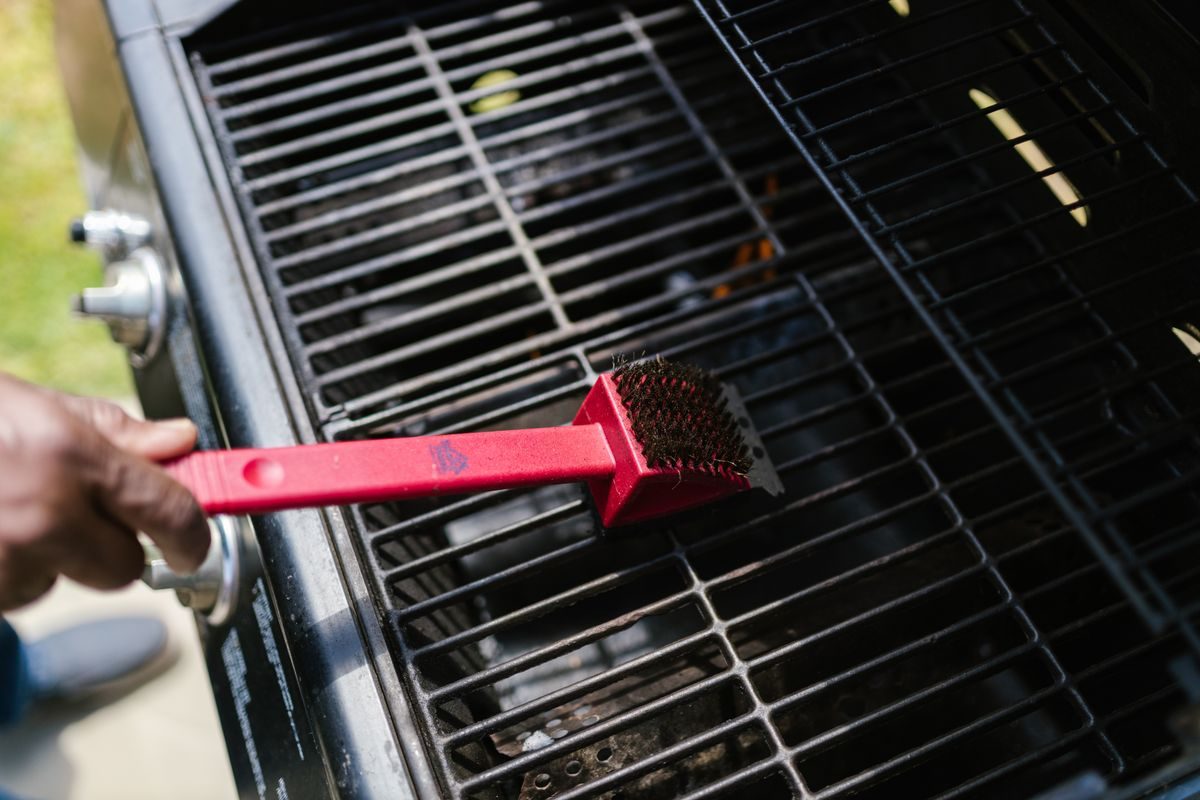
Cleaning a grill is a fire-prevention job and, since 2026, a recall-checking job too. This guide draws on the CDC’s MMWR report on wire-bristle injuries, the US Consumer Product Safety Commission’s (CPSC) 2026 recall notices and grilling tip sheet, NFPA’s grilling safety page, and owner’s guides from Weber and Char-Broil.
What the CDC documented
The CDC’s 2012 report described six patients at one Rhode Island hospital system between March 2011 and June 2012, aged 31 to 64, who each swallowed a wire bristle from a grill-cleaning brush. It followed an earlier series of six cases at the same hospitals. The injuries ranged from punctures in the neck to perforation of the gastrointestinal tract, and two patients needed emergency abdominal surgery. All six recovered. The CDC advised examining the grill surface before cooking and considering alternative cleaning methods or products, and it asked that cases be reported to the CPSC at saferproducts.gov.
Where the guidance stands in 2026
The CPSC has since moved from the CDC’s cautious suggestion to consider alternatives to a firm stop-using message. It recalled about 3.2 million Weber wire brushes on February 26, 2026, citing at least 38 reports of detached bristles, four of them swallowed and treated. About 10.2 million Nexgrill brushes followed on March 26, and Conair’s Cuisinart recall reached 3,625,800 brushes after an August 27 expansion. The CPSC’s acting chairman urged consumers to stop using and discard metal-bristle brushes, switch to non-wire alternatives, and, before grilling, inspect the grill surface and examine food closely. Its grilling tip sheet suggests a ball of aluminum foil or a nylon brush.
Where sources differ
Weber owner’s guides from 2016 to 2020 (the charcoal, kettle and Summit models we read) still tell owners to check a stainless bristle brush for loose bristles and replace it every spring. They predate the recall, so treat that advice as superseded and check cpsc.gov for your brush. Weber’s replacement, a nylon brush, is listed for use only on fully cool grates. Weber’s UK page suggests brushing residue off while the grate is still hot after a burn-off. Char-Broil’s guide says cleaning cooking surfaces while the grill is hot is not recommended, and asks you to make sure no loose bristles remain if you do use a bristle brush. A cool-only nylon brush fits the Char-Broil approach, not the hot-brush one.
Grease management, per the manuals
NFPA says the grill had not been cleaned in roughly one-fifth of grill fires (2020–2024 averages) and advises removing grease or fat from the grill and the trays below it. Weber’s Summit 670 guide asks you to check the slide-out grease tray and catch pan before every use, remove excess grease with a plastic spatula or scraper, and wash them in soapy water. It warns that the catch pan and its hot grease need care when you remove them.
- Foil: Weber’s US and international guides both say not to line the slide-out grease tray with foil; the US guide says foil can stop grease reaching the catch pan. The international guide does allow a disposable drip pan or foil in the catch pan.
- Lid flakes: Weber says carbonised grease inside the lid flakes off looking like paint, and suggests wiping the lid with a paper towel while it is warm. Char-Broil says brown or black buildup inside a gas grill is not paint, and suggests detergent solution or a grill cleaner with a scrub brush.
- Burners: Weber’s gas guides say not to enlarge burner ports or valve orifices when cleaning.
Safe order of work for a gas grill
Weber’s Summit guide says to turn the grill off and let it cool before cleaning. Its deep-cleaning article adds turning the grill off and disconnecting the propane tank first. Inspect the hose as you go: Weber says a nicked, cracked, abraded or cut hose means the grill should not be used until the hose is replaced with an authorised part.
When to stop and hand off
- Any loose bristle on the grate or brush: discard the brush and use a non-wire tool. Weber’s guide says to replace a brush if loose bristles are found.
- A bristle in food, or swallowed: the CDC’s cases involved severe pain on swallowing or severe abdominal pain after grilled meat. The report is written for clinicians, so contact a health professional if you are worried, and report the incident at saferproducts.gov.
- Damaged hoses, gas fittings, igniters or burner parts: Weber’s guide says not to repair gas-carrying or gas-burning components without contacting the manufacturer.
Keep reading
- Grill Flare-Ups and Grease Fires: Causes and What to Do
- Propane Grill Safety: Leak Checks, Storage and Gas Smells
- Winterizing a Grill: Weber and NC Storage Rules
- Cleaning an Offset Smoker’s Firebox
Sources
- CDC MMWR: Injuries from Ingestion of Wire Bristles from Grill-Cleaning Brushes, Providence, Rhode Island, March 2011–June 2012
- CPSC: Weber Recalls Over 3.2 Million Metal Wire Bristle Grill Brushes
- CPSC: Nexgrill Recalls Over 10.2 Million Metal Wire Bristle Grill Brushes
- CPSC: Conair Expands Recall of Cuisinart Grill Brushes
- CPSC: Chairman Feldman statement on the Weber recall
- CPSC: Summer Grilling Safety tip sheet (NSN-11-052023)
- NFPA: Grilling Safety Facts & Resources
- Weber Summit E-670/S-670 LP Owner’s Guide (part 52575, 2020; retailer-hosted copy)
- Weber Spirit E-210/E-310 Classic LPG Owner’s Guide (part 48626, 2016)
- Weber support: How do I clean my Gasgrill?
- Weber UK: How to clean a gas BBQ grill
- Weber US: How to Deep Clean Your Gas, Charcoal, or Pellet Grill
- Weber US: Cold Cleaning Brush product page (cool grates only)
- Char-Broil gas grill product guide (model 463346017; retailer-hosted copy)