
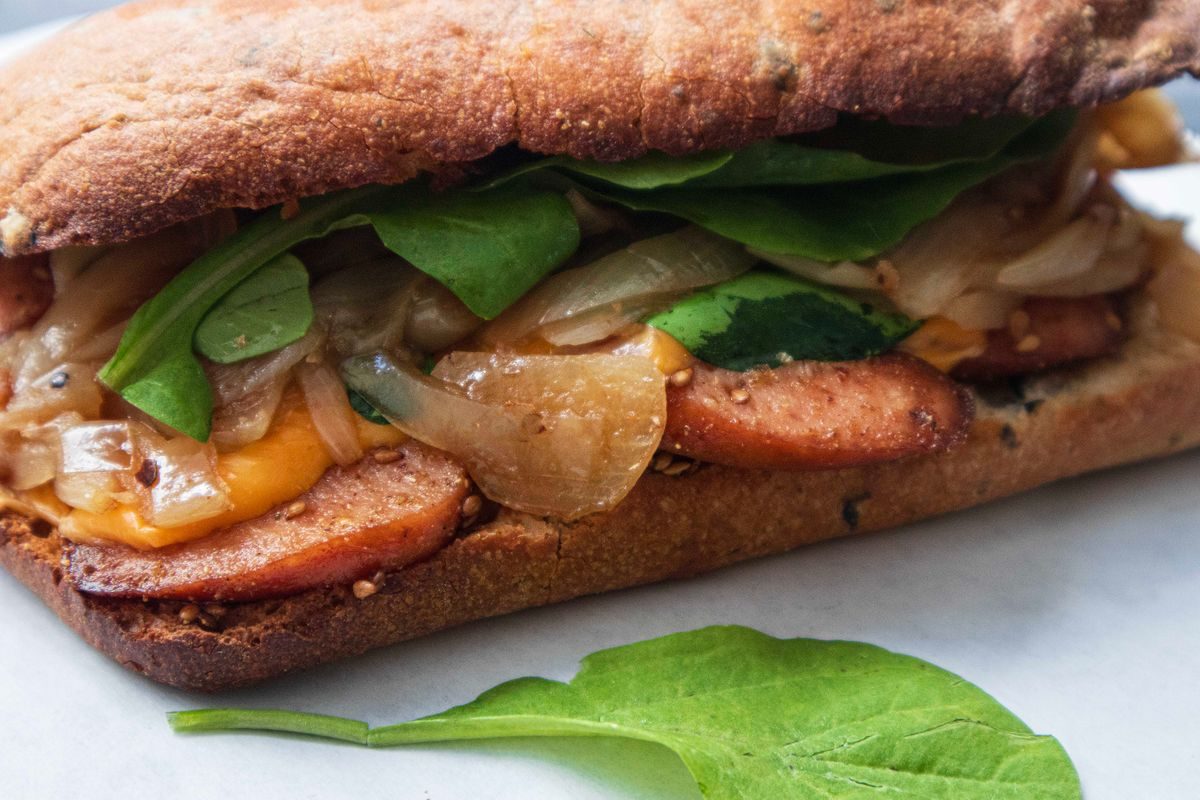
This one is less a single chef’s recipe than an Australian institution, and the method here comes from food writer Richard Cornish‘s How to make your sausages sizzle, published on Good Food, the recipe site run by The Sydney Morning Herald and The Age, alongside the history of the tradition itself as recorded by the Australian Food Timeline and ABC News.
What a Sausage Sizzle Is
A sausage sizzle, in its most familiar modern form, is what the Australian Food Timeline describes as a sausage and fried onions wrapped in a single slice of white bread, with tomato sauce optional. It’s typically run by volunteers from a local charity, school or sports club as a fundraiser rather than sold as a commercial product. The best-known version is the Bunnings Sausage Sizzle, held most weekends outside the hardware chain’s stores, but the format is older and wider than any one retailer.
Cooking the Sausages and Onions
Cornish’s advice, given in response to a reader whose onions burned at a school fundraiser, centers on heat control. Turn the barbecue down low. Slice the onions finely, season them with salt, and massage the salt through to soften them and draw out liquid. Place a big double handful of onions on the hotplate with as much of that liquid as you can manage, and resist stirring for about five minutes; then turn them and leave them piled up rather than spread out, so they stay soft and golden instead of drying out, with the sugar in the drawn-out juice caramelising at the edges.
The sausages themselves should also be cooked low and slow, according to Cornish, with excess hot fat scraped away as it builds up, since it can exceed 200°C and cause the collagen casing to fail. He also advises against pricking sausages before cooking, since that releases the fat and moisture that keep them from drying out and can cause flare-ups on the grill.
A Note on Safety
Sausages are a ground and seasoned meat product, so they fall under the same food-safety category as burgers or meatballs rather than a whole cut like a steak. Cornish’s article cites Australia’s Food Safety Information Council, which advises that sausages and chicken cooked on a barbecue should reach an interior of 75°C, checked with a meat thermometer rather than guessed by eye. That’s higher than the equivalent U.S. figure: the USDA’s Safe Minimum Internal Temperature Chart sets ground meats at 160°F, which is 71.1°C. Either way, a thermometer beats guesswork, and Cornish also warns against cooking raw chicken and sausages side by side on the same barbecue surface to avoid cross-contamination.
From Rationing to Ritual
The sausage sizzle’s origins are humbler than its current status suggests. According to ABC News’ account of its history, sausages weren’t rationed like other cuts of meat during the Second World War, since they were largely made from trimmings, and Jacqui Newling, colonial gastronomer at Sydney Living Museums, told ABC that “people didn’t trust what went inside the sausage” during that period, which gave it a reputation as poverty food. One of the earliest recorded uses of the term “sausage sizzle” was the “Full Moon Sausage Sizzle” run by the Forbes Country Women’s Association in 1946, raising food parcels for England. By the 1960s, ABC reports, the sausage had gone from humble to something closer to a folk hero, tied to community fundraising rather than any particular brand.
The Bunnings Version and #Oniongate
The Bunnings Sausage Sizzle traces back to a charity cake stall outside the Sunshine, Melbourne store in 2004, run by the local Country Women’s Association, according to the Australian Food Timeline; it’s speculated that a local footy club helped turn the stall from cakes into sausages, since the aroma of frying sausages and onions was likely a bigger draw for hardware shoppers than cream sponges. A 2019 rule change requiring onions to sit under, not on top of, the sausage — introduced after a customer slipped on a dropped piece of onion at the Gympie store — became national and even international news, a controversy ABC News covered as evidence of how seriously Australians take the ritual.
Keep reading
- Smoked Sausage: 225°F Method and USDA Temperatures
- How to Grill Sausages and Brats Without Splitting
- Griddle Breakfast Potatoes: Two Published Methods
- NPS Freezer Breakfast Burritos for the Campfire