
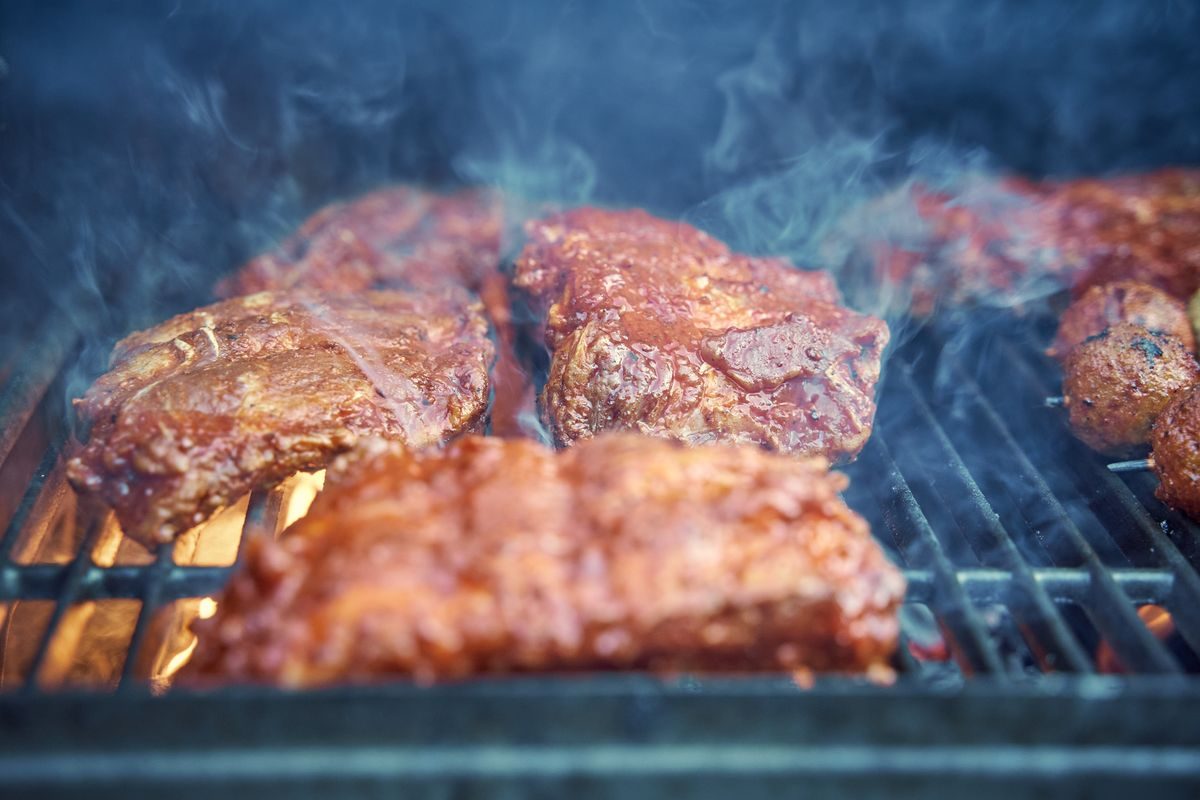
This method comes from Meathead Goldwyn of AmazingRibs.com: the Last Meal Ribs recipe. It is written to work for any cut of pork ribs, and here we follow it as a baby back rib cook, using the timing it gives for that cut. It relies on plain salt, a simple rub and a single low temperature, with no foil and no mop.
Why baby backs cook differently
The recipe explains that baby backs lie near the spine, while spareribs attach to them and run down to the chest. Baby backs are described as leaner and smaller than St. Louis cut ribs, so they cook faster: the recipe allows 3 to 5 hours for baby backs versus 5 to 7 hours for spareribs or St. Louis cut, and thicker, meatier slabs take longer. If you pack racks tightly into rib holders, it suggests adding about an hour.
Ingredients (one rack)
- 1 slab of baby back ribs
- 4 tablespoons Meathead’s Memphis Dust rub
- 1 teaspoon Morton Coarse Kosher Salt (the recipe’s ratio is ¼ teaspoon per pound of meat, because ribs are about half bone)
- 6 tablespoons barbecue sauce (optional)
- About 8 ounces (roughly 227 g, our conversion) of dry wood chunks, chips or pellets in total; the recipe suggests apple, oak or hickory for pork
The Memphis Dust recipe is published separately on AmazingRibs. That page says the rub contains no salt, which is why this recipe salts the meat first. It is built on brown sugar, white sugar, paprika, garlic powder, black pepper, ginger, onion powder and rosemary; the full batch recipe is on AmazingRibs.
Method
- Prep. Rinse the rack, then remove the membrane from the bone side. Slide a butter knife under it, work a section loose with your fingers, grip it with a paper towel and peel. If it will not come off, the recipe says to slash it every inch so fat can render. Trim excess fat from both sides.
- Salt. Sprinkle on the kosher salt, ideally 1 to 2 hours ahead, which the recipe calls dry brining. Skip this if you use a commercial rub that already contains salt, and note that “enhanced” or “self-basting” ribs have been injected with brine at the packing plant.
- Rub. Wet the meat with a thin layer of water, then sprinkle on about 2 tablespoons of the rub per side, enough to coat without hiding the meat. The recipe says a mustard slather makes little or no difference.
- Fire up. Set up a smoker or two-zone grill at about 225°F (107°C), staying above 200°F (93°C) and below 250°F (121°C) if you can. Monitor it with a good digital oven thermometer; the recipe says not to rely on bimetal dial thermometers. Add about 4 ounces of wood at the start and another 4 ounces when the smoke fades after 20 to 30 minutes, then no more; the recipe warns that over-smoked meat is the mistake you cannot undo.
- Cook. Put the ribs in over indirect heat, meaty side up, and close the lid. There is no need to flip them. With several slabs, swap the positions of those nearest the fire halfway through.
- Test for doneness. Lift the slab with tongs and bounce it gently. If the surface cracks, it is ready.
- Sauce, if wanted. Brush both sides lightly and cook about 15 minutes more. The recipe says not to sauce earlier because the sugar can burn. Optionally, finish over the hottest part of the grill with the lid open, one side then the other, and watch closely, because the sauce can go from caramelized to burnt in under a minute.
Doneness is texture, not the USDA number
USDA’s chart lists 145°F (63°C) with a 3-minute rest for pork steaks, chops and roasts; ribs are not named on it. Ribs are taken far past that for tenderness. AmazingRibs says a thermometer is one of the few tools you cannot lean on with ribs, because the bones affect the reading and the meat is thin. If you have a very thin probe and can keep it away from bone, it suggests aiming for about 200°F (93°C). That figure is there to break down tough connective tissue, so the bend (bounce) test remains the recipe’s main check.
The foil question
Meathead describes the “Texas Crutch”, wrapping the slab in foil with about an ounce of water for up to an hour, as optional. He notes competition cooks use it, but says the improvement is slight, that he never bothers for backyard cooking, and that too long in foil can turn the meat to mush and soften the bark. He specifically recommends against the 3-2-1 method, saying two hours in foil or butcher paper is far too long for ribs. If you want to try wrapping, the recipe suggests mastering the basics first.
Keep reading
- Weber’s St. Louis Ribs with Smoked Onion BBQ Sauce
- Meathead’s Georgia-Style Smoked Chicken Recipe
- Malcom Reed’s Killer Hogs Ribs: A Step-by-Step Smoked Spare Rib Method
- Baby Back, Spare, or St. Louis-Cut: What’s Actually Different About Each Rib