
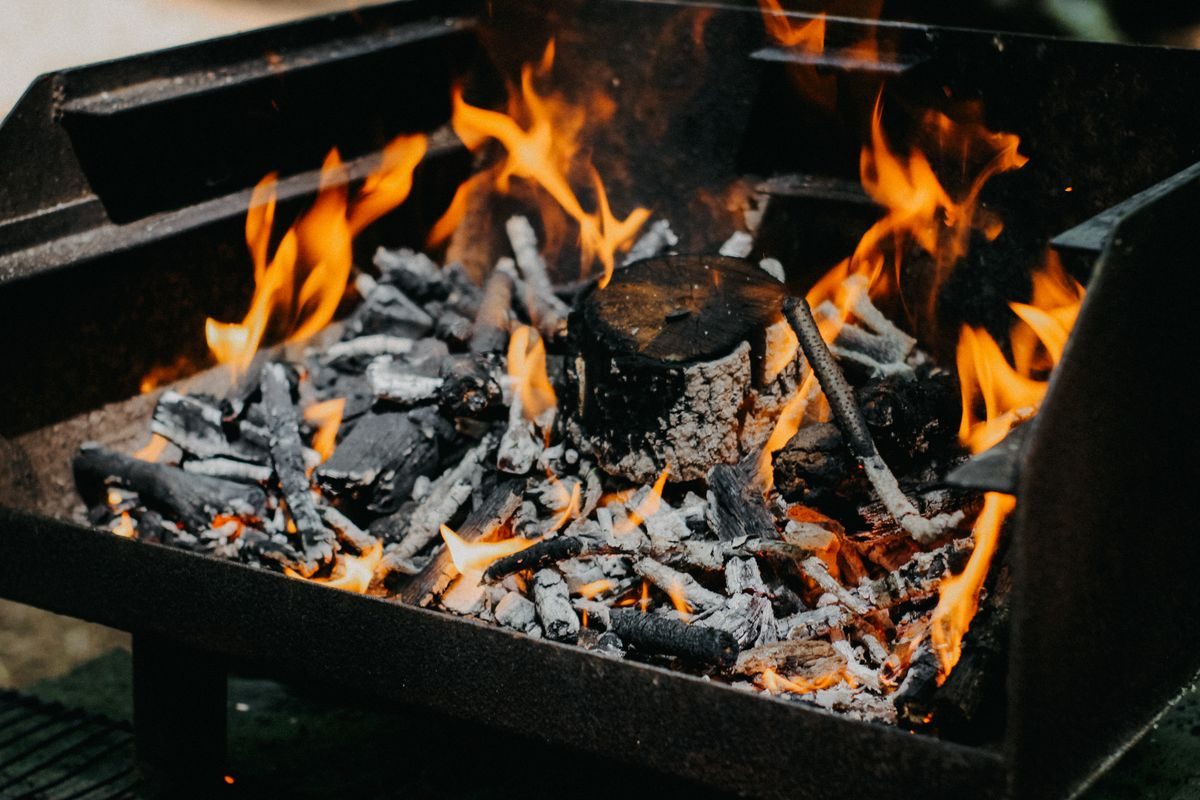
Weber, AmazingRibs.com and the National Fire Protection Association (NFPA) all agree on the starting point: use a chimney starter rather than a bottle of lighter fluid. They differ on timing, on how many fire-starter cubes to use, and on whether to shake the coals partway through. This guide follows Weber’s chimney starter walkthrough, Weber’s Chimney Starter 101, Weber’s charcoal grill owner’s guide, AmazingRibs.com’s charcoal starter guide and NFPA’s grilling safety tip sheet. Temperatures are in °F, with °C conversions of our own.
The Setup Steps
Weber’s walkthrough starts by taking the cooking grate out of the kettle. Fill the chimney to the top with charcoal (less if you are cooking less), put the lighter cubes on the charcoal grate and light them, then stand the chimney directly over the flame. Weber’s Chimney Starter 101 adds three preparation steps: open the lid damper fully, slide the bowl damper blades fully open, and sweep old ash into the ash catcher first.
The fire starter itself is where the sources disagree. Weber’s Chimney Starter 101 specifies two lighter cubes. AmazingRibs says the package on Weber’s cubes calls for two but that one is enough. Weber’s UK page tells readers to light three. With no cubes, Weber’s owner’s guide says a few sheets of wadded newspaper in the bottom of the chimney will do. Chimney Starter 101 suggests soaking the paper in olive oil; AmazingRibs says oil is optional and that it has never found it necessary.
How Long It Takes, and What “Ready” Looks Like
Every source hedges the timing, and the ranges differ:
- Weber’s walkthrough: about 10 to 15 minutes, depending on weather.
- Weber’s Chimney Starter 101 and AmazingRibs: about 15 minutes.
- Weber’s owner’s guide: 15 to 20 minutes with a chimney.
The readiness cue is more consistent than the clock. Weber says the coals on top should be turning a bit gray with ash; the owner’s guide says a coating of white ash, and that the lighter cubes must be completely consumed before food goes on. AmazingRibs describes briquettes covered in gray ash, and says lump charcoal shows a mix of red embers and white ash and does not ash over, so about 15 minutes is enough. Only AmazingRibs recommends a step in the middle: at around five minutes, put on a glove and shake the chimney so the unlit top coals tumble down. Weber’s pages do not mention shaking.
Pouring and Handling the Chimney
Weber says to put on two insulated barbecue mitts and hold both handles; the swinging handle helps you lift the chimney and aim the coals. Arrange them for direct or indirect heat, put the cooking grate back and close the lid. Weber says the grill reaches 500 to 550°F (260 to 288°C) in about 10 to 15 minutes, counts as preheated, and then you adjust the dampers.
Weber’s owner’s guide adds rules for the grill: use it outdoors only, never in a garage, breezeway or other enclosed area, and keep it at least two feet (60 cm) from combustible material. Do not wear loose flowing sleeves while lighting. Keep charcoal on the charcoal grate, not the bottom of the bowl. Afterwards, Weber says to set the chimney somewhere safe, away from pets and guests, and check that it is completely empty. AmazingRibs adds that it should sit on something heatproof.
What the Safety Sources Say About Lighter Fluid
Weber’s owner’s guide calls charcoal starter fluid “not recommended”. If you use it anyway, it says to remove any fluid that drained through the bowl vents before lighting, never to add fluid (or fluid-soaked charcoal) to hot or warm charcoal, and to cap the bottle and keep it a safe distance from the grill. It prohibits gasoline, alcohol and other highly volatile fluids for lighting charcoal. Weber’s blog adds that fluid can leave a flavor on food.
NFPA’s tip sheet says to use only charcoal starter fluid, and never to add it or any other flammable liquid to the fire. It says to keep the fluid away from children and heat, and lists the chimney with newspaper and electric starters as alternatives; for electric starters it says to use an outdoor-rated extension cord. AmazingRibs goes furthest, asking readers not to use starter fluid or other petroleum products at all, and warning against squirting more onto a fire that is slow to catch.
When You Are Finished: Hot Ash
Weber says to extinguish charcoal by closing the bowl vent and lid damper with the lid on, not to use water on charcoal, never to touch the grate, ashes or charcoal to test whether they are hot, and never to dump ashes or charcoal before they are fully extinguished. NFPA says to let the coals cool completely before putting them in a metal container.
Where This Guide Stops
This article covers lighting only. The Weber and NFPA documents cited here do not describe how to fight a fire that has escaped the grill, so this article does not either; treat that as a matter for your local fire service, and see our guide to flare-ups and grease fires for what those sources do say. If a fire is slow to catch, do not reach for more fluid: NFPA and Weber both draw the line there.
Keep reading
- Charcoal Grill Vents: Weber and AmazingRibs Compared
- Snake Method vs Minion Method for Slow Charcoal Cooks
- Grill Heat Levels: What Low, Medium and High Mean
- Carbon Monoxide and Charcoal Grills: Keep Them Outside
Sources
- Weber (US) — How To Use A Charcoal Chimney Starter
- Weber (US) — Chimney Starter 101
- Weber (UK) — How to control the temperature of your charcoal barbecue
- Weber — Charcoal Grill Owner’s Guide (document 57884)
- AmazingRibs.com — The Best Charcoal Starters
- AmazingRibs.com — The Weber Charcoal Chimney
- AmazingRibs.com — Using the Vents to Control Temperature
- NFPA — Grilling Safety tip sheet (2019)