
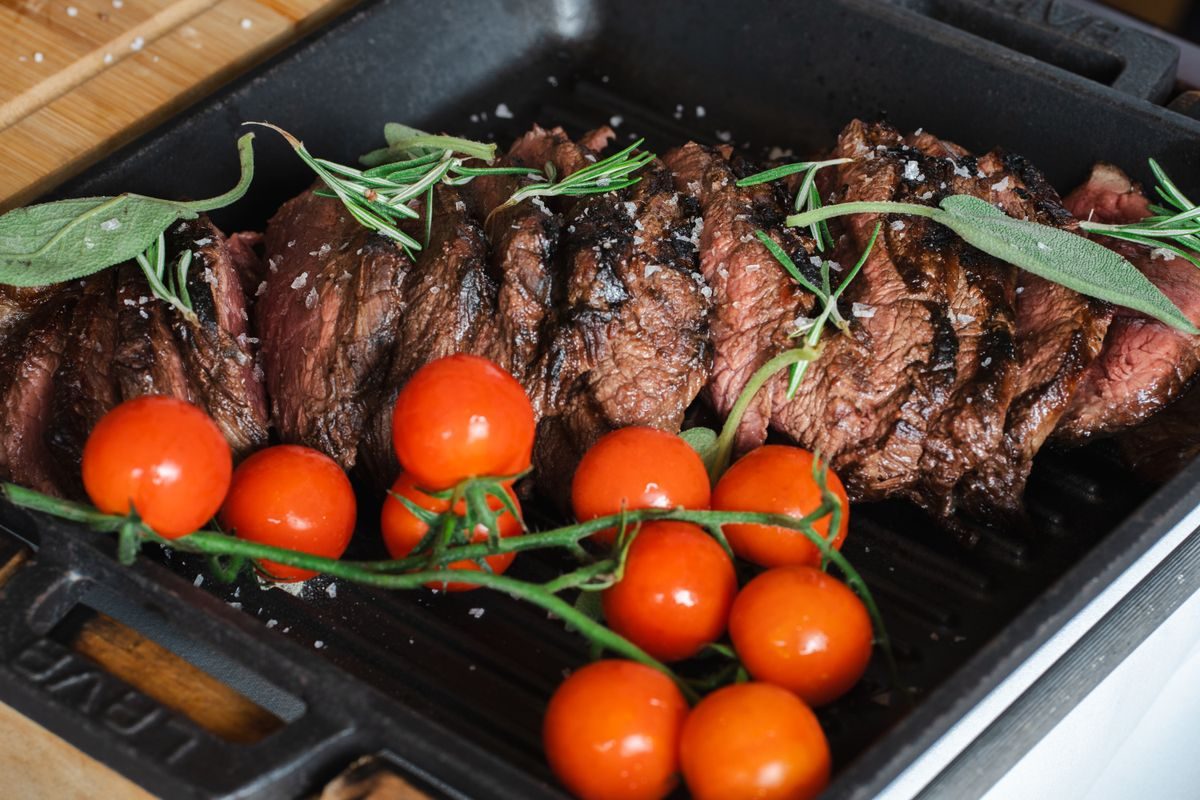
Flat iron is one of the easier steaks to get right on a grill, mostly because it is thin, evenly shaped and forgiving of high heat. This guide draws on two published methods: Jamie Purviance’s flat iron recipe on weber.com (with Weber’s flat iron preparation skill page) and America’s Test Kitchen’s grill-smoked flat-iron recipe. The Beef Checkoff’s cut profile supplies the background. Where they differ, both versions are given. Temperature conversions to °C are ours.
What You Are Buying
The Beef Checkoff’s “Beef. It’s What’s For Dinner” cut page describes flat iron as coming from the top blade in the chuck, the shoulder area. It says the cutting method removes the internal connective tissue from the whole top blade, which lets the steak deliver as the “second most tender cut.” It is also described as well marbled and great for grilling. ATK notes that blade steaks can be substituted if you cannot find flat iron.
Step One: Trim the Tough Streak
Weber’s skill page shows that some flat iron steaks have a tough streak running down the middle, and that it is harder to see once the steak is cooked. Its advice is to cut that streak away so every slice is tender. Weber’s recipe likewise calls for excess fat and any gristle to be removed. ATK’s ingredient list also specifies steaks “trimmed”. In every case the trimming happens before the fire, not after.
Step Two: Season
The two publishers season on very different clocks.
- Weber: brush both sides lightly with oil, season with salt and pepper, and let the steaks stand at room temperature for 15 to 30 minutes.
- ATK: rub both sides with kosher salt (1 tablespoon for four steaks) and hold them at room temperature for 1 hour, on a wire rack over a baking sheet. ATK says the long salting lets the seasoning penetrate below the surface. It then presses on an herb-spice rub and sprays lightly with oil.
Both use steaks of roughly 6 to 8 ounces (170 to 225 g). Weber specifies about 1 inch (2.5 cm) thick; ATK says three-quarters of an inch to 1 inch (about 2 to 2.5 cm).
Step Three: Set Up the Heat
Both methods use direct heat with a cooler escape zone.
- Weber: direct high heat, 450° to 550°F (roughly 230° to 290°C). On charcoal, keep a small part of the grate clear of briquettes as a safety zone of indirect heat. Brush the grates clean first.
- ATK (charcoal): pour lit coals over half the grate. ATK (gas): primary burner on high, the others on medium. Either way the steaks go on the hotter side, and if they char before they reach temperature they move to the cooler side with the lid on.
Step Four: Grill and Rest
Weber grills over direct high heat with the lid closed, 6 to 8 minutes for medium rare, turning once or twice. If flare-ups occur, it says to move the steaks temporarily over indirect heat. ATK’s steaks cook 4 to 6 minutes per side, lid on, until well browned and reading 130° to 135°F (54° to 57°C), which ATK calls medium. ATK then tents them with foil for a 10-minute rest and slices thin against the grain. Weber’s recipe does not state a rest time before serving.
Weber’s timing is a range for a doneness, not a temperature, so a thermometer remains the safer check.
What Temperature Is Safe?
USDA’s Food Safety and Inspection Service advises cooking beef steaks to a minimum internal temperature of 145°F (63°C) as measured with a food thermometer, then resting for at least three minutes. ATK’s 130° to 135°F medium target sits below that figure, and Weber’s medium-rare timing gives no temperature at all. Cooks who want to follow the USDA line should pull the steaks at 145°F instead and rest them for three minutes or more; the sources above are simply describing preferred doneness.
Serving
Slice against the grain. Weber’s recipe tops each steak with a slice of chilled herb butter (tarragon, chives, garlic and lemon zest, chilled at least an hour), while ATK’s version comes with grilled lemon wedges and a light smoke from a small foil packet of wood chips: 1 cup for charcoal, 1½ cups for gas. Neither is essential to the core method of trimming, seasoning, high direct heat and a thin slice.
Keep reading
- Flat Iron vs Hanger vs Skirt vs Flank: Which to Grill
- How to Grill Flank Steak: Marinade, Heat and Slicing
- How to Grill Hanger Steak: Trim, Marinate, Sear
- How to Grill a Steak on Gas or Charcoal: Sources Compared