
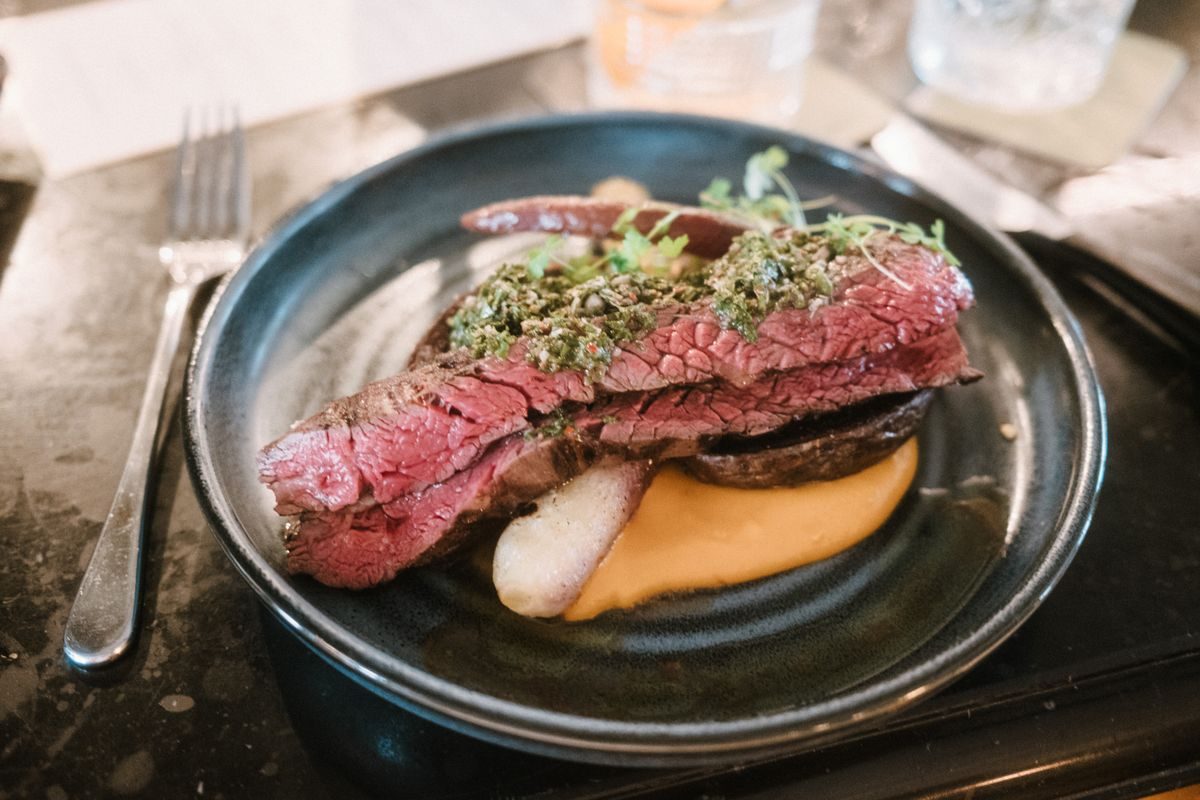
This chimichurri is taken directly from Saveur: the Chimichurri recipe adapted from a recipe in Seven Fires by Argentine chef Francis Mallmann. Its twist is a cooled saltwater brine stirred in with the herbs, which Saveur says stops the fresh herbs from discoloring. Nothing is cooked except that brine, and this guide covers the recipe, where the sauce comes from, and how long it is sensible to keep.
Where Chimichurri Comes From
Britannica describes chimichurri as a sauce of Argentine origin that typically includes parsley, oregano, garlic and red wine vinegar. It adds that in Argentina, fresh parsley, garlic, oregano and chilies form the basis, while other parts of Latin America often use coriander (cilantro). Most people, it says, think the sauce started with the gauchos who roamed the grasslands of what are now Argentina, Uruguay and Paraguay in the 19th century, though it appears in cookbooks only after the late 1950s. The name’s origin is uncertain, but Britannica says it is probably from the Basque word tximitxurri, roughly “a hodgepodge.”
Ingredients
Serves 6; Saveur lists 35 minutes total.
- 1 tablespoon kosher salt
- 1 cup water (for the brine)
- 1 cup finely chopped fresh parsley
- 3/4 cup finely chopped fresh oregano
- 8 garlic cloves, finely chopped
- 1 1/2 teaspoons crushed red chile flakes
- 1/3 cup extra-virgin olive oil
- 1/4 cup red wine vinegar
- Freshly ground black pepper
Method
- Bring the salt and water to a boil in a small pot, then take it off the heat and let it cool to room temperature.
- In a bowl, combine the parsley, oregano, garlic, chile flakes, olive oil, vinegar and pepper.
- Stir in the cooled brine.
- Let the sauce sit at room temperature for at least 30 minutes and up to 3 hours before serving.
Saveur suggests it for grilled steak, vegetables and bread. Note that the herbs are fresh and finely chopped by hand, and the oregano is nearly as plentiful as the parsley.
How Other Versions Differ
Recipes vary widely, as Britannica says, from region to region and cook to cook. For comparison, Meathead Goldwyn’s AmazingRibs.com version blends parsley with basil and oregano (or either alone), and adds balsamic vinegar, lemon or lime juice, onion and paprika, processing everything in a food processor. He says the parsley, basil, oregano and garlic must be fresh. That is a different ingredient set from Mallmann’s, and Meathead notes it works on chicken and fish as well as beef. Neither is presented as the only correct one; they are different cooks’ takes on the same idea.
Storage: Two Sources That Disagree
Saveur says you can use the chimichurri right away or refrigerate it in an airtight container for up to 3 weeks. However, guidance from the National Center for Home Food Preservation (a University of Georgia program) says garlic in oil should be made fresh and refrigerated at 40°F or lower for no more than 4 days, and warns that garlic-in-oil mixtures stored at room temperature are at risk of botulism. Oregon State University Extension likewise says fresh herbs and vegetables in oil should be used within 4 days or frozen.
This sauce is not a plain infused oil, because it also contains vinegar and a salt brine, and I found no source that tests this exact mixture. So there is no verified answer beyond “the publisher says 3 weeks; food-safety extension guidance for garlic in oil says 4 days.” The cautious path is to follow the shorter limit, keep it cold, and make a smaller batch if you will not use it quickly.
Serving It Safely
If you plan to use the same sauce on raw meat as a marinade, USDA says a marinade that has touched raw meat or poultry needs to be boiled for a few minutes before reuse. Boiling would ruin a fresh-herb sauce, so the practical answer is to keep a separate portion for serving and never dip cooked food in a bowl the raw meat touched. USDA also says not to reuse the same platter and utensils for raw and cooked meat. The serving-bowl tip is my inference from that guidance, not a line from the page.
Diet Notes
The Saveur ingredient list contains no meat, fish, dairy, eggs or honey, but Saveur does not label the recipe as vegan or vegetarian, and I have not verified how the red wine vinegar was made, so I am not making a diet claim for it.
Keep reading
- Chimichurri Rojo: Argentina’s Red Sauce
- Eastern NC Vinegar-Pepper Sauce (Saveur Recipe)
- Meathead’s Memphis Dust Rub: A Sweet, Salt-Free Blend
- Greek Grilled Octopus (Ktapodi stin Skara)
Sources
- Chimichurri — Saveur (Francis Mallmann, adapted from Seven Fires)
- Chimichurri — Encyclopaedia Britannica
- Chimichurri Sauce Recipe — Meathead’s AmazingRibs.com
- Freezing Garlic-in-Oil — National Center for Home Food Preservation
- Herbs and vegetables in oil — Oregon State University Extension
- Grilling and Food Safety — USDA Food Safety and Inspection Service