Safety

Food, fire and fuel safety guidance for outdoor cooking.

  • Grilling, Charring and Cancer Risk: What the National Cancer Institute Actually Says

    Grilling, Charring and Cancer Risk: What the National Cancer Institute Actually Says

    The idea that grilled and charred meat carries some cancer risk is widely repeated, but the actual evidence behind it is more specific, and more nuanced, than the general warning suggests. The National Cancer Institute (NCI), through its Division of Cancer Epidemiology and Genetics, has directly studied the chemistry involved, and its findings are worth understanding precisely rather than treating grilling as either perfectly safe or something to avoid entirely.

    What Actually Forms When You Grill at High Heat

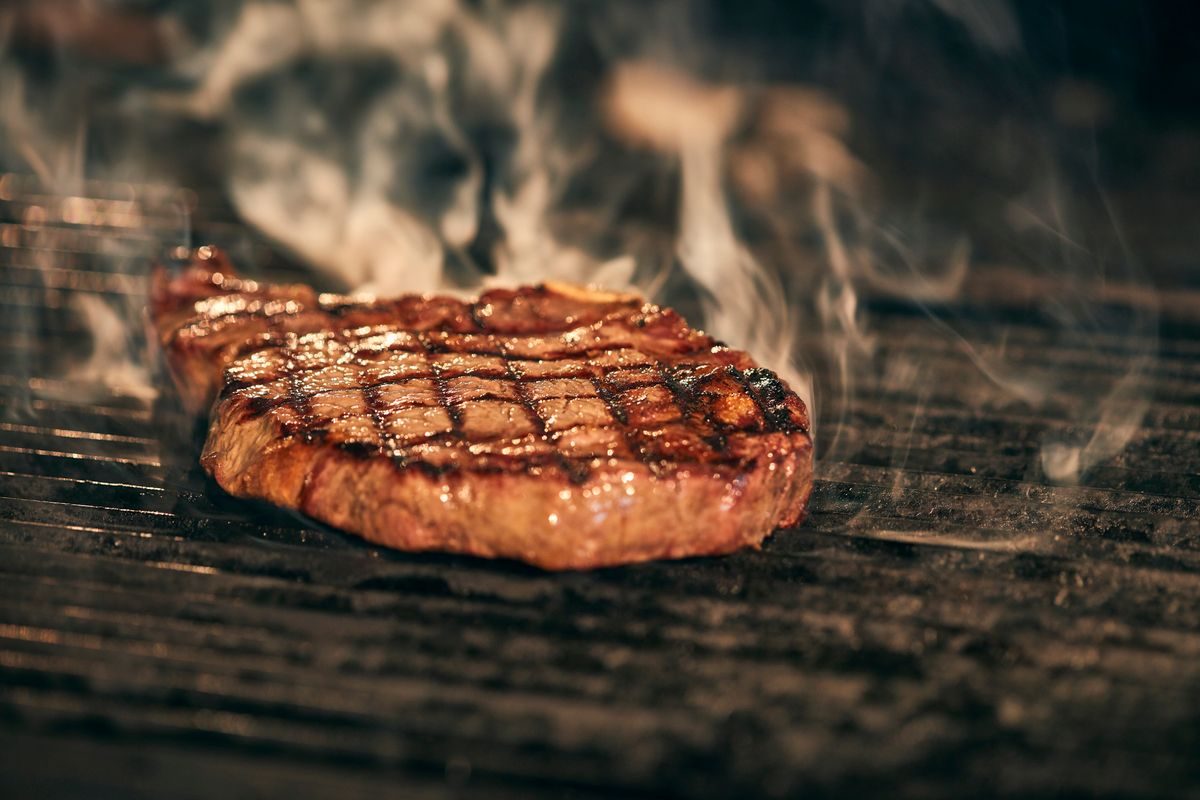
    Two specific chemical families are involved. Heterocyclic amines (HCAs) form in muscle meat — beef, pork, poultry, fish — when it is cooked using high-temperature methods, including grilling, and they form through reactions involving amino acids, sugars and creatine in the meat itself. Polycyclic aromatic hydrocarbons (PAHs) form differently: when fat and juices from meat drip onto a hot surface or open flame, the resulting flare-ups and smoke deposit PAHs onto the meat’s surface. Both are formed by the cooking process itself, not by any inherent property of the raw meat before it is cooked.

    What the Evidence Actually Shows

    According to NCI, laboratory research has found that HCAs and PAHs are mutagenic — meaning they can cause changes to DNA of the kind that, in principle, could increase cancer risk. Studies from NCI’s own Division of Cancer Epidemiology and Genetics have found that higher consumption of well-done, fried, or barbecued meats is associated with increased risk of colorectal, pancreatic and prostate cancer in population studies. It is important to be precise about what this does and does not establish: NCI’s own position is that population studies have not established a definitive, direct causal link between HCA and PAH exposure from cooked meats and cancer in humans. The mutagenic laboratory findings and the population associations are both real and worth taking seriously, but they fall short of proof that eating grilled meat causes cancer in any individual case — this is an area of ongoing research with a real signal, not a settled, closed question.

    Practical Ways to Reduce Exposure

    NCI’s own guidance focuses on reducing formation of these compounds without requiring you to give up grilling, since the amount formed is directly tied to specific, controllable factors in how the meat is cooked:

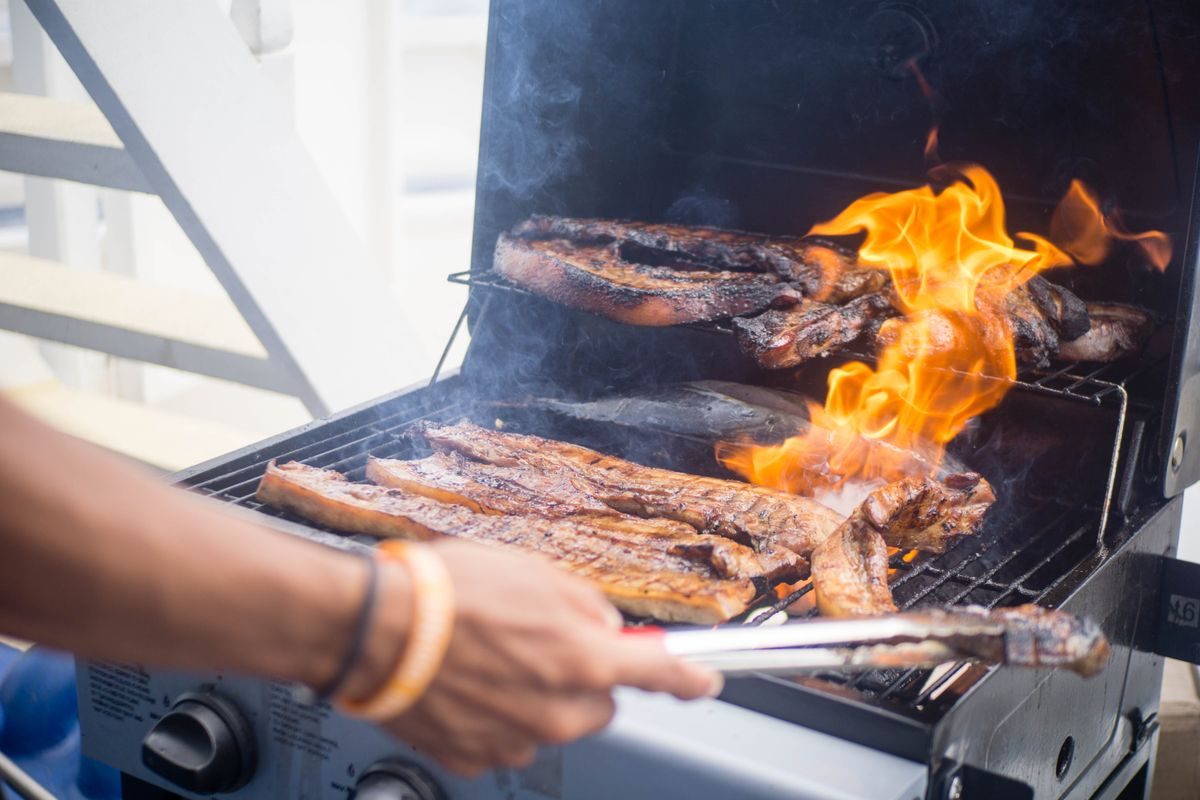
    • Avoid direct flame exposure and prolonged high heat. Since PAHs form specifically from fat dripping into flames, and HCA formation increases with cooking temperature and time, both reducing direct flame contact and avoiding unnecessarily long high-heat cooking times reduce formation of both compound groups.
    • Trim excess fat before grilling to reduce dripping and the flare-ups that generate PAHs, and consider a drip pan or indirect setup for fattier cuts rather than cooking them directly over an open flame the whole way through.
    • Flip meat frequently rather than leaving it on one side for an extended period, which reduces the time any single surface spends at peak char temperature.
    • Marinate for at least an hour before cooking. NCI’s guidance specifically notes marinating as a measure that helps reduce HCA formation, alongside the other steps above.
    • Remove and discard heavily charred portions rather than eating them, since char represents the most concentrated area of both HCA and PAH formation on the meat’s surface.
    • Consider a brief pre-cook step (such as microwaving meat briefly before it goes on the grill) to reduce the total time the meat needs to spend at high, direct heat to finish cooking.
    • Grill vegetables and fruit alongside meat as a straightforward way to vary the meal, since plant foods do not form HCAs during grilling in the way muscle meat does.

    A Reasonable Way to Think About This

    None of NCI’s own guidance frames grilling as something to stop doing — it frames it as a cooking method where specific, identifiable factors (heat, flame contact, char, cooking time) drive formation of compounds worth minimising through straightforward, low-effort adjustments. Moderation, trimming fat, avoiding prolonged direct-flame char, and not routinely eating heavily blackened portions cover most of what the actual research points to, without requiring a wholesale change to how or whether you grill.

    Keep reading

    Sources

  • Marinade Food Safety: What Actually Kills Bacteria, and What Doesn’t

    Marinade Food Safety: What Actually Kills Bacteria, and What Doesn’t

    Marinating is one of the most common steps in outdoor cooking, and also one of the most commonly mishandled from a food safety perspective. A marinade that has touched raw meat or poultry is not automatically safe to reuse as a sauce, and the rules around it are more specific than most home cooks realise.

    Refrigeration is not optional

    Food safety guidance from University of Illinois Extension’s meat safety programme is direct on this point: raw meat should always be marinated in the refrigerator, never left out on a counter, because room temperature gives bacteria on the meat’s surface time to multiply well before the marinade’s acidity or the eventual cooking process can address it (University of Illinois Extension). Marinating time varies by recipe — some delicate or thin cuts only need 15 to 30 minutes, while tougher cuts benefit from several hours up to about 24 hours — but the refrigeration requirement applies regardless of how long the marinade is left on.

    The used-marinade rule

    This is the detail that trips up the most home cooks: a marinade that has been in contact with raw meat or poultry cannot simply be poured over the cooked food afterward as a finishing sauce or dip. If it needs to be reused after contact with raw meat, the guidance is specific — it must be brought to a full boil first, which is sufficient to kill the harmful bacteria that may have transferred from the raw meat into the liquid. Simply warming it briefly is not the same as bringing it to a rolling boil, and the distinction matters because partial heating can leave bacteria viable.

    The safer and simpler alternative, and the one most food safety guidance actually recommends as a default, is to set aside a separate, untouched portion of the marinade before it goes anywhere near raw meat, specifically for basting or serving later. That portion never needs boiling because it was never exposed to raw meat juices in the first place.

    Container choice and cross-contamination

    Food-safe containers — glass, stainless steel, or resealable food-grade bags — are the recommended vessels for marinating, and the guidance is specific that plastic bags used to hold raw meat and marinade should not be cleaned and reused; they are treated as single-use. Reusable containers like glass or metal need proper washing followed by sanitising, with a common recommended solution being roughly one teaspoon of bleach per four cups of water, with a short soak of about 30 seconds, before the container touches food again.

    Timing marinating around a smoker or grill session

    Outdoor cooking adds a scheduling wrinkle that indoor cooking usually avoids: meat is often marinated well ahead of a long smoking session, sometimes the night before, which is within the guidance’s suggested window for tougher cuts but still requires planning the refrigerator space and container choice in advance rather than improvising it on the morning of a cook. It is worth deciding before the meat goes into the marinade whether any of it will be needed as a finishing sauce later, since setting aside an untouched portion at that point is far simpler than trying to boil a large batch of marinade to safety hours later while also managing a live fire.

    Why marinades don’t sterilise meat

    A common misconception is that an acidic marinade (built around vinegar, citrus or wine) meaningfully reduces bacterial risk on the meat itself. The extension guidance is explicit that marinades alone will not eliminate bacteria — proper refrigerated storage before cooking and reaching a safe internal cooking temperature during cooking remain the actual food-safety steps; the marinade’s job is flavour and tenderness, not decontamination.

    Practical rules for grill day

    • Marinate in the fridge, always, even for short marinating windows.
    • Set aside a clean portion of marinade before it touches raw meat if you want to use it for basting or serving — this avoids the boiling step entirely.
    • If marinade must be reused after contact with raw meat, bring it to a full boil first, not just a simmer or a quick warm-through.
    • Use dedicated, food-safe containers and treat plastic bags that held raw meat as single-use.
    • Marinating is not a substitute for cooking to a safe internal temperature — it does not replace that step.

    Thawing and marinating together

    A related mistake worth flagging separately is marinating meat that is still partially frozen, or using the marinating period as a substitute for proper thawing. Meat should be fully thawed, in the refrigerator rather than on the counter, before it goes into a marinade — a partially frozen piece of meat marinates unevenly, with the thawed outer surface absorbing flavour and any surface bacteria continuing to multiply at the edges while the centre remains frozen and effectively untouched by the marinade. This also means the total time a piece of meat has spent between the temperature danger zone (broadly, above refrigerator temperature) needs to be tracked across the whole process — thawing time plus marinating time plus any time spent coming up to room temperature before cooking — rather than treating marinating as a separate clock that starts fresh once the meat is technically thawed.

    Keep reading

    Sources

  • Safe Internal Cooking Temperatures for Grilling and Smoking (USDA Guide)

    Safe Internal Cooking Temperatures for Grilling and Smoking (USDA Guide)

    Grilling and smoking add real risk that a lot of backyard cooks underrate, mostly because outdoor cooking makes it harder to judge doneness by eye — a piece of chicken can look perfectly browned on a hot grill while still being unsafe in the middle. The numbers below come from the U.S. Department of Agriculture’s Food Safety and Inspection Service (FSIS), the federal agency responsible for meat, poultry, and egg product safety, specifically its Safe Minimum Internal Temperature Chart and its Grilling Food Safely guidance.

    The Core Rule: Color and Time Aren’t Reliable

    FSIS is explicit that meat and poultry cooked on a grill tends to brown very quickly on the outside — sometimes well before the inside is actually safe — so a food thermometer, not a cut-and-check or a visual guess, is the only reliable way to confirm a safe internal temperature. USDA also advises against partially grilling meat or poultry with the intention of finishing it later, since that gives bacteria a window to multiply during the gap between the two cooking sessions.

    Safe Minimum Internal Temperatures

    • Steaks, chops, and roasts (beef, pork, lamb, veal): 145°F, then rest for at least 3 minutes before cutting or eating. The rest isn’t optional — USDA’s guidance treats it as part of the safety standard, not just a cooking tip, because the temperature needs those few minutes to hold and finish destroying pathogens at the surface.
    • Ground meat (beef, pork, lamb, veal): 160°F. Grinding distributes any surface bacteria throughout the meat, which is why ground product needs a higher target than a whole steak or roast.
    • Poultry, whole or ground, including chicken and turkey: 165°F, measured in the thickest part of the breast or thigh without touching bone.
    • Fish: 145°F.
    • Egg dishes: 160°F.
    • Leftovers and reheated food: 165°F.

    Always check the thickest part of the cut, and keep the thermometer probe away from bone or the pan/grate itself — both conduct heat differently than muscle and will throw off the reading.

    Cross-Contamination on the Grill

    FSIS recommends using two separate plates when you grill: one to carry raw meat or poultry out to the grill, and a different, clean one to bring cooked food back in. Putting a finished steak or chicken breast back on the same plate that held it raw undoes the cooking you just did. The same logic applies to cutting boards — keep one for raw meat and poultry and a separate one for produce, buns, or anything that won’t be cooked further.

    Marinades and Basting

    Any marinade that’s touched raw meat or poultry should never be brushed on food again once it’s cooking or finished, unless you boil the marinade first to kill off whatever it picked up from the raw meat. If you want sauce for serving, set some aside before the raw meat goes in, or make a fresh batch. Marinating should always happen in the refrigerator, not on the counter — USDA’s general food safety guidance treats the “danger zone” between roughly 40°F and 140°F as the range where bacteria multiply fastest, and a countertop easily sits in that range for hours.

    The Danger Zone and the 2-Hour (1-Hour) Rule

    FSIS defines the “danger zone” as the range between 40°F and 140°F, where bacteria can double in number in as little as 20 minutes under the right conditions. The general rule is not to leave perishable food, cooked or raw, sitting out in that range for more than 2 hours. At an outdoor cookout in summer weather, that window is cut in half: once the ambient temperature is above 90°F, FSIS’s guidance drops the safe limit to 1 hour. This matters for both ends of an outdoor cook — raw meat waiting to go on the grill should stay in a cooler or the fridge until it’s needed, not sitting on a counter or picnic table, and cooked food shouldn’t linger out in the heat either, particularly things like potato salad or anything with mayonnaise that outdoor cookouts tend to pair with grilled meat.

    One More USDA Note

    USDA also specifically advises against washing raw meat or poultry before cooking. It doesn’t reliably remove bacteria, and splashing water off raw meat can spread it around your sink and countertops instead — the heat of cooking is what actually neutralizes the risk, not rinsing.

    Why This Matters More for Outdoor Cooking Specifically

    Smoking and grilling both involve carryover variables — wind, ambient temperature, fuel type, lid position — that make it much easier to misjudge internal temperature than with an oven at a fixed, known setting. A brisket or pork butt can also sit in the temperature danger zone for a while during a long stall (see our separate article on the science of the stall) before climbing back up, which is one more reason a reliable instant-read or leave-in probe thermometer belongs in every outdoor cook’s kit, not just an optional extra.

    Keep reading

    Sources