
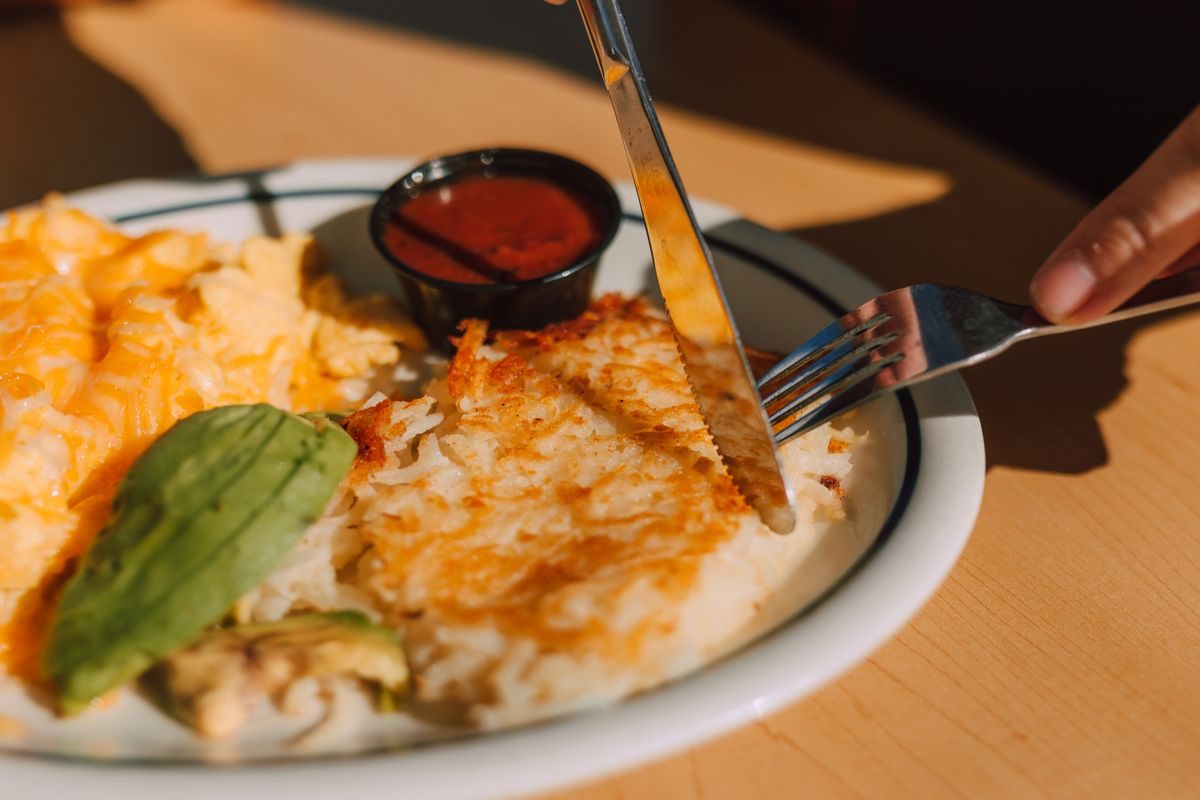
This one is adapted from Taste of Home, credited there to reader Gina Nistico — the Campfire Cheese Hash Brown Packets recipe published on tasteofhome.com, a Test Kitchen-approved dish built specifically for cooking over a campfire or grill in foil. It turns a bag of potatoes, bacon and cheese into a hash without a single pan to pack or scrub afterward.
Ingredients (Makes 4 Packets)
- 1 package (28 ounces) frozen O’Brien potatoes, thawed
- 1 1/4 cups shredded cheddar cheese, divided
- 8 bacon strips, cooked and chopped
- 1/2 teaspoon salt
- 1/4 teaspoon pepper
- Hard-boiled eggs and pico de gallo, optional, for serving
Method
Get your campfire or grill going for medium-high heat. In a bowl, toss the thawed potatoes with 3/4 cup of the cheddar, the chopped bacon, salt and pepper. Divide the mixture among four 18-by-12-inch sheets of heavy-duty nonstick foil, placing the food on the dull side of the foil. Fold the foil up and around each portion, sealing the seams tightly so no steam escapes.
Set the packets over the campfire or grill and cook them for 6 to 9 minutes per side, until the potatoes are tender. Open each packet carefully — hot steam will rush out — and sprinkle on the remaining cheese. Taste of Home suggests serving the hash with hard-boiled eggs and fresh pico de gallo on the side, though either is optional.
Why O’Brien Potatoes and Pre-Cooked Bacon
The recipe’s efficiency comes down to two ingredient choices. Frozen O’Brien potatoes already come diced and mixed with onion and bell pepper, so there’s no knife work at the campsite. And using bacon that’s already been cooked and chopped means the foil packet only has to reheat it and finish the potatoes, rather than cook raw pork through from cold — which foil-packet cooking over uneven campfire heat isn’t well suited to doing reliably. Total time, prep included, is listed at about 30 minutes for four servings.
Getting an Even Cook Over Open Flame
Campfire heat is far less consistent than a grill grate, so the 6-to-9-minute-per-side window in the recipe is a range rather than a fixed number — thinner beds of coals or a packet set further from the flame will run long. The fix is the same one used for any foil-packet cook: press the mixture into a flatter, more even layer inside the foil before sealing, and check one packet for tenderness before assuming the rest are done. A packet that swells noticeably as it cooks is a good sign steam is building inside and doing its job.
Food Safety Notes for Campsite Cooking
Because the bacon here goes into the packet already cooked, the job of the campfire is reheating, not killing pathogens from raw meat — which is exactly why USDA guidance on bacon flags it as hard to judge by a thermometer reading. Its Bacon and Food Safety guidance notes that it’s “very difficult to determine the temperature of a thin piece of meat such as bacon,” and that bacon should instead be judged by doneness: cooked crisp, it has reached a safe temperature, and cured bacon can stay pink even once it’s fully cooked. If you’re cooking the bacon fresh at camp rather than reheating pre-cooked strips, cook it completely in one pass — USDA warns against partially cooking bacon and finishing it later, since any surviving bacteria won’t be destroyed by the interruption.
The optional hard-boiled eggs carry their own rule: USDA guidance is to cook eggs until the yolk and white are both firm, which a properly hard-boiled egg already satisfies. And whatever you don’t eat hot off the fire, don’t let it sit at a campsite for more than 2 hours — or more than 1 hour if the air is above 90°F — before it goes back in a cooler, per USDA’s general “danger zone” guidance for cooked food.
Keep reading
- Taste of Home’s Cajun Seafood Boil in Foil
- NPS Freezer Breakfast Burritos for the Campfire
- NPS Campfire Meals in Foil: Recipe and Safety Notes
- Griddle Breakfast Potatoes: Two Published Methods