
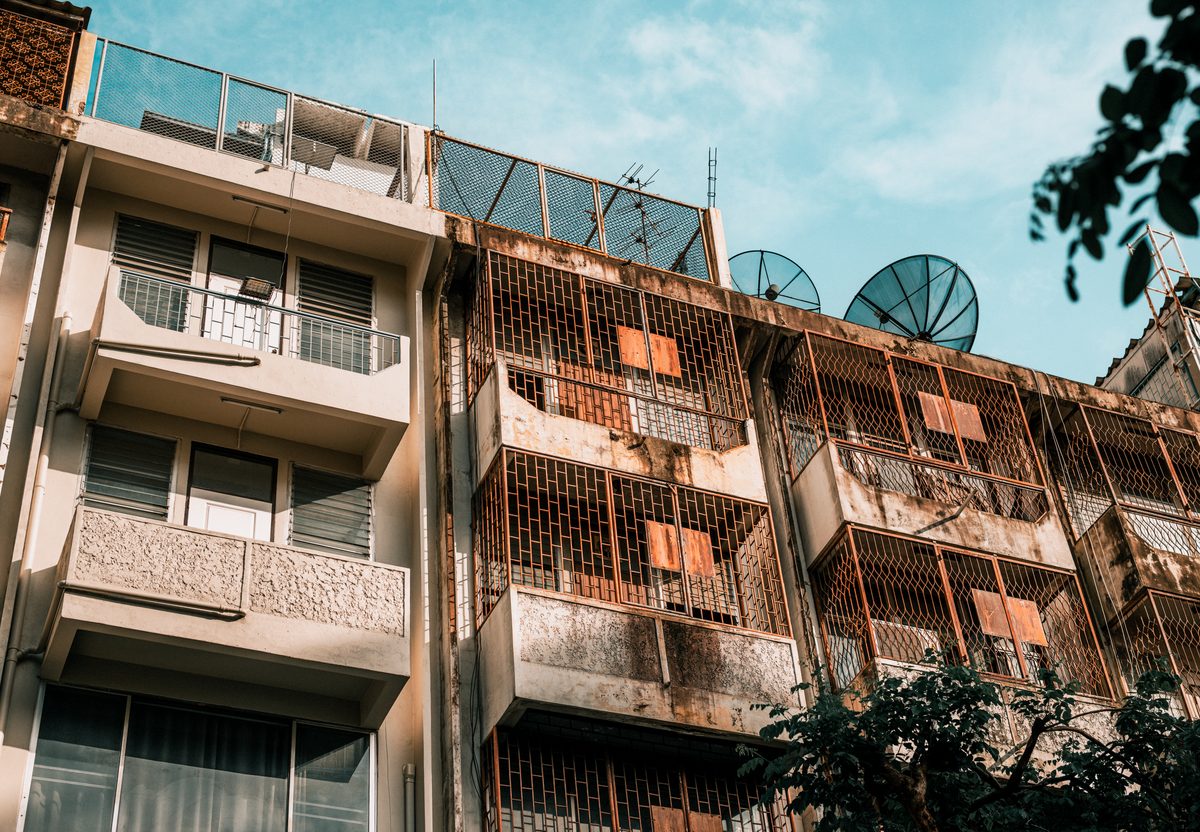
The fire-code detail in this guide comes from the Cape Coral, Florida Fire Department’s published summary of NFPA 1, the model fire code most U.S. jurisdictions adopt in some form, and from balcony-grill manufacturer ElectriChef’s own guidance on grilling in small spaces. Because fire codes are adopted and amended locally, the specific numbers below are what NFPA 1 says and what one Florida city enforces — not a universal rule. Always check your own city’s code and your lease or condo association’s rules before buying a grill for a balcony.
What NFPA 1 Actually Restricts
The relevant section, quoted directly on Cape Coral’s fire department site, is NFPA 1:10.10.6.1: “For other than one- and two-family dwellings, no hibachi, grill, or other similar device used for cooking, heating, or any other purpose shall be used or kindled on any balcony, under any overhanging portion, or within 10 ft (3 m) of any structure.” That single sentence is doing most of the work behind apartment and condo grilling rules nationwide — it covers charcoal and gas alike, and it isn’t limited to lit grills; storing an unlit one on the balcony is restricted too.
The code carves out one specific exception in that same section: “Listed electric portable, table top grills, not to exceed 200 sq. in. cooking surface, or other similar apparatus shall be permitted.” That’s the entire legal basis for why electric grills are the default option on multi-family balconies — not because the code declares them safer in some general sense, but because this one clause names them as the exception to an otherwise blanket ban.
Why Propane Tanks Are a Separate, Stricter Problem
Even setting the balcony-use ban aside, propane storage has its own restriction. Cape Coral’s summary cites NFPA 1:69.5.3.5, which limits cylinders stored inside a residential building — including common storage areas in multi-family buildings — to a maximum of 2.7 lb water capacity each, and 5.4 lb aggregate per living unit. A standard propane grill tank holds roughly 20 lb of propane, well over that limit. That’s why, in Cape Coral’s plain-language explanation, “L.P. gas grills use at least 20 lb tanks and therefore cannot be stored on a balcony,” and the cylinders “cannot be stored inside the residential unit or anywhere above the first floor” either. Small 1 lb camping-style canisters fall under a separate, more permissive allowance, but a full-size gas grill tank does not.
What Small-Space Guidance Looks Like From an Actual Manufacturer
ElectriChef, which builds electric grills marketed specifically for balconies, boats, and RVs, publishes its own sizing and placement advice for apartment use. Its guidance recommends a roughly 16- to 24-inch cooking surface for a balcony — large enough to cook for a few people, small enough to fit the space — and favors built-in or tabletop styles over larger closed-base or pedestal grills. The company also flags two practical placement constraints that have nothing to do with fire code: keeping the grill within reach of a power outlet, since its grills need dedicated wiring (220V, by ElectriChef’s own spec, for its larger models), and not blocking the balcony access door, since that both restricts movement and pushes smoke back into the apartment.
Rules Still Vary by City, Building, and Insurer
NFPA 1 is a model code, not federal law — a city or state has to formally adopt it, often with local amendments, before it’s enforceable there. Cape Coral’s page says as much in its own closing note: “Many condominiums or apartment complexes have regulations on the use of barbecue grills that exceed fire code requirements. Please check with your management staff to see what requirements or exceptions apply to use of grills at your complex.” In practice, three separate layers can restrict what’s allowed — the adopted fire code, any local amendments to it, and whatever a specific lease or HOA adds on top — and any one of them can be stricter than what’s described here.
The Practical Takeaway
If you live above the first floor of a multi-family building, the safe assumption is that propane and charcoal grills are off-limits on the balcony itself, and that a small electric grill — ideally one sized and built for exactly this use — is the option most likely to be permitted. But “most likely” isn’t “guaranteed.” Before buying anything, ask building management directly whether grilling is allowed at all, and if so, what size and fuel type they permit; the fire code sets a ceiling on what’s legally possible, not a guarantee of what a specific building allows.
Keep reading
- Grill Fires by the Numbers: What NFPA’s Data Actually Shows
- RV and Camper Grilling: Propane Safety at the Site
- Winterizing a Grill: Weber and NC Storage Rules
- Carbon Monoxide and Charcoal Grills: Keep Them Outside