
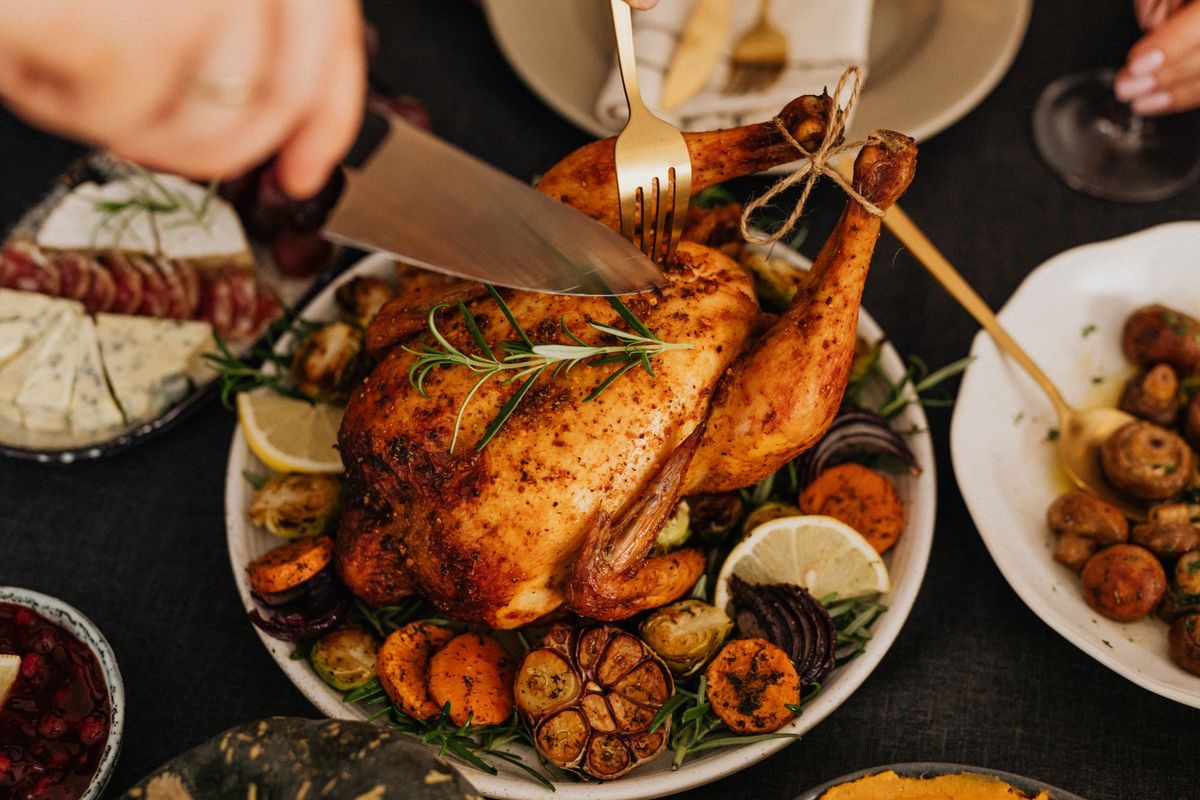
This recipe is taken directly from Weber’s recipe library — the Lemon-Rosemary Chicken Breasts recipe on weber.com. It is a short marinade of oil, lemon, rosemary and garlic, which makes it a good vehicle for learning how to handle a marinade properly. The safety rules below come from the US Department of Agriculture’s Food Safety and Inspection Service (FSIS).
Ingredients (serves 4)
For the marinade
- 5 tablespoons extra-virgin olive oil
- 1 tablespoon fresh lemon juice
- 1 tablespoon minced fresh rosemary leaves (from about 4 sprigs)
- 2 garlic cloves, minced
- 1 teaspoon kosher salt
- 3/4 teaspoon freshly ground black pepper
For the chicken
- 4 boneless, skinless chicken breast halves, each about 6 ounces, trimmed of fat
Method
- Whisk the marinade ingredients together.
- Put the chicken breasts in a large resealable plastic bag and pour in the marinade. Press the air out, seal the bag tightly, and turn it to spread the marinade around.
- Set the bag in a bowl and refrigerate for 2 to 4 hours, turning the bag now and then.
- Prepare the grill for direct cooking over medium heat, 350 to 450°F. Brush the grates clean.
- Take the chicken out of the bag and discard the marinade. Grill the chicken, smooth (skin) side down first, over direct medium heat with the lid closed for 8 to 12 minutes, turning once, until an instant-read thermometer in the thickest part reads 165°F.
- Rest the chicken for 3 to 5 minutes, then serve warm.
Weber’s version of the recipe also tells you to remove the chicken from the refrigerator 20 minutes before grilling. This article leaves that step out, because USDA’s grilling guidance says to keep meat and poultry refrigerated until you are ready to use it and to take out only what will go straight on the grill.
The Marinade Rules That Matter
The point of this article is that the raw-chicken part of a marinade is where the risk lies. FSIS’s guidance on marinating is specific:
- Marinate in the refrigerator. FSIS says always marinate meat and poultry in the refrigerator, not on the counter. Cover the poultry while it marinates.
- Time limits. Poultry can be refrigerated for up to 2 days in a marinade. FSIS notes that most recipes call for 6 to 24 hours, and that after two days the marinade can start to break down the meat’s fibers and make it mushy. Weber’s 2 to 4 hours is comfortably inside the two-day limit.
- Never reuse raw-poultry marinade as a sauce unless it is boiled. FSIS says not to use marinade from raw poultry as a sauce unless it is boiled first to destroy bacteria. Whenever a marinade used on raw meat or poultry is going to be reused, it should come to a boil for a few minutes.
- Or set some aside first. If you want a sauce, FSIS says to reserve a portion of the marinade before the raw meat goes in. Weber’s recipe takes the simpler route: the used marinade is discarded.
- Bag it and bin it. FSIS suggests food-grade plastic bags, which you discard afterwards. Food-grade plastic, stainless steel or glass containers also work.
- Keep the food cold on the way. If you are carrying food to another location, FSIS says to use an insulated cooler with enough ice or ice packs to keep it at 40°F or below.
Remember also that the acid in a marinade is doing something to the meat. FSIS explains that the acid causes poultry tissue to break down, which has a tenderizing effect, and it warns that too much vinegar or hot sauce can leave meat stringy and tough. This recipe uses only one tablespoon of lemon juice to five of oil, so the marinade is mostly oil, garlic, rosemary and seasoning.
Cooking Temperature
Go by the thermometer rather than the timer. Weber’s recipe gives 165°F as the target, and FSIS agrees that whole poultry and poultry parts are safe at a minimum internal temperature of 165°F, checked with a food thermometer. FSIS also notes that meat cooked on a grill often browns very fast on the outside, so colour alone is not a reliable sign of doneness. For chicken breasts, check the thickest part.
Keep reading
- Butterflied Grilled Leg of Lamb with Herb Butter
- Weber’s Harissa Chicken Thighs on the Grill
- Marinade Food Safety: What Actually Kills Bacteria, and What Doesn’t
- Portuguese Piri-Piri Sauce and Marinade (David Leite)